
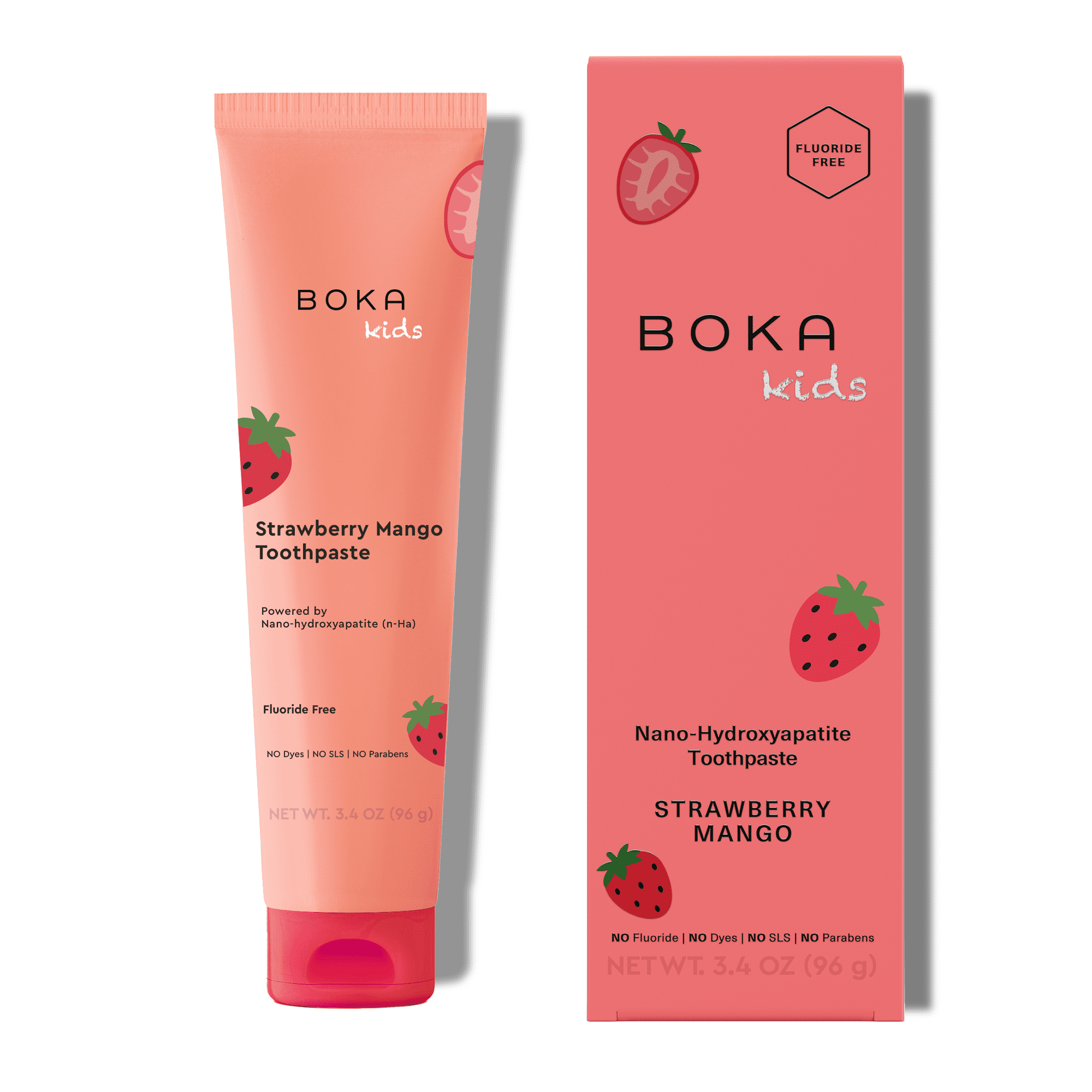


Boka Fluoride Free Nano-Hydroxyapatite Kids Toothpaste Strawberry Mango 3.4oz
Analysis updated September 2026 · How Scout scores
At a glance
Summary
This toothpaste features a clean formula with beneficial ingredients like hydroxyapatite and xylitol, which support enamel remineralization and reduce cavity-causing bacteria. It avoids harmful substances such as fluoride and SLS, and includes additional natural ingredients like aloe vera and green tea extract that promote oral health. The absence of major irritants or harmful chemicals contributes to its high rating.
Key ingredients 22
HydroxyapatiteVery Good
Hydroxyapatite is a biomimetic mineral that helps to remineralize and strengthen tooth enamel. It is a beneficial alternative to fluoride.
Risks
There are no significant risks associated with hydroxyapatite in toothpaste.
Benefits
It aids in repairing and strengthening enamel, reducing sensitivity and preventing cavities.
XylitolVery Good
Xylitol is a natural sweetener that reduces cavity-causing bacteria in the mouth. It is beneficial for oral health.
Risks
In large amounts, xylitol can cause digestive discomfort.
Benefits
Xylitol helps to prevent tooth decay and promotes oral health.
GlycerinGood
Beneficial ingredient — whole-food or functional value in this product class.
Risks
Excessive glycerin can cause a sticky feeling in the mouth.
Benefits
Glycerin helps to keep the toothpaste from drying out and maintains its smooth texture.
Aloe Barbadensis (Aloe Vera) Leaf JuiceGood
Aloe vera is known for its soothing and healing properties. It is beneficial for oral tissues and can help reduce inflammation.
Risks
There are no significant risks associated with aloe vera in toothpaste.
Benefits
Aloe vera helps to soothe and heal oral tissues, promoting overall oral health.
Camellia Sinensis (Green Tea)Good
Green tea extract is known for its antioxidant and antimicrobial properties. It can help reduce plaque and improve oral health.
Risks
There are no significant risks associated with green tea extract in toothpaste.
Benefits
Green tea extract helps to reduce plaque and improve oral health through its antimicrobial properties.
Water (Aqua/Eau)Neutral
Water is a common solvent used in many products. It helps dissolve other ingredients and provides a base for the formulation.
Risks
There are no significant risks associated with water in this context.
Benefits
Water helps to maintain the consistency and spreadability of the toothpaste.
Hydrated SilicaNeutral
Hydrated silica is used as a mild abrasive to help remove plaque and stains from teeth. It is commonly found in toothpaste formulations.
Risks
Overuse of abrasive agents can potentially wear down enamel over time.
Benefits
It effectively aids in cleaning teeth and removing surface stains.
SorbitolNeutral
Sorbitol is a sugar alcohol used as a sweetener and humectant. It helps maintain moisture and provides a pleasant taste.
Risks
In large amounts, sorbitol can cause digestive discomfort.
Benefits
Sorbitol helps to keep the toothpaste moist and palatable.
SilicaNeutral
Silica is used as an abrasive to help clean teeth and remove plaque. It is a common ingredient in toothpaste.
Risks
Excessive use of abrasive agents can lead to enamel erosion.
Benefits
Silica helps in effectively cleaning teeth and maintaining oral hygiene.
Xanthan GumNeutral
Xanthan gum is used as a thickening agent to stabilize the toothpaste formulation. It helps maintain the desired consistency.
Risks
Ingesting large amounts can cause digestive issues.
Benefits
Xanthan gum helps to ensure the toothpaste remains smooth and easy to apply.
TriacetinNeutral
Triacetin is used as a solvent and plasticizer in toothpaste. It helps to maintain the consistency and stability of the product.
Risks
There are no significant risks associated with triacetin in toothpaste.
Benefits
It contributes to the smooth texture and stability of the toothpaste.
Stevia Rebaudiana Leaf/Stem ExtractNeutral
Stevia extract is a natural sweetener used to enhance the taste of toothpaste. It does not contribute to tooth decay.
Risks
There are no significant risks associated with stevia in toothpaste.
Benefits
Stevia provides a pleasant taste without increasing the risk of cavities.
Dimethyl SulfoneNeutral
Dimethyl sulfone, also known as MSM, is used for its potential anti-inflammatory properties. It is included in some oral care products.
Risks
There is limited research on its effects in oral care products.
Benefits
It may provide anti-inflammatory benefits, although more research is needed.
Sodium BicarbonateNeutral
Standard formulation ingredient — neither beneficial nor harmful at typical use.
Risks
Overuse can lead to enamel wear if used excessively.
Benefits
It helps to clean teeth effectively and neutralize harmful acids in the mouth.
Medium Chain TriglyceridesNeutral
Medium chain triglycerides are used as a carrier oil and emollient in toothpaste. They help to maintain the texture and spreadability.
Risks
There are no significant risks associated with medium chain triglycerides in toothpaste.
Benefits
They help to improve the texture and application of the toothpaste.
Cucumis Sativus (Cucumber) Fruit ExtractNeutral
Cucumber extract is used for its soothing and hydrating properties. It is included in some oral care products for its potential benefits.
Risks
There are no significant risks associated with cucumber extract in toothpaste.
Benefits
Cucumber extract may provide soothing and hydrating benefits to oral tissues.
Mangifera Indica (Mango) Fruit ExtractNeutral
Mango extract is used for its flavor and potential antioxidant properties. It is included to enhance the taste of the toothpaste.
Risks
There are no significant risks associated with mango extract in toothpaste.
Benefits
Mango extract provides a pleasant flavor and may offer antioxidant benefits.
Persea Gratissima (Avocado) Fruit ExtractNeutral
Avocado extract is used for its moisturizing and nourishing properties. It is included in some oral care products for its potential benefits.
Risks
There are no significant risks associated with avocado extract in toothpaste.
Benefits
Avocado extract may provide moisturizing and nourishing benefits to oral tissues.
Sodium BenzoateBad
Synthetic preservative that can form benzene in the presence of vitamin C.
Risks
In rare cases, sodium benzoate can cause allergic reactions.
Benefits
It helps to extend the shelf life of the toothpaste by preventing spoilage.
Sodium Lauroyl SarcosinateBad
Processed additive flagged under Scout's ingredient doctrine.
Risks
In rare cases, it can cause mild irritation in sensitive individuals.
Benefits
It helps to effectively clean teeth while being gentle on oral tissues.
Benzyl AlcoholBad
Processed additive flagged under Scout's ingredient doctrine.
Risks
In high concentrations, it can cause irritation, but it is generally safe in toothpaste.
Benefits
It helps to preserve the toothpaste and maintain its consistency.
Natural Flavor (aroma)Bad
Processed additive flagged under Scout's ingredient doctrine.
Risks
There is a potential for allergic reactions in sensitive individuals.
Benefits
Natural flavors improve the taste and user experience of the toothpaste.
Processing
Processed Foods
Get the full breakdown in the Scout appTake Scout shopping
Scan any product to see lab results, healthy alternatives, and your personalized analysis.
Download on theApp Store GET IT ONGoogle PlayAmazon pricing & content
Amazon price as of . Product prices and availability are accurate as of the date/time indicated and are subject to change. Any price and availability information displayed on Amazon.com at the time of purchase will apply to the purchase of this product.
CERTAIN CONTENT THAT APPEARS ON THIS SITE COMES FROM AMAZON. THIS CONTENT IS PROVIDED “AS IS” AND IS SUBJECT TO CHANGE OR REMOVAL AT ANY TIME.