
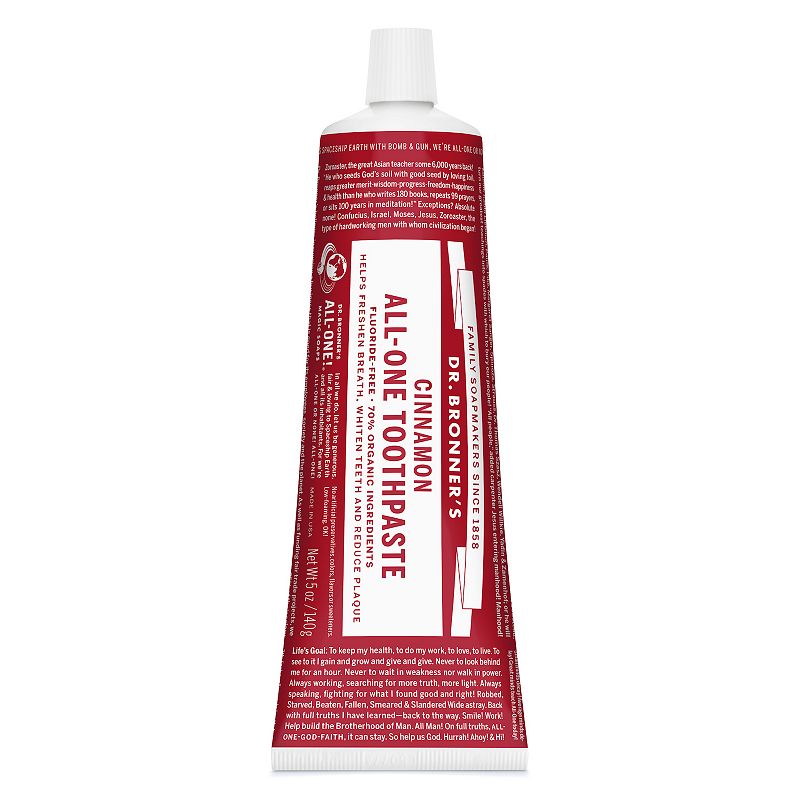



Dr. Bronner s All-One Organic Cinnamon Toothpaste 5oz
Dr. Bronner'sAnalysis updated September 2026 · How Scout scores
At a glance
Summary
This toothpaste features a clean formula with beneficial ingredients like aloe vera, baking soda, cinnamon oil, mint, and coconut oil, all of which contribute to oral health through their antimicrobial and soothing properties. The absence of harmful chemicals such as fluoride, SLS, and artificial sweeteners enhances its safety profile, making it a strong choice for those seeking a natural oral care product. The use of organic ingredients further supports its high rating, reflecting a commitment to quality and minimal processing.
Key ingredients 14
Organic GlycerinGood
Beneficial ingredient — whole-food or functional value in this product class.
Risks
There are no significant risks associated with glycerin in oral care products.
Benefits
It helps to keep the toothpaste from drying out, ensuring a smooth application.
Organic Aloe Barbadensis Leaf JuiceGood
Aloe vera is known for its soothing properties and can help reduce inflammation in the mouth. It is beneficial for oral tissues and can aid in healing minor irritations. Its natural composition makes it a favorable ingredient in oral care.
Risks
There are minimal risks, though some individuals may experience allergic reactions.
Benefits
It soothes oral tissues and can help in healing minor irritations.
Organic Mentha Arvensis CrystalsGood
Mentha arvensis crystals provide a natural mint flavor and have antimicrobial properties that can help freshen breath. They are beneficial for maintaining oral hygiene and are considered safe. Their natural composition makes them a favorable ingredient in oral care.
Risks
There are minimal risks, though some individuals may experience sensitivity.
Benefits
They freshen breath and provide antimicrobial benefits.
Organic Cocos Nucifera OilGood
Coconut oil is known for its antimicrobial properties and is used in oral care for its ability to reduce harmful bacteria. It is beneficial for oral hygiene and is considered safe. Its natural composition makes it a favorable ingredient in toothpaste.
Risks
There are minimal risks, though some individuals may experience sensitivity.
Benefits
It helps reduce harmful bacteria and supports oral hygiene.
Hydrated SilicaNeutral
Hydrated silica is used as a mild abrasive to help remove plaque and surface stains from teeth. It is generally considered safe for use in toothpaste. However, it does not provide any direct health benefits beyond its cleaning action.
Risks
Excessive use of abrasive agents can potentially wear down enamel over time.
Benefits
It helps in cleaning teeth by removing plaque and surface stains.
Calcium CarbonateNeutral
Calcium carbonate acts as a mild abrasive in toothpaste, aiding in the removal of plaque and surface stains. It is a common ingredient in oral care products and is considered safe. It does not provide direct health benefits but supports cleaning action.
Risks
Overuse of abrasive agents can lead to enamel wear.
Benefits
It assists in cleaning teeth by removing plaque and surface stains.
Xanthan GumNeutral
Xanthan gum is used as a thickening agent to stabilize the toothpaste formula. It is safe for use in oral care products and does not contribute to oral health directly. Its primary role is to maintain the consistency of the product.
Risks
There are no significant risks associated with xanthan gum in oral care products.
Benefits
It helps maintain the consistency and stability of the toothpaste.
Sodium BicarbonateNeutral
Standard formulation ingredient — neither beneficial nor harmful at typical use.
Risks
There are minimal risks, though excessive use can lead to enamel wear.
Benefits
It helps clean teeth, neutralize acids, and freshen breath.
Potassium CocoateNeutral
Potassium cocoate is a natural soap derived from coconut oil, used as a surfactant to help clean teeth. It is considered safe and non-toxic in oral care products. It does not provide direct health benefits but aids in the cleaning process.
Risks
There are no significant risks associated with potassium cocoate in oral care products.
Benefits
It helps in cleaning teeth by acting as a natural surfactant.
Organic Cinnamomum Cassia OilNeutral
Cinnamomum cassia oil is used for its flavoring properties and potential antimicrobial effects. It adds a pleasant taste to the toothpaste and may help reduce oral bacteria. However, its primary role is flavor enhancement.
Risks
Some individuals may experience allergic reactions or irritation.
Benefits
It provides flavor and may offer antimicrobial benefits.
Organic Cocos Nucifera FlourNeutral
Cocos nucifera flour is derived from coconut and is used as a natural thickener or filler in toothpaste. It is safe for use and does not contribute to oral health directly. Its primary role is to support the texture of the product.
Risks
There are no significant risks associated with cocos nucifera flour in oral care products.
Benefits
It helps maintain the texture and consistency of the toothpaste.
TocopherolNeutral
Tocopherol, or vitamin E, is used as an antioxidant to help preserve the freshness of the toothpaste. It is safe for use in oral care products and does not contribute to oral health directly. Its primary role is to maintain product stability.
Risks
There are no significant risks associated with tocopherol in oral care products.
Benefits
It helps preserve the freshness and stability of the toothpaste.
Citric AcidNeutral
Citric acid is used to adjust the pH of the toothpaste and enhance its stability. It is generally considered safe for use in oral care products. It does not provide direct health benefits but supports the product's formulation.
Risks
Excessive use can lead to enamel erosion, but it is typically used in safe amounts.
Benefits
It helps maintain the pH balance and stability of the toothpaste.
Organic Stevia Rebaudiana Leaf / Stem ExtractNeutral
Stevia extract is used as a natural sweetener to improve the taste of the toothpaste. It is considered safe and non-toxic for oral care products. It does not contribute to oral health directly but enhances flavor.
Risks
There are no significant risks associated with stevia extract in oral care products.
Benefits
It provides a natural sweetening effect without contributing to tooth decay.
Processing
Processed Foods
Get the full breakdown in the Scout appTake Scout shopping
Scan any product to see lab results, healthy alternatives, and your personalized analysis.
Download on theApp Store GET IT ONGoogle PlayAmazon pricing & content
Amazon price as of . Product prices and availability are accurate as of the date/time indicated and are subject to change. Any price and availability information displayed on Amazon.com at the time of purchase will apply to the purchase of this product.
CERTAIN CONTENT THAT APPEARS ON THIS SITE COMES FROM AMAZON. THIS CONTENT IS PROVIDED “AS IS” AND IS SUBJECT TO CHANGE OR REMOVAL AT ANY TIME.