
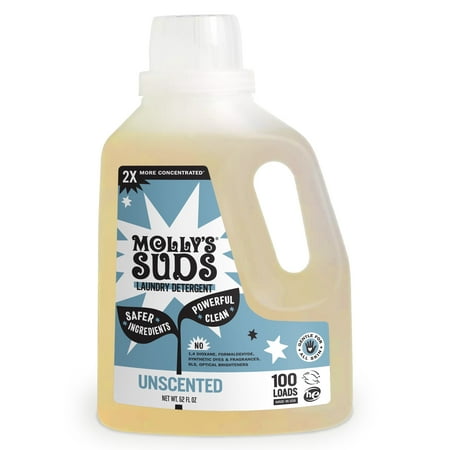
Molly s Suds Liquid Laundry Detergent | Natural Laundry Detergent Soap for Sensitive Skin | 2x Concentrated High Efficiency (HE) | Unscented - 100 Loads
Analysis updated August 2026 · How Scout scores
At a glance
Summary
This laundry detergent features a range of beneficial ingredients, including plant-derived surfactants like decyl glucoside and caprylyl/capryl glucoside, which are gentle and biodegradable. The inclusion of enzymes such as protease and mannanase enhances cleaning power while being environmentally friendly. However, the presence of phenoxyethanol, a synthetic preservative that can cause skin irritation, slightly detracts from its overall safety profile.
Key ingredients 12
PROTEASEGood
Protease is an enzyme that breaks down protein-based stains such as blood and food. It enhances the cleaning power of the detergent. Enzymes like protease are biodegradable and environmentally friendly.
Risks
There is a minimal risk of allergic reactions in sensitive individuals.
Benefits
Protease effectively removes protein stains, improving the overall cleaning performance.
DECYL GLUCOSIDEGood
Decyl glucoside is a mild, plant-derived surfactant used for its gentle cleansing properties. It is biodegradable and suitable for sensitive skin. It is derived from glucose and coconut oil.
Risks
There are minimal risks associated with decyl glucoside, making it suitable for sensitive skin.
Benefits
It provides effective cleaning while being gentle on the skin and the environment.
MANNANASEGood
Mannanase is an enzyme that breaks down mannan-based stains, such as those from food thickeners. It enhances the stain removal capability of the detergent. Enzymes like mannanase are biodegradable and environmentally friendly.
Risks
There is a minimal risk of allergic reactions in sensitive individuals.
Benefits
Mannanase effectively removes specific types of stains, improving cleaning performance.
CAPRYLYL/CAPRYL GLUCOSIDEGood
Caprylyl/capryl glucoside is a mild, plant-derived surfactant known for its gentle cleansing properties. It is biodegradable and suitable for sensitive skin. It is derived from glucose and fatty alcohols.
Risks
There are minimal risks associated with caprylyl/capryl glucoside, making it suitable for sensitive skin.
Benefits
It provides effective cleaning while being gentle on the skin and the environment.
WATERNeutral
Water is a universal solvent used to dissolve other ingredients. It acts as a carrier for the active components in the detergent. It does not contribute to cleaning efficacy directly.
Risks
There are no significant risks associated with water in this context.
Benefits
Water helps in evenly distributing the detergent ingredients during the wash cycle.
SODIUM CARBONATENeutral
Sodium carbonate, also known as washing soda, is used to soften water and enhance cleaning efficiency. It helps in breaking down grease and stains. It is a common ingredient in laundry detergents.
Risks
In high concentrations, it can be irritating to the skin and eyes.
Benefits
It improves the effectiveness of the detergent by softening water and removing stains.
XANTHAN GUMNeutral
Xanthan gum is used as a thickening agent to stabilize the detergent formula. It helps maintain the consistency of the liquid detergent. It is derived from natural sources and is biodegradable.
Risks
There are no significant risks associated with xanthan gum in this context.
Benefits
It helps in maintaining the desired viscosity of the detergent, ensuring even distribution.
GLYCERINNeutral
Glycerin is used as a humectant to retain moisture in the detergent formula. It helps in preventing the detergent from drying out. It is a byproduct of soap making and is biodegradable.
Risks
There are no significant risks associated with glycerin in this context.
Benefits
It helps maintain the moisture content of the detergent, ensuring its longevity.
SODIUM C14-16 OLEFIN SULFONATENeutral
Sodium C14-16 olefin sulfonate is a surfactant used for its cleansing and foaming properties. It is effective in removing dirt and oils. It is considered milder than traditional sulfates.
Risks
It may cause mild skin irritation in sensitive individuals.
Benefits
It provides effective cleaning and foaming action in the detergent.
SODIUM GLUCONATENeutral
Sodium gluconate is a chelating agent used to improve the stability and effectiveness of the detergent. It helps in preventing the formation of insoluble salts. It is biodegradable and derived from glucose.
Risks
There are no significant risks associated with sodium gluconate in this context.
Benefits
It enhances the performance of the detergent by stabilizing the formula.
ETHYLHEXYLGLYCERINNeutral
Ethylhexylglycerin is used as a skin-conditioning agent and preservative enhancer. It helps in maintaining the product's stability and efficacy. It is considered a mild ingredient with low irritation potential.
Risks
There are minimal risks associated with ethylhexylglycerin, though it may cause mild irritation in very sensitive individuals.
Benefits
It enhances the preservative efficacy of the detergent, ensuring product longevity.
PHENOXYETHANOLBad
Phenoxyethanol is a preservative used to prevent microbial growth in the detergent. It is effective in extending the shelf life of the product. However, it can be a skin irritant and is a synthetic compound.
Risks
It may cause skin irritation and allergic reactions in sensitive individuals.
Benefits
It helps in preserving the detergent by preventing microbial contamination.
Get the full breakdown in the Scout appTake Scout shopping
Scan any product to see lab results, healthy alternatives, and your personalized analysis.
Download on theApp Store GET IT ONGoogle PlayAmazon pricing & content
Amazon price as of . Product prices and availability are accurate as of the date/time indicated and are subject to change. Any price and availability information displayed on Amazon.com at the time of purchase will apply to the purchase of this product.
CERTAIN CONTENT THAT APPEARS ON THIS SITE COMES FROM AMAZON. THIS CONTENT IS PROVIDED “AS IS” AND IS SUBJECT TO CHANGE OR REMOVAL AT ANY TIME.