
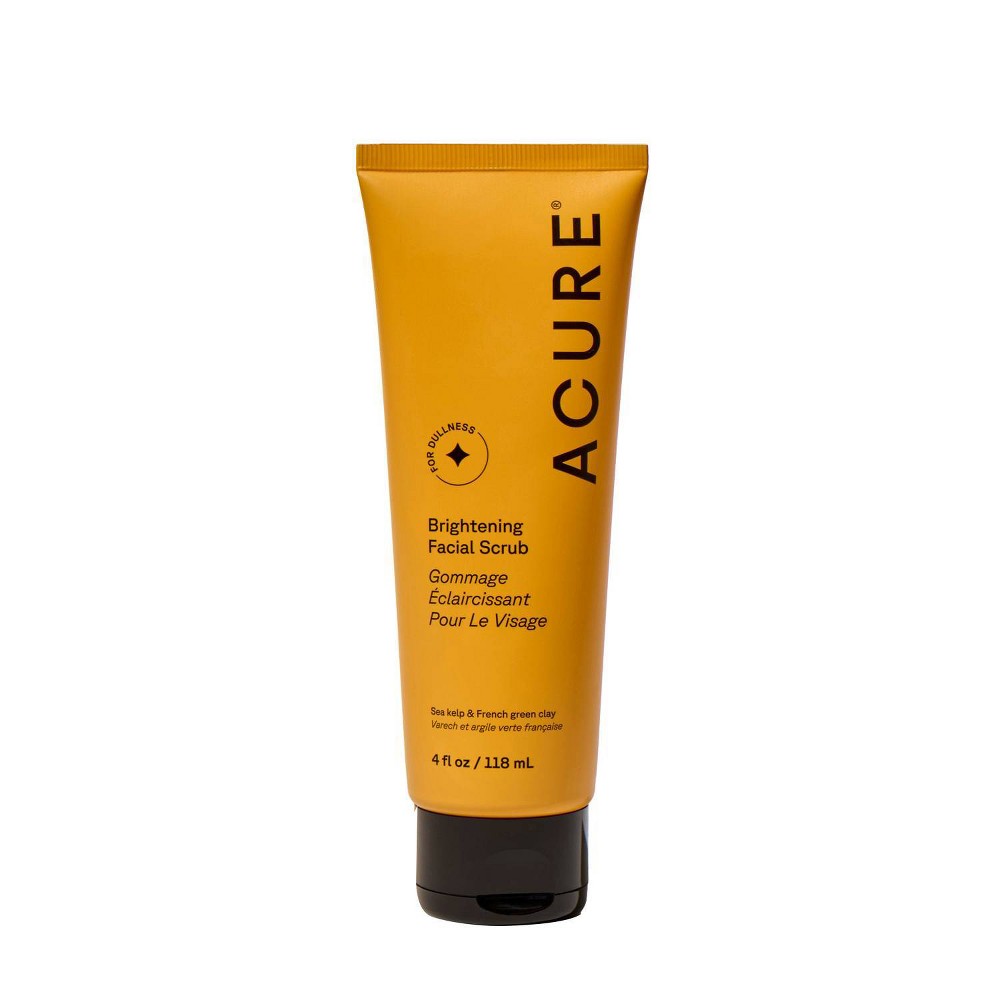

Acure Brightening Facial Scrub - Unscented - 4 fl oz: Vegan, Aluminum-Free, Sulfate-Free, Recommended for All Skin Types
Analysis updated August 2026 · How Scout scores
At a glance
Summary
This facial scrub features a blend of natural and beneficial ingredients such as glycerin, aloe vera, and various fruit extracts, which provide hydration, soothing, and antioxidant benefits. The absence of harsh chemicals, synthetic fragrances, and sulfates contributes to its high rating, making it suitable for all skin types, including sensitive skin. The product's formulation is minimally processed, focusing on natural extracts and oils that enhance skin health without introducing potential irritants.
Key ingredients 37
Aloe Barbadensis (Aloe) Leaf JuiceVery Good
Aloe vera is known for its soothing and hydrating properties. It helps in calming irritated skin and provides moisture. It is beneficial for all skin types, especially sensitive skin.
Risks
Generally safe, but may cause allergic reactions in rare cases.
Benefits
Soothes and hydrates the skin effectively.
Chamomilla Recutita (Matricaria) Flower ExtractVery Good
Chamomile extract is known for its calming and anti-inflammatory properties. It helps in soothing irritated skin and reducing redness. It is particularly beneficial for sensitive skin.
Risks
Rare allergic reactions may occur.
Benefits
Calms and soothes the skin effectively.
Calendula Officinalis (Pot Marigold) Flower ExtractVery Good
Calendula extract is known for its healing and anti-inflammatory properties. It helps in soothing and repairing damaged skin. It is particularly beneficial for sensitive and irritated skin.
Risks
Rare allergic reactions may occur.
Benefits
Heals and soothes the skin effectively.
Olea Europaea (Olive) Fruit OilVery Good
Olive oil is rich in antioxidants and healthy fats, which help in moisturizing and nourishing the skin. It also has anti-inflammatory properties. It is beneficial for maintaining soft and supple skin.
Risks
May cause breakouts in very oily skin types.
Benefits
Deeply moisturizes and nourishes the skin.
Argania Spinosa (Argan) Callus Culture ExtractVery Good
Argan extract is known for its nourishing and anti-aging properties. It helps in improving skin elasticity and hydration. It is beneficial for maintaining youthful and healthy skin.
Risks
Generally safe with minimal risk of irritation.
Benefits
Nourishes and improves skin elasticity.
GlycerinGood
Glycerin is a humectant that attracts moisture to the skin, helping to keep it hydrated. It is widely used in skincare for its moisturizing properties. It is generally well-tolerated and beneficial for all skin types.
Risks
Rarely, it may cause irritation in very sensitive skin.
Benefits
Excellent for moisturizing and maintaining skin hydration.
Citrus Limon (Lemon) PeelGood
Lemon peel contains natural acids that can help in exfoliating and brightening the skin. It also has antioxidant properties. However, it can be irritating to sensitive skin.
Risks
Potential for skin irritation, especially in sunlight.
Benefits
Brightens skin and provides antioxidant protection.
Laminaria Digitata (Algae) ExtractGood
Algae extract is rich in minerals and antioxidants, which help in nourishing and protecting the skin. It can improve skin hydration and elasticity. It is beneficial for maintaining healthy skin.
Risks
Rarely, it may cause allergic reactions.
Benefits
Nourishes and protects the skin with essential minerals.
Rubus Fruticosus (Blackberry) Fruit ExtractGood
Blackberry extract is rich in antioxidants and vitamins, which help in protecting the skin from environmental damage. It also has anti-inflammatory properties. It is beneficial for maintaining youthful skin.
Risks
Minimal risk of irritation.
Benefits
Protects the skin with antioxidants and reduces inflammation.
Euterpe Oleracea (Acai) Fruit ExtractGood
Acai extract is high in antioxidants, which help in protecting the skin from oxidative stress. It also provides essential nutrients for skin health. It is beneficial for maintaining a healthy complexion.
Risks
Generally safe with minimal risk of irritation.
Benefits
Provides antioxidant protection and nourishes the skin.
Rosa Canina (Dog Rose) Fruit ExtractGood
Rosehip extract is rich in vitamins and essential fatty acids, which help in nourishing and rejuvenating the skin. It also has antioxidant properties. It is beneficial for improving skin texture and tone.
Risks
Minimal risk of irritation.
Benefits
Nourishes and rejuvenates the skin with essential nutrients.
Aspalathus Linearis (Rooibos) Leaf ExtractGood
Rooibos extract is rich in antioxidants, which help in protecting the skin from environmental damage. It also has anti-inflammatory properties. It is beneficial for maintaining healthy and youthful skin.
Risks
Minimal risk of irritation.
Benefits
Protects the skin with antioxidants and reduces inflammation.
Punica Granatum (Pomegranate) ExtractGood
Pomegranate extract is high in antioxidants and vitamins, which help in protecting and nourishing the skin. It also promotes skin regeneration. It is beneficial for maintaining a healthy and radiant complexion.
Risks
Generally safe with minimal risk of irritation.
Benefits
Nourishes and protects the skin with antioxidants.
Sodium PCAGood
Sodium PCA is a natural component of the skin's moisturizing factor, helping to maintain hydration. It is highly effective in attracting moisture to the skin. It is beneficial for keeping the skin hydrated and supple.
Risks
Generally safe with minimal risk of irritation.
Benefits
Maintains skin hydration and suppleness.
KaolinGood
Beneficial ingredient — whole-food or functional value in this product class.
Risks
May cause dryness if overused.
Benefits
Absorbs excess oil and purifies the skin.
GluconolactoneGood
Gluconolactone is a polyhydroxy acid that provides gentle exfoliation and hydration. It is suitable for sensitive skin and helps in improving skin texture. It is beneficial for maintaining smooth and hydrated skin.
Risks
Generally safe with minimal risk of irritation.
Benefits
Exfoliates gently and hydrates the skin.
WaterNeutral
Water is a common solvent used in cosmetics to dissolve other ingredients. It helps in forming emulsions and is essential for hydration. It does not have any direct benefits or risks.
Benefits
Provides a base for other ingredients and helps in hydration.
Juglans Regia (Walnut) Shell PowderNeutral
Walnut shell powder is used as a natural exfoliant to remove dead skin cells. It provides physical exfoliation which can improve skin texture. However, it may be too abrasive for sensitive skin.
Risks
Can cause micro-tears in the skin if used too aggressively.
Benefits
Helps in exfoliating and smoothing the skin surface.
Sodium Methyl Cocoyl TaurateNeutral
This is a mild surfactant derived from coconut oil, used to cleanse the skin without stripping natural oils. It is considered gentle and suitable for sensitive skin. It does not have significant benefits or risks.
Risks
Minimal risk of irritation compared to harsher surfactants.
Benefits
Gently cleanses the skin without causing dryness.
MontmorilloniteNeutral
Montmorillonite is a type of clay used for its absorbent properties. It helps in removing excess oil and impurities from the skin. It is generally safe and effective for oily skin types.
Risks
May cause dryness if overused.
Benefits
Absorbs excess oil and purifies the skin.
Mentha Viridis (Spearmint) Leaf OilNeutral
Spearmint oil provides a refreshing scent and has mild antibacterial properties. It can invigorate the skin but may cause irritation in sensitive individuals. It is used primarily for its aromatic properties.
Risks
Potential for skin irritation, especially in sensitive skin.
Benefits
Provides a refreshing sensation and mild antibacterial effects.
Salvia Officinalis (Sage) OilNeutral
Sage oil has antimicrobial and antioxidant properties, which can help in protecting the skin. It is used for its aromatic and preservative qualities. However, it may cause irritation in sensitive skin.
Risks
Potential for skin irritation.
Benefits
Offers antimicrobial and antioxidant benefits.
Cymbopogon Flexuosus (Lemon Grass) Leaf OilNeutral
Lemongrass oil is known for its antimicrobial and astringent properties. It can help in toning the skin and reducing oiliness. However, it may cause irritation in sensitive skin.
Risks
Potential for skin irritation, especially in sensitive skin.
Benefits
Helps in toning and reducing oiliness.
Lavandula Hybrida OilNeutral
Lavender oil is known for its calming and antimicrobial properties. It is used for its soothing scent and potential skin benefits. However, it may cause irritation in sensitive skin.
Risks
Potential for skin irritation.
Benefits
Calms and provides antimicrobial benefits.
IsomaltNeutral
Isomalt is a sugar substitute used as a humectant in cosmetics. It helps in retaining moisture in the skin. It is generally safe and non-irritating.
Risks
Minimal risk of irritation.
Benefits
Helps in retaining skin moisture.
Cellulose GumNeutral
Cellulose gum is used as a thickening agent in cosmetics. It helps in stabilizing formulations and improving texture. It is generally safe and non-irritating.
Risks
Minimal risk of irritation.
Benefits
Stabilizes formulations and improves texture.
Glyceryl LaurateNeutral
Glyceryl laurate is used as an emulsifier and surfactant in cosmetics. It helps in mixing oil and water components. It is generally safe and non-irritating.
Risks
Minimal risk of irritation.
Benefits
Helps in emulsifying and stabilizing formulations.
Sodium Lauroyl LactylateNeutral
Sodium lauroyl lactylate is a mild surfactant used for its cleansing properties. It helps in removing dirt and oil from the skin. It is generally considered gentle and safe for most skin types.
Risks
Minimal risk of irritation.
Benefits
Gently cleanses the skin without causing dryness.
Sodium LauroamphoacetateNeutral
Sodium lauroamphoacetate is a mild surfactant used for its cleansing properties. It is gentle on the skin and helps in removing impurities. It is generally safe and non-irritating.
Risks
Minimal risk of irritation.
Benefits
Gently cleanses the skin without causing dryness.
Sodium Cocoyl IsethionateNeutral
Sodium cocoyl isethionate is a mild surfactant derived from coconut oil. It is used for its cleansing properties and is gentle on the skin. It is generally safe and non-irritating.
Risks
Minimal risk of irritation.
Benefits
Gently cleanses the skin without causing dryness.
IlliteNeutral
Illite is a type of clay used for its absorbent properties. It helps in removing excess oil and impurities from the skin. It is generally safe and effective for oily skin types.
Risks
May cause dryness if overused.
Benefits
Absorbs excess oil and purifies the skin.
EthylhexylglycerinNeutral
Ethylhexylglycerin is used as a preservative and skin conditioning agent. It helps in improving the shelf life of products and provides mild antimicrobial effects. It is generally safe and non-irritating.
Risks
Minimal risk of irritation.
Benefits
Improves product shelf life and provides mild antimicrobial effects.
Phenethyl AlcoholNeutral
Phenethyl alcohol is used as a preservative and fragrance component. It helps in preventing microbial growth and provides a mild floral scent. It is generally safe and non-irritating.
Risks
Minimal risk of irritation.
Benefits
Prevents microbial growth and provides a mild scent.
Chlorophyllin-Copper ComplexNeutral
Chlorophyllin-copper complex is used for its antioxidant and colorant properties. It helps in protecting the skin from oxidative stress and provides a natural green color. It is generally safe and non-irritating.
Risks
Minimal risk of irritation.
Benefits
Provides antioxidant protection and natural coloring.
LecithinBad
Processed additive flagged under Scout's ingredient doctrine.
Risks
Minimal risk of irritation.
Benefits
Improves skin texture and hydration.
CarrageenanBad
Processed additive flagged under Scout's ingredient doctrine.
Risks
Minimal risk of irritation.
Benefits
Improves texture and consistency of formulations.
Potassium SorbateBad
Synthetic preservative — flagged in daily-use products.
Risks
Minimal risk of irritation.
Benefits
Prevents microbial growth and extends product shelf life.
Processing
Processed Foods
Get the full breakdown in the Scout appTake Scout shopping
Scan any product to see lab results, healthy alternatives, and your personalized analysis.
Download on theApp Store GET IT ONGoogle PlayAmazon pricing & content
Amazon price as of . Product prices and availability are accurate as of the date/time indicated and are subject to change. Any price and availability information displayed on Amazon.com at the time of purchase will apply to the purchase of this product.
CERTAIN CONTENT THAT APPEARS ON THIS SITE COMES FROM AMAZON. THIS CONTENT IS PROVIDED “AS IS” AND IS SUBJECT TO CHANGE OR REMOVAL AT ANY TIME.