
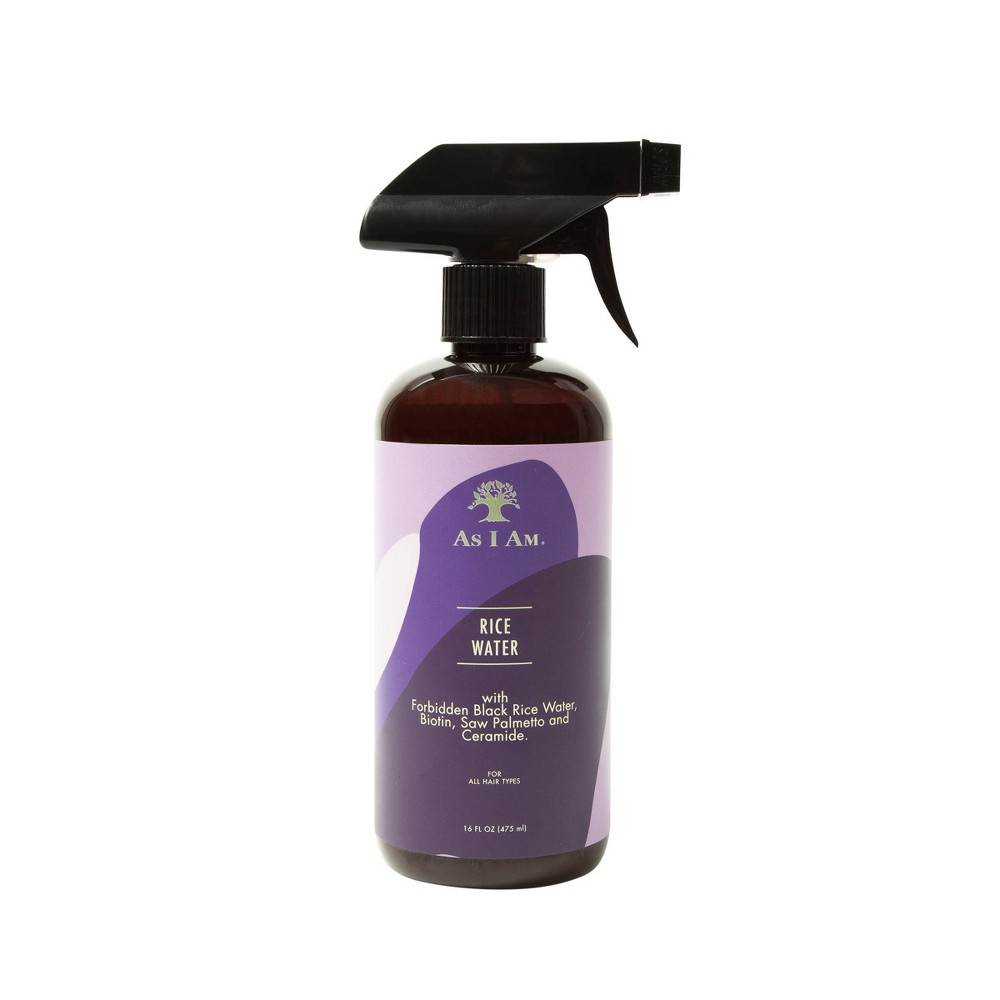
As I Am Rice Water Hair Spray - 16 fl oz: Vegan, Paraben-Free, Moisturizing, Liquid
Analysis updated August 2026 · How Scout scores
At a glance
Summary
This hair spray contains a variety of beneficial ingredients such as rice extract, ceramides, and copper peptides, which are known for their moisturizing and skin-regenerating properties. The product is free from parabens and other harsh chemicals, contributing to its safety profile. However, it is a processed product, which slightly limits its score despite the clean ingredient list.
Key ingredients 22
Copper Tripeptide-1Very Good
Copper Tripeptide-1 is a peptide known for its skin-regenerating properties. It promotes collagen production and has anti-aging benefits. It is highly regarded for its ability to improve skin elasticity and reduce wrinkles.
Risks
Generally safe with low risk of irritation.
Benefits
Promotes collagen production and improves skin elasticity.
Copper Tripeptide-34Very Good
Similar to Copper Tripeptide-1, this peptide supports skin regeneration and repair. It is effective in reducing signs of aging and enhancing skin firmness. It is a potent ingredient for maintaining youthful skin.
Risks
Low risk of adverse effects when used in appropriate concentrations.
Benefits
Enhances skin repair and reduces signs of aging.
Helianthus Annuus (Sunflower) Seed OilVery Good
Sunflower seed oil is a natural oil rich in essential fatty acids and vitamin E. It is highly moisturizing and helps to maintain the skin's natural barrier. It is well-tolerated and beneficial for all skin types.
Risks
Low risk of irritation or allergic reactions.
Benefits
Moisturizes and protects the skin barrier.
BetaineGood
Betaine is a natural compound known for its moisturizing properties. It helps to maintain skin hydration and improve texture. It is generally well-tolerated and beneficial for skin health.
Risks
Rarely, it may cause irritation in sensitive individuals.
Benefits
Enhances skin moisture retention and provides a soothing effect.
Oryza Sativa (Rice) ExtractGood
Rice extract is rich in antioxidants and has soothing properties. It can help protect the skin from environmental damage and improve skin texture. It is a natural ingredient with a long history of use in skincare.
Risks
Generally considered safe with minimal risk of irritation.
Benefits
Provides antioxidant protection and soothes the skin.
PhytosterolsGood
Phytosterols are plant-derived compounds that help to reinforce the skin barrier. They are known for their moisturizing and anti-inflammatory properties. They are beneficial for maintaining skin health and reducing irritation.
Risks
Generally safe with low risk of adverse effects.
Benefits
Enhances skin barrier function and reduces inflammation.
Ceramide NPGood
Ceramide NP is a skin-identical lipid that helps to restore the skin barrier. It is crucial for maintaining skin hydration and protecting against environmental damage. It is highly beneficial for dry and sensitive skin types.
Benefits
Restores and strengthens the skin barrier, improving hydration.
BiotinGood
Beneficial ingredient — whole-food or functional value in this product class.
Risks
No known risks when used topically.
Benefits
May support hair strength and health.
InositolGood
Beneficial ingredient — whole-food or functional value in this product class.
Benefits
May aid in moisture retention and support hair health.
Rosmarinus Officinalis (Rosemary) Leaf ExtractGood
Rosemary extract is an antioxidant-rich ingredient with antimicrobial properties. It helps to protect the skin from environmental damage and reduce inflammation. It is a beneficial addition to skincare formulations.
Risks
May cause irritation in sensitive individuals.
Benefits
Provides antioxidant protection and reduces inflammation.
GlycerinGood
Glycerin is a humectant that attracts moisture to the skin. It is highly effective in maintaining skin hydration and improving texture. It is a staple ingredient in moisturizing products.
Risks
Generally safe with minimal risk of irritation.
Benefits
Enhances skin hydration and improves texture.
Aqua/Water/EauNeutral
Water is a common solvent used in cosmetic formulations. It helps dissolve other ingredients and provides a base for the product. It does not have any direct benefits or risks.
Benefits
Provides a medium for other ingredients to be delivered effectively.
Serenoa Serrulata Fruit ExtractNeutral
This extract is often used for its potential anti-inflammatory properties. It is more commonly associated with hair care products for its role in supporting hair health. Its effects in cosmetics are not well-documented.
Risks
Limited evidence on its efficacy in topical applications.
Benefits
May support hair health and reduce inflammation.
CaffeineNeutral
Standard formulation ingredient — neither beneficial nor harmful at typical use.
Risks
May cause irritation in sensitive skin types.
Benefits
Reduces puffiness and improves skin tone.
Polyglyceryl-10 LaurateNeutral
This is an emulsifier used to stabilize formulations. It helps to blend oil and water components in cosmetic products. It is considered safe and non-irritating.
Benefits
Stabilizes formulations and improves texture.
Polyglyceryl-3 Betainate AcetateNeutral
This ingredient functions as a conditioning agent in cosmetics. It helps to improve the feel of the product on the skin or hair. It is generally considered safe and effective.
Risks
No known risks when used in cosmetic formulations.
Benefits
Improves product feel and conditioning properties.
Sodium Lauroyl LactylateNeutral
Sodium Lauroyl Lactylate is a mild surfactant and emulsifier. It helps to cleanse and stabilize formulations without being harsh. It is considered safe and non-irritating.
Risks
Low risk of irritation compared to harsher surfactants.
Benefits
Cleanses gently and stabilizes formulations.
Sodium Cocoyl GlutamateNeutral
This is a mild surfactant derived from coconut oil and glutamic acid. It is used for its gentle cleansing properties and is suitable for sensitive skin. It is considered safe and effective in cosmetic formulations.
Risks
Minimal risk of irritation or allergic reactions.
Benefits
Provides gentle cleansing suitable for sensitive skin.
Citric AcidNeutral
Citric acid is used to adjust the pH of cosmetic formulations. It can also act as a mild exfoliant and antioxidant. It is generally safe when used in appropriate concentrations.
Risks
May cause irritation if used in high concentrations.
Benefits
Helps maintain product stability and provides mild exfoliation.
EthylhexylglycerinNeutral
Ethylhexylglycerin is used as a preservative and skin conditioning agent. It helps to enhance the efficacy of other preservatives and improve skin feel. It is considered safe and effective in cosmetic products.
Risks
Low risk of irritation or allergic reactions.
Benefits
Enhances preservation and improves skin feel.
Potassium SorbateBad
Synthetic preservative — flagged in daily-use products.
Risks
May cause irritation in sensitive individuals.
Benefits
Prevents microbial growth and extends product shelf life.
Sodium BenzoateBad
Synthetic preservative that can form benzene in the presence of vitamin C.
Risks
May cause irritation or allergic reactions in sensitive individuals.
Benefits
Inhibits microbial growth and preserves product integrity.
Get the full breakdown in the Scout appTake Scout shopping
Scan any product to see lab results, healthy alternatives, and your personalized analysis.
Download on theApp Store GET IT ONGoogle PlayAmazon pricing & content
Amazon price as of . Product prices and availability are accurate as of the date/time indicated and are subject to change. Any price and availability information displayed on Amazon.com at the time of purchase will apply to the purchase of this product.
CERTAIN CONTENT THAT APPEARS ON THIS SITE COMES FROM AMAZON. THIS CONTENT IS PROVIDED “AS IS” AND IS SUBJECT TO CHANGE OR REMOVAL AT ANY TIME.