
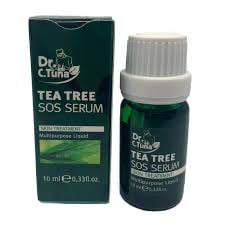
Tea Tree Serum - Dr. C. Tuna
Summary
The Tea Tree Serum by Dr. C. Tuna contains beneficial natural ingredients like tea tree oil, which is known for its skin-soothing properties. However, the presence of synthetic fragrance can be a concern due to potential skin irritation and allergy risks. The product is moderately processed, which affects its overall rating despite the inclusion of some natural components.
At a glance
Key ingredients 9
Aqua/Water
Aqua, or water, is the most common ingredient in cosmetics, serving as a solvent. It helps dissolve other ingredients and provides a base for the formulation. It is generally considered safe and non-irritating.
Risks
There are no significant risks associated with water in cosmetics.
Benefits
Water hydrates the skin and helps in the absorption of other ingredients.
Alcohol Denat.
Alcohol Denat. is used as a solvent and astringent in cosmetics. It can help other ingredients penetrate the skin more effectively. However, it can be drying and irritating to sensitive skin.
Risks
It may cause dryness and irritation, especially in sensitive skin types.
Benefits
It helps in the quick absorption of the product and provides a refreshing feel.
Polysorbate-20
Polysorbate-20 is an emulsifier that helps mix oil and water-based ingredients. It is commonly used to stabilize formulations. It is generally considered safe for use in cosmetics.
Risks
There is a low risk of skin irritation or allergic reactions.
Benefits
It improves the texture and consistency of the product, enhancing user experience.
Tea Tree Oil (Melaleuca Alternifolia Leaf Oil)
Tea Tree Oil is known for its antimicrobial and anti-inflammatory properties. It is often used to treat acne and other skin conditions. It is a natural ingredient with a long history of use in skincare.
Risks
In some cases, it can cause skin irritation or allergic reactions.
Benefits
It helps reduce acne and soothes irritated skin.
PEG-40 Hydrogenated Castor Oil
PEG-40 Hydrogenated Castor Oil is used as an emulsifier and surfactant. It helps to blend oil and water components in formulations. It is generally considered safe but may contain impurities.
Risks
There is a potential risk of contamination with harmful substances like 1,4-dioxane.
Benefits
It enhances the texture and stability of the product.
Limonene
Limonene is a fragrance ingredient and solvent derived from citrus oils. It provides a pleasant scent and can enhance the penetration of other ingredients. However, it can oxidize and cause skin irritation.
Risks
Oxidized limonene can cause skin irritation and allergic reactions.
Benefits
It imparts a fresh citrus scent and can have antioxidant properties.
Thymus Vulgaris Leaf Extract
Thymus Vulgaris Leaf Extract, or thyme extract, is known for its antimicrobial and antioxidant properties. It is used to help preserve the product and protect the skin. It is a natural ingredient with beneficial effects.
Risks
There is a low risk of skin irritation or allergic reactions.
Benefits
It helps protect the skin from environmental damage and supports skin health.
Rosmarinus Officinalis Leaf Extract
Rosmarinus Officinalis Leaf Extract, or rosemary extract, is used for its antioxidant and antimicrobial properties. It helps preserve the product and protect the skin. It is a natural ingredient with a long history of use in skincare.
Risks
There is a low risk of skin irritation or allergic reactions.
Benefits
It helps protect the skin from free radicals and supports skin health.
Sodium Benzoate
Sodium Benzoate is a preservative used to prevent microbial growth in cosmetics. It is effective in low concentrations and is generally considered safe. However, it can cause irritation in sensitive individuals.
Risks
It may cause skin irritation or allergic reactions in sensitive individuals.
Benefits
It helps extend the shelf life of the product by preventing microbial growth.
Processing
Processed Foods
Get the full breakdown in the Scout app
Scan any product to see lab results, healthy alternatives, and your personalized analysis.
Download on theApp Store