



At a glance
Summary
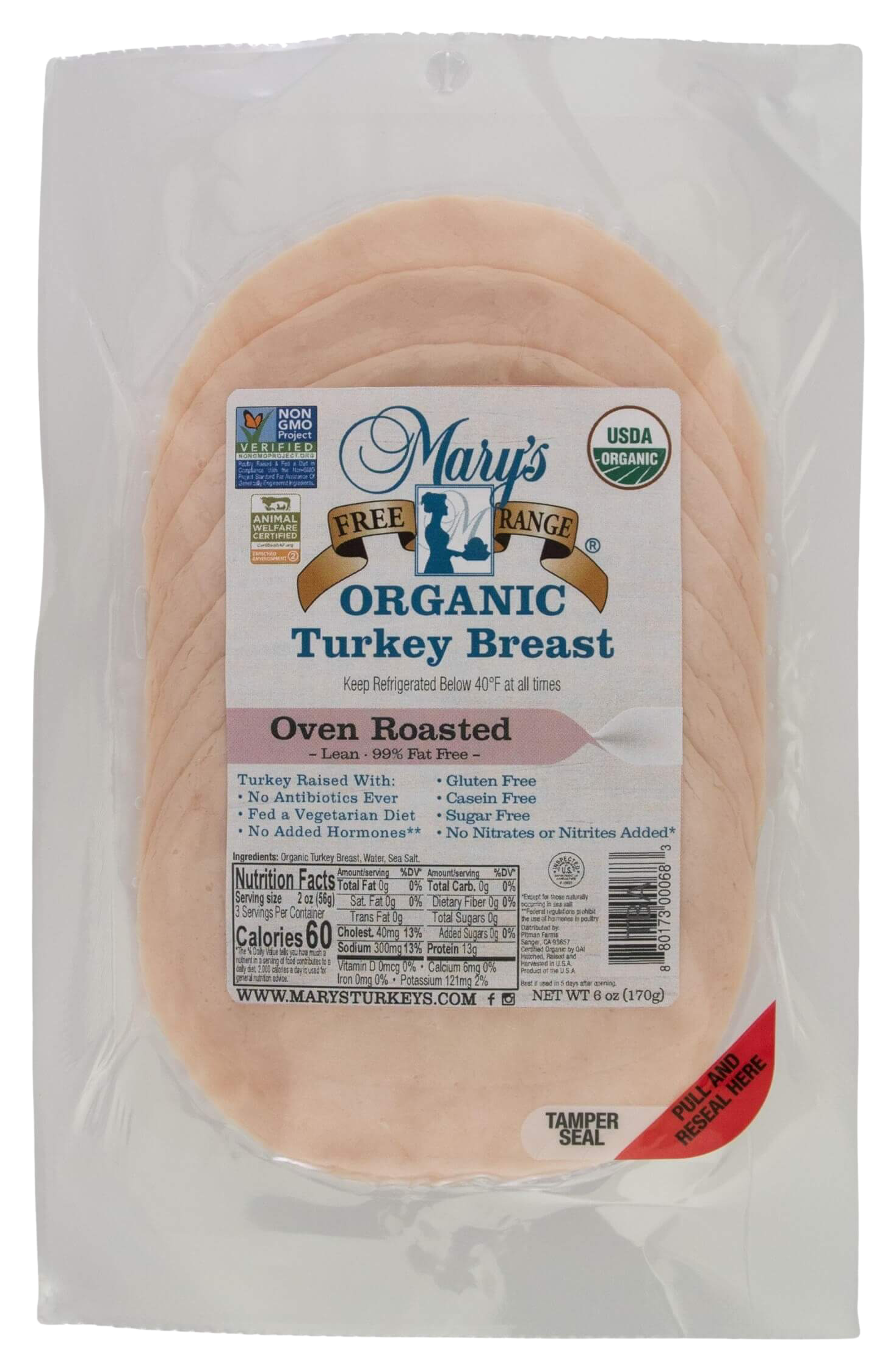
This oven roasted turkey breast is primarily composed of turkey breast, which is a high-quality source of lean protein and minimally processed. The inclusion of sea salt adds flavor without artificial additives. However, the presence of cane sugar, a refined sugar, slightly detracts from its nutritional profile, as it contributes extra calories without essential nutrients.
Key ingredients 4
Turkey BreastGood
Turkey breast is a high-quality source of lean protein, providing essential amino acids. It is minimally processed and typically free from additives. Compared to other meats, it is lower in fat and calories, making it a healthy choice.
Benefits
Rich in protein, which is essential for muscle growth and repair. Low in fat, making it a heart-healthy option.
Sea SaltGood
Sea salt is a minimally processed source of sodium and trace minerals. It is often preferred over refined salt due to its natural mineral content. Sea salt can enhance flavor without the need for artificial additives.
Risks
Excessive consumption of sodium can lead to high blood pressure and other cardiovascular issues.
Benefits
Provides essential sodium and trace minerals that are important for maintaining electrolyte balance.
WaterNeutral
Water is used as a processing aid and does not contribute any nutritional value. It is a common ingredient in many food products to maintain moisture. There are no health concerns associated with water as an ingredient.
See more about Water →Cane SugarBad
Cane sugar is a refined sugar that can contribute to increased calorie intake without providing essential nutrients. It is associated with various health issues when consumed in excess, such as obesity and dental cavities. Compared to natural sweeteners, it lacks additional nutritional benefits.
Risks
High consumption of refined sugars can lead to weight gain, insulin resistance, and increased risk of chronic diseases.
Processing
Processed Culinary Ingredients
Get the full breakdown in the Scout appTake Scout shopping
Scan any product to see lab results, healthy alternatives, and your personalized analysis.
Download on theApp Store GET IT ONGoogle Play