
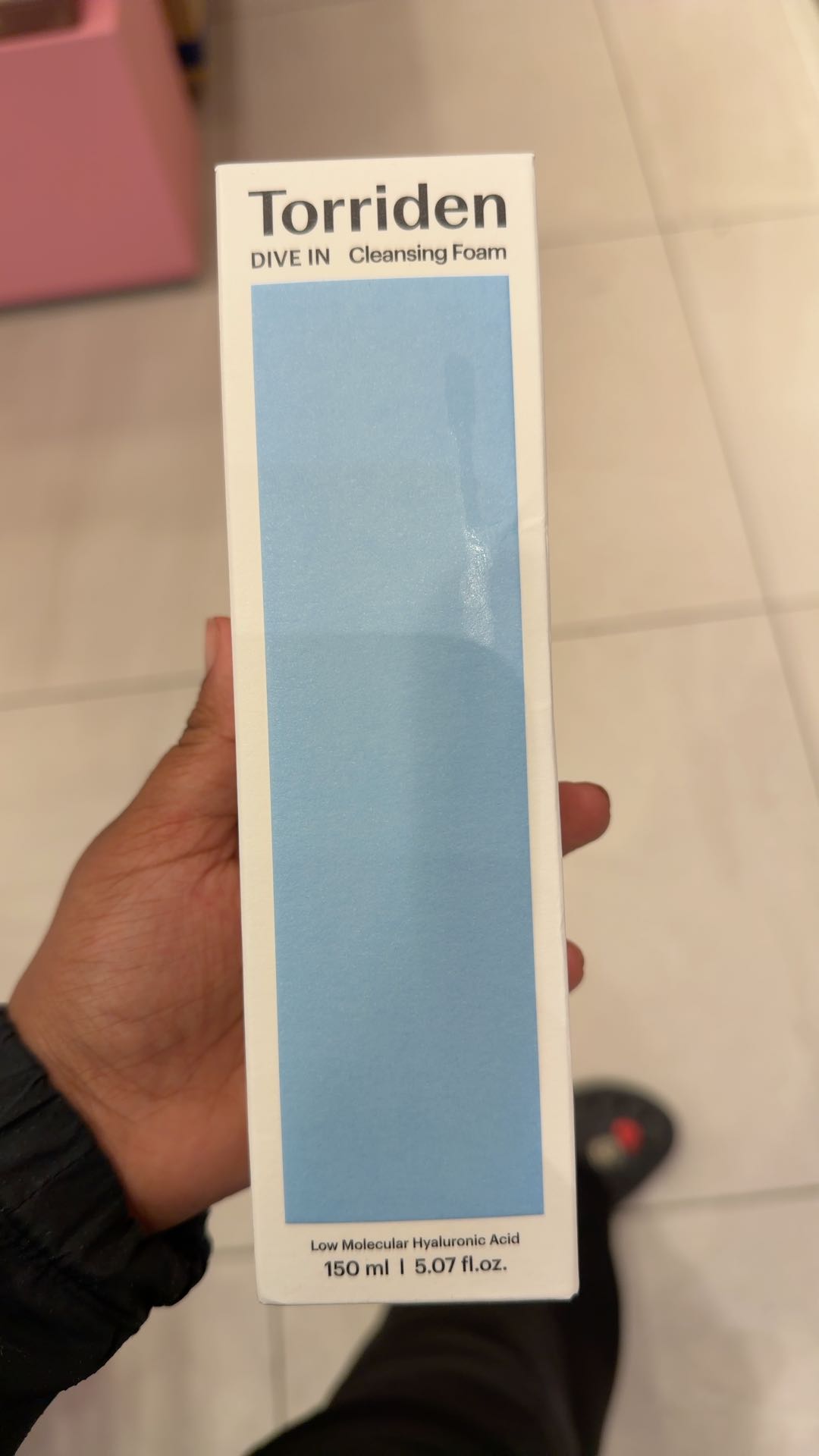

Torriden DIVE-IN Low Molecular Hyaluronic Acid Cleansing Foam
Analysis updated July 2026 · How Scout scores
At a glance
Summary
This cleansing foam features a variety of beneficial ingredients such as multiple forms of hyaluronic acid, which provide deep hydration and improve skin texture. The inclusion of mild surfactants like Sodium Cocoyl Glycinate and Sodium Lauroyl Glutamate ensures gentle cleansing without stripping natural oils. However, the presence of synthetic preservatives and processing agents like Polyquaternium-67 and Disodium EDTA slightly lowers the score due to their potential for irritation and environmental concerns.
Key ingredients 32
Hydrolyzed Hyaluronic AcidVery Good
Hydrolyzed Hyaluronic Acid penetrates deeper into the skin due to its smaller molecular size. It provides long-lasting hydration and improves skin texture. It is beneficial for dry and dehydrated skin.
Benefits
Enhances deep skin hydration and elasticity.
Sodium Acetylated HyaluronateVery Good
Sodium Acetylated Hyaluronate is a modified form of hyaluronic acid with enhanced moisture retention properties. It provides superior hydration and skin barrier support. It is effective in reducing dryness and improving skin texture.
Benefits
Offers enhanced hydration and skin barrier protection.
Hydroxypropyltrimonium HyaluronateVery Good
Hydroxypropyltrimonium Hyaluronate is a cationic form of hyaluronic acid that adheres well to the skin. It provides long-lasting hydration and improves skin feel. It is suitable for all skin types.
Benefits
Improves skin hydration and texture.
Hydrolyzed Sodium HyaluronateVery Good
Hydrolyzed Sodium Hyaluronate is a low molecular weight form of hyaluronic acid. It penetrates the skin more effectively, providing deep hydration. It is beneficial for improving skin elasticity and reducing fine lines.
Benefits
Enhances deep hydration and skin elasticity.
Sodium Hyaluronate CrosspolymerVery Good
Sodium Hyaluronate Crosspolymer forms a protective film on the skin, providing sustained hydration. It enhances the skin's moisture barrier and reduces water loss. It is suitable for all skin types.
Benefits
Provides long-lasting hydration and skin protection.
Potassium HyaluronateVery Good
Potassium Hyaluronate is a salt form of hyaluronic acid that offers excellent moisture retention. It hydrates the skin and improves its texture. It is effective in reducing dryness and fine lines.
Benefits
Enhances skin hydration and smoothness.
PanthenolVery Good
Panthenol, also known as pro-vitamin B5, is a moisturizing agent that soothes and repairs the skin. It enhances skin barrier function and reduces irritation. It is suitable for sensitive and dry skin.
Risks
Rarely, it may cause mild irritation in sensitive individuals.
Benefits
Improves skin hydration and reduces inflammation.
AllantoinVery Good
Allantoin is a skin-soothing agent that promotes cell regeneration. It helps calm irritated skin and improves skin texture. It is beneficial for sensitive and dry skin types.
Benefits
Soothes and protects the skin, promoting healing.
TocopherolVery Good
Tocopherol, or Vitamin E, is an antioxidant that protects the skin from free radical damage. It improves skin hydration and reduces signs of aging. It is beneficial for all skin types.
Risks
Rarely, it may cause mild irritation in sensitive individuals.
Benefits
Protects the skin from oxidative stress and enhances moisture.
Camellia Sinensis Leaf ExtractVery Good
Camellia Sinensis Leaf Extract, or Green Tea Extract, is rich in antioxidants that protect the skin from environmental damage. It soothes and calms irritated skin. It is suitable for all skin types.
Benefits
Provides antioxidant protection and soothes the skin.
Chamomilla Recutita (Matricaria) ExtractVery Good
Chamomilla Recutita Extract, or Chamomile Extract, is known for its soothing and anti-inflammatory properties. It calms irritated skin and reduces redness. It is beneficial for sensitive and inflamed skin.
Benefits
Soothes and calms the skin, reducing inflammation.
GlycerinGood
Glycerin is a humectant that attracts moisture to the skin. It helps maintain skin hydration and improves skin barrier function. It is well-tolerated by most skin types.
Risks
Overuse can lead to a sticky feeling on the skin.
Benefits
It enhances skin moisture levels and smoothness.
Sodium Cocoyl GlycinateGood
Sodium Cocoyl Glycinate is a mild surfactant derived from coconut oil and glycine. It cleanses the skin without stripping natural oils. It is suitable for sensitive skin.
Risks
May cause mild irritation in very sensitive individuals.
Benefits
Provides gentle cleansing and maintains skin's natural moisture.
Sodium Lauroyl GlutamateGood
Sodium Lauroyl Glutamate is a gentle surfactant derived from natural sources. It effectively cleanses the skin while being mild and non-irritating. It is suitable for sensitive skin types.
Risks
Rarely, it may cause mild irritation.
Benefits
Offers gentle cleansing and is biodegradable.
Sodium HyaluronateGood
Sodium Hyaluronate is a form of hyaluronic acid that deeply hydrates the skin. It helps retain moisture and plumps the skin. It is highly effective in improving skin texture.
Benefits
Enhances skin hydration and reduces the appearance of fine lines.
Hyaluronic AcidGood
Hyaluronic Acid is a powerful humectant that attracts and retains moisture in the skin. It improves skin elasticity and smoothness. It is suitable for all skin types.
Benefits
Provides intense hydration and reduces signs of aging.
TrehaloseGood
Trehalose is a sugar that acts as a humectant, helping to retain moisture in the skin. It protects the skin from dehydration and environmental stress. It is suitable for all skin types.
Benefits
Enhances skin hydration and resilience.
Hamamelis Virginiana (Witch Hazel) ExtractGood
Witch Hazel Extract is a natural astringent that helps tighten pores and reduce inflammation. It soothes irritated skin and controls oil production. It is suitable for oily and acne-prone skin.
Risks
May cause dryness or irritation in sensitive skin.
Benefits
Reduces inflammation and tightens pores.
Purified WaterNeutral
Purified water is used as a solvent in cosmetic formulations. It helps dissolve other ingredients and provides a base for the product. It is generally considered safe and non-reactive.
Risks
There are no known risks associated with purified water in cosmetics.
Benefits
It acts as a carrier for active ingredients and hydrates the skin.
Butylene GlycolNeutral
Butylene Glycol is a solvent and humectant that helps improve the texture of cosmetic formulations. It enhances the penetration of other ingredients. It is generally considered safe for use in cosmetics.
Risks
May cause mild irritation in very sensitive skin.
Benefits
Improves product texture and enhances ingredient absorption.
Dipropylene GlycolNeutral
Dipropylene Glycol is a solvent used to improve the texture and spreadability of cosmetic products. It helps dissolve other ingredients and enhances product stability. It is generally considered safe for use in cosmetics.
Risks
May cause mild irritation in very sensitive skin.
Benefits
Improves product texture and stability.
Hydroxypropyl Starch PhosphateNeutral
Hydroxypropyl Starch Phosphate is a modified starch used as a thickening agent in cosmetics. It improves the texture and stability of formulations. It is generally considered safe for use in cosmetics.
Benefits
Enhances product texture and stability.
Glyceryl Stearate SENeutral
Glyceryl Stearate SE is an emulsifier that helps blend water and oil components in cosmetic formulations. It improves product texture and stability. It is generally considered safe for use in cosmetics.
Benefits
Enhances product texture and stability.
Potassium BenzoateNeutral
Potassium Benzoate is a preservative used to prevent microbial growth in cosmetic products. It helps extend the shelf life of formulations. It is generally considered safe for use in cosmetics.
Risks
May cause mild irritation in very sensitive skin.
Benefits
Prevents microbial growth and extends product shelf life.
Sodium ChlorideNeutral
Sodium Chloride, or table salt, is used as a thickening agent in cosmetic formulations. It helps improve the texture and viscosity of products. It is generally considered safe for use in cosmetics.
Risks
May cause mild irritation in very sensitive skin.
Benefits
Improves product texture and viscosity.
Polyquaternium-67Neutral
Polyquaternium-67 is a conditioning agent that improves the feel and texture of cosmetic products. It helps enhance the spreadability and smoothness of formulations. It is generally considered safe for use in cosmetics.
Benefits
Improves product texture and spreadability.
Sodium AcetateNeutral
Sodium Acetate is used as a buffering agent in cosmetic formulations. It helps maintain the pH balance of products. It is generally considered safe for use in cosmetics.
Benefits
Helps maintain product pH balance.
1, 2-HexanediolNeutral
1, 2-Hexanediol is a solvent and preservative used in cosmetic formulations. It helps improve product stability and extend shelf life. It is generally considered safe for use in cosmetics.
Risks
May cause mild irritation in very sensitive skin.
Benefits
Improves product stability and extends shelf life.
Citric AcidNeutral
Citric Acid is used as a pH adjuster in cosmetic formulations. It helps maintain the acidity of products and enhances their stability. It is generally considered safe for use in cosmetics.
Risks
May cause mild irritation in very sensitive skin.
Benefits
Helps maintain product pH and stability.
EthylhexylglycerinNeutral
Ethylhexylglycerin is a preservative and skin conditioning agent used in cosmetics. It helps improve product stability and enhances skin feel. It is generally considered safe for use in cosmetics.
Risks
May cause mild irritation in very sensitive skin.
Benefits
Improves product stability and skin feel.
Malachite ExtractNeutral
Malachite Extract is used for its antioxidant properties in cosmetic formulations. It helps protect the skin from environmental stressors. It is generally considered safe for use in cosmetics.
Benefits
Provides antioxidant protection for the skin.
Disodium EDTABad
Processed additive flagged under Scout's ingredient doctrine.
Risks
May cause mild irritation in very sensitive skin.
Benefits
Enhances product stability and prevents degradation.
Get the full breakdown in the Scout appTake Scout shopping
Scan any product to see lab results, healthy alternatives, and your personalized analysis.
Download on theApp Store GET IT ONGoogle PlayAmazon pricing & content
Amazon price as of . Product prices and availability are accurate as of the date/time indicated and are subject to change. Any price and availability information displayed on Amazon.com at the time of purchase will apply to the purchase of this product.
CERTAIN CONTENT THAT APPEARS ON THIS SITE COMES FROM AMAZON. THIS CONTENT IS PROVIDED “AS IS” AND IS SUBJECT TO CHANGE OR REMOVAL AT ANY TIME.