
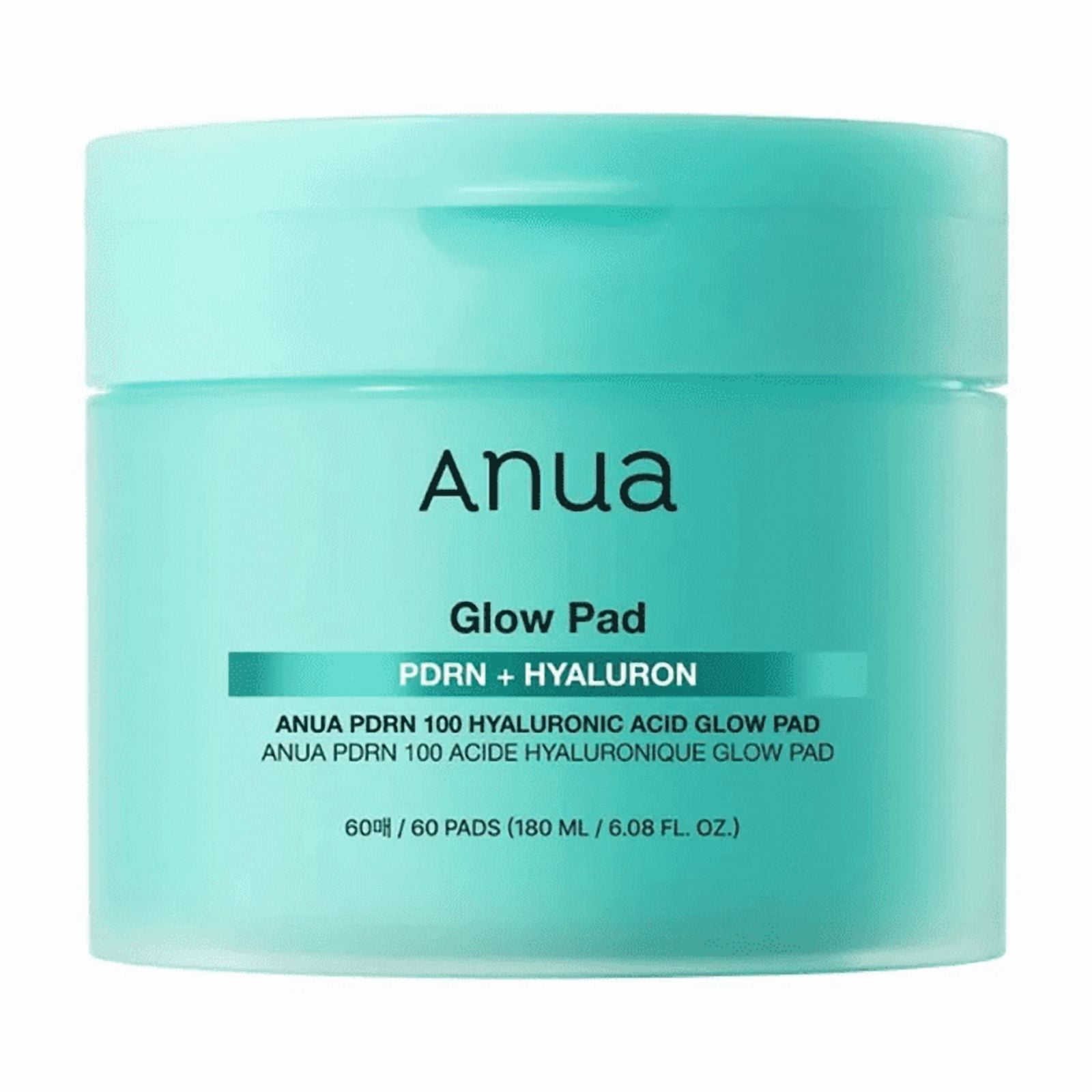

Anua PDRN 100 Hyaluronic Acid Glow Pads
Analysis updated August 2026 · How Scout scores
At a glance
Summary
This product contains a variety of beneficial ingredients such as niacinamide, glycerin, and aloe extract, which are known for their moisturizing and soothing properties. The presence of natural extracts like turmeric and neem further enhances its skin-friendly profile. However, the inclusion of synthetic compounds like disodium EDTA and the processed nature of the product slightly reduce its overall score.
Key ingredients 45
Aloe Barbadensis Flower ExtractVery Good
Aloe Barbadensis Flower Extract is known for its soothing and moisturizing properties. It helps to calm irritated skin and provide hydration. It is highly beneficial for maintaining healthy skin.
Risks
There are minimal risks, though it may cause irritation in very sensitive skin.
Benefits
It calms irritated skin and provides hydration.
Hydrolyzed Hyaluronic AcidVery Good
Hydrolyzed Hyaluronic Acid is a smaller molecule form of hyaluronic acid that penetrates deeper into the skin. It helps to improve skin hydration and elasticity. It is highly beneficial for maintaining youthful, hydrated skin.
Risks
There are minimal risks associated with its use.
Benefits
It improves skin hydration and elasticity.
NiacinamideGood
Niacinamide is a form of Vitamin B3 that is known for its anti-inflammatory and skin-brightening properties. It helps to improve skin texture and reduce the appearance of pores. It is highly beneficial for maintaining healthy skin.
Risks
There are minimal risks, though high concentrations may cause mild irritation.
Benefits
It improves skin texture, reduces pores, and has anti-inflammatory properties.
GlycerinGood
Glycerin is a well-known humectant that attracts moisture to the skin. It helps to keep the skin hydrated and soft. It is widely used in cosmetics for its moisturizing properties.
Risks
There are minimal risks, though it may cause irritation in very sensitive skin.
Benefits
It helps to keep the skin hydrated and soft.
Melia Azadirachta Leaf ExtractGood
Melia Azadirachta Leaf Extract is known for its antibacterial and anti-inflammatory properties. It helps to soothe and protect the skin. It is beneficial for maintaining healthy skin.
Risks
There are minimal risks, though it may cause irritation in very sensitive skin.
Benefits
It soothes and protects the skin with antibacterial properties.
AdenosineGood
Adenosine is known for its anti-aging and skin-soothing properties. It helps to improve the appearance of fine lines and wrinkles. It is beneficial for maintaining youthful skin.
Risks
There are minimal risks associated with its use.
Benefits
It improves the appearance of fine lines and has anti-aging properties.
Melia Azadirachta Flower ExtractGood
Melia Azadirachta Flower Extract is known for its soothing and antibacterial properties. It helps to calm and protect the skin. It is beneficial for maintaining healthy skin.
Risks
There are minimal risks, though it may cause irritation in very sensitive skin.
Benefits
It calms and protects the skin with antibacterial properties.
Hydrolyzed CollagenGood
Hydrolyzed Collagen is known for its moisturizing and skin-firming properties. It helps to improve skin elasticity and reduce the appearance of fine lines. It is beneficial for maintaining youthful skin.
Risks
There are minimal risks associated with its use.
Benefits
It improves skin elasticity and reduces fine lines.
Curcuma Longa (Turmeric) Root ExtractGood
Curcuma Longa Root Extract is known for its anti-inflammatory and antioxidant properties. It helps to soothe and protect the skin. It is beneficial for maintaining healthy skin.
Risks
There are minimal risks, though it may cause irritation in very sensitive skin.
Benefits
It soothes and protects the skin with antioxidant properties.
Sodium HyaluronateGood
Sodium Hyaluronate is a form of hyaluronic acid known for its excellent moisturizing properties. It helps to retain moisture and improve skin hydration. It is highly beneficial for maintaining healthy, hydrated skin.
Risks
There are minimal risks associated with its use.
Benefits
It retains moisture and improves skin hydration.
Hyaluronic AcidGood
Hyaluronic Acid is a powerful humectant that attracts and retains moisture in the skin. It helps to keep the skin hydrated and plump. It is highly beneficial for maintaining youthful, hydrated skin.
Risks
There are minimal risks associated with its use.
Benefits
It keeps the skin hydrated and plump.
Collagen ExtractGood
Collagen Extract is known for its moisturizing and skin-firming properties. It helps to improve skin elasticity and reduce the appearance of fine lines. It is beneficial for maintaining youthful skin.
Risks
There are minimal risks associated with its use.
Benefits
It improves skin elasticity and reduces fine lines.
Hexapeptide-11Good
Hexapeptide-11 is known for its anti-aging and skin-firming properties. It helps to improve skin elasticity and reduce the appearance of fine lines. It is beneficial for maintaining youthful skin.
Risks
There are minimal risks associated with its use.
Benefits
It improves skin elasticity and reduces fine lines.
Oligopeptide-1Good
Oligopeptide-1 is known for its skin-repairing and anti-aging properties. It helps to improve skin texture and reduce the appearance of fine lines. It is beneficial for maintaining youthful skin.
Risks
There are minimal risks associated with its use.
Benefits
It improves skin texture and reduces fine lines.
Oligopeptide-2Good
Oligopeptide-2 is known for its skin-repairing and anti-aging properties. It helps to improve skin texture and reduce the appearance of fine lines. It is beneficial for maintaining youthful skin.
Risks
There are minimal risks associated with its use.
Benefits
It improves skin texture and reduces fine lines.
Oligopeptide-3Good
Oligopeptide-3 is known for its skin-repairing and anti-aging properties. It helps to improve skin texture and reduce the appearance of fine lines. It is beneficial for maintaining youthful skin.
Risks
There are minimal risks associated with its use.
Benefits
It improves skin texture and reduces fine lines.
WaterNeutral
Water is a common solvent used in cosmetics to dissolve other ingredients. It helps in the application and absorption of the product. It does not have any direct benefits or risks.
Risks
There are no significant risks associated with water in cosmetics.
Benefits
Water helps in the application and absorption of the product.
Butylene GlycolNeutral
Butylene Glycol is a common humectant that helps to retain moisture in the skin. It also acts as a solvent and improves the texture of the product. It is generally considered safe for use in cosmetics.
Risks
In rare cases, it may cause irritation or allergic reactions in sensitive individuals.
Benefits
It helps to retain moisture and improve the texture of the product.
Glycereth-26Neutral
Glycereth-26 is an ethoxylated glycerin used as a humectant and emollient in cosmetics. It helps to moisturize and soften the skin. It is generally considered safe for use in cosmetics.
Risks
There are minimal risks associated with its use, though it may cause irritation in very sensitive skin.
Benefits
It helps to moisturize and soften the skin.
1,2-HexanediolNeutral
1,2-Hexanediol is a synthetic preservative and moisture-binding agent. It helps to stabilize the product and retain moisture. It is generally considered safe for use in cosmetics.
Risks
There are minimal risks, though it may cause irritation in very sensitive skin.
Benefits
It helps to stabilize the product and retain moisture.
Diethoxyethyl SuccinateNeutral
Diethoxyethyl Succinate is used as a skin-conditioning agent. It helps to improve the texture and feel of the skin. It is generally considered safe for use in cosmetics.
Risks
There are minimal risks associated with its use.
Benefits
It improves the texture and feel of the skin.
Hydroxyethyl UreaNeutral
Hydroxyethyl Urea is a moisturizing agent that helps to improve skin hydration. It is used to enhance the texture and feel of the product. It is generally considered safe for use in cosmetics.
Risks
There are minimal risks, though it may cause irritation in very sensitive skin.
Benefits
It helps to improve skin hydration and texture.
HydroxyacetophenoneNeutral
Hydroxyacetophenone is an antioxidant and preservative booster. It helps to protect the product from degradation and enhance its stability. It is generally considered safe for use in cosmetics.
Risks
There are minimal risks associated with its use.
Benefits
It protects the product from degradation and enhances stability.
Glycereth-25 PCA IsostearateNeutral
Glycereth-25 PCA Isostearate is an emollient and skin-conditioning agent. It helps to improve the texture and feel of the skin. It is generally considered safe for use in cosmetics.
Risks
There are minimal risks associated with its use.
Benefits
It improves the texture and feel of the skin.
Glycosyl TrehaloseNeutral
Glycosyl Trehalose is a sugar-based ingredient used for its moisturizing properties. It helps to retain moisture in the skin. It is generally considered safe for use in cosmetics.
Risks
There are minimal risks associated with its use.
Benefits
It helps to retain moisture in the skin.
Hydrogenated Starch HydrolysateNeutral
Hydrogenated Starch Hydrolysate is a humectant and skin-conditioning agent. It helps to retain moisture and improve the texture of the skin. It is generally considered safe for use in cosmetics.
Risks
There are minimal risks associated with its use.
Benefits
It helps to retain moisture and improve skin texture.
EthylhexylglycerinNeutral
Ethylhexylglycerin is a preservative and skin-conditioning agent. It helps to enhance the efficacy of preservatives and improve skin feel. It is generally considered safe for use in cosmetics.
Risks
There are minimal risks associated with its use.
Benefits
It enhances preservative efficacy and improves skin feel.
Xanthan GumNeutral
Xanthan Gum is a natural thickening agent used to stabilize and thicken cosmetic formulations. It helps to improve the texture and consistency of the product. It is generally considered safe for use in cosmetics.
Risks
There are minimal risks associated with its use.
Benefits
It stabilizes and thickens formulations, improving texture.
PropanediolNeutral
Propanediol is a solvent and humectant that helps to improve skin hydration. It is used to enhance the texture and feel of the product. It is generally considered safe for use in cosmetics.
Risks
There are minimal risks, though it may cause irritation in very sensitive skin.
Benefits
It improves skin hydration and product texture.
Coccinia Indica Fruit ExtractNeutral
Coccinia Indica Fruit Extract is used for its antioxidant properties. It helps to protect the skin from environmental damage. It is generally considered safe for use in cosmetics.
Risks
There are minimal risks associated with its use.
Benefits
It protects the skin from environmental damage.
Sodium DNANeutral
Sodium DNA is used for its moisturizing and skin-conditioning properties. It helps to improve skin hydration and texture. It is generally considered safe for use in cosmetics.
Risks
There are minimal risks associated with its use.
Benefits
It improves skin hydration and texture.
Solanum Melongena (Eggplant) Fruit ExtractNeutral
Solanum Melongena Fruit Extract is used for its antioxidant properties. It helps to protect the skin from environmental damage. It is generally considered safe for use in cosmetics.
Risks
There are minimal risks associated with its use.
Benefits
It protects the skin from environmental damage.
Coptis Japonica Root ExtractNeutral
Coptis Japonica Root Extract is known for its antioxidant and anti-inflammatory properties. It helps to soothe and protect the skin. It is generally considered safe for use in cosmetics.
Risks
There are minimal risks associated with its use.
Benefits
It soothes and protects the skin.
Ocimum Sanctum Leaf ExtractNeutral
Ocimum Sanctum Leaf Extract is used for its antioxidant and anti-inflammatory properties. It helps to protect and soothe the skin. It is generally considered safe for use in cosmetics.
Risks
There are minimal risks associated with its use.
Benefits
It protects and soothes the skin.
Zea Mays (Corn) Kernel ExtractNeutral
Zea Mays Kernel Extract is used for its moisturizing and skin-conditioning properties. It helps to improve skin hydration and texture. It is generally considered safe for use in cosmetics.
Risks
There are minimal risks associated with its use.
Benefits
It improves skin hydration and texture.
Corallina Officinalis ExtractNeutral
Corallina Officinalis Extract is used for its antioxidant properties. It helps to protect the skin from environmental damage. It is generally considered safe for use in cosmetics.
Risks
There are minimal risks associated with its use.
Benefits
It protects the skin from environmental damage.
Terminalia Ferdinandiana Fruit ExtractNeutral
Terminalia Ferdinandiana Fruit Extract is used for its antioxidant properties. It helps to protect the skin from environmental damage. It is generally considered safe for use in cosmetics.
Risks
There are minimal risks associated with its use.
Benefits
It protects the skin from environmental damage.
FructanNeutral
Fructan is used for its moisturizing properties. It helps to retain moisture in the skin. It is generally considered safe for use in cosmetics.
Risks
There are minimal risks associated with its use.
Benefits
It helps to retain moisture in the skin.
Acetyl GlutamineNeutral
Acetyl Glutamine is used for its skin-conditioning properties. It helps to improve skin texture and hydration. It is generally considered safe for use in cosmetics.
Risks
There are minimal risks associated with its use.
Benefits
It improves skin texture and hydration.
Bacillus/Soybean Ferment ExtractNeutral
Bacillus/Soybean Ferment Extract is used for its skin-conditioning properties. It helps to improve skin texture and hydration. It is generally considered safe for use in cosmetics.
Risks
There are minimal risks associated with its use.
Benefits
It improves skin texture and hydration.
Caprylyl GlycolNeutral
Caprylyl Glycol is a skin-conditioning agent and preservative booster. It helps to improve skin hydration and enhance preservative efficacy. It is generally considered safe for use in cosmetics.
Risks
There are minimal risks associated with its use.
Benefits
It improves skin hydration and enhances preservative efficacy.
Folic AcidNeutral
Folic Acid is used for its skin-conditioning properties. It helps to improve skin texture and hydration. It is generally considered safe for use in cosmetics.
Risks
There are minimal risks associated with its use.
Benefits
It improves skin texture and hydration.
Disodium EDTABad
Processed additive flagged under Scout's ingredient doctrine.
Risks
There are minimal risks associated with its use.
Benefits
It improves product stability and prevents degradation.
GlucoseBad
Processed additive flagged under Scout's ingredient doctrine.
Risks
There are minimal risks associated with its use.
Benefits
It helps to retain moisture in the skin.
LecithinBad
Processed additive flagged under Scout's ingredient doctrine.
Risks
There are minimal risks associated with its use.
Benefits
It improves the texture and feel of the product.
Get the full breakdown in the Scout appTake Scout shopping
Scan any product to see lab results, healthy alternatives, and your personalized analysis.
Download on theApp Store GET IT ONGoogle PlayAmazon pricing & content
Amazon price as of . Product prices and availability are accurate as of the date/time indicated and are subject to change. Any price and availability information displayed on Amazon.com at the time of purchase will apply to the purchase of this product.
CERTAIN CONTENT THAT APPEARS ON THIS SITE COMES FROM AMAZON. THIS CONTENT IS PROVIDED “AS IS” AND IS SUBJECT TO CHANGE OR REMOVAL AT ANY TIME.