
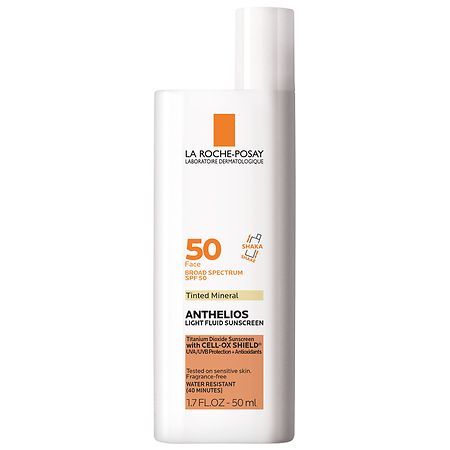


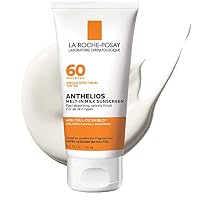

La Roche Posay Laboratoire Dermatologique Anthelios 50 Tinted Mineral Face Broad Spectrum SPF 50 Sunscreen / LOTION
La Roche-PosayAnalysis updated August 2026 · How Scout scores
At a glance
Summary
This sunscreen contains beneficial ingredients like tocopherol, which provides antioxidant protection. However, it also includes talc, which has potential contamination concerns, and phenoxyethanol, a preservative associated with skin irritation. The presence of these ingredients, along with its high level of processing, impacts its overall safety and effectiveness.
Key ingredients 6
TocopherolGood
Tocopherol, or Vitamin E, is an antioxidant that helps protect the skin from free radical damage. It is beneficial for skin health and is commonly used in skincare products. It also has moisturizing properties.
Risks
There are minimal risks associated with tocopherol, though it can cause mild irritation in very sensitive skin.
Benefits
Tocopherol provides antioxidant protection and helps in maintaining skin health.
WaterNeutral
Water is a common solvent used in cosmetics to dissolve other ingredients. It helps in forming emulsions and is essential for hydration. It does not have any direct benefits or risks in this formulation.
Risks
There are no significant risks associated with water in cosmetics.
Benefits
Water helps in hydrating the skin and acts as a carrier for other ingredients.
IsododecaneNeutral
Isododecane is a lightweight, volatile hydrocarbon used to improve the texture and spreadability of products. It evaporates quickly, leaving a non-greasy finish. It is generally considered safe for use in cosmetics.
Risks
There are minimal risks associated with isododecane, though it can cause mild irritation in sensitive individuals.
Benefits
Isododecane provides a smooth application and helps in achieving a matte finish.
DimethiconeBad
Occlusive silicone film-former — flagged under clean-beauty doctrine.
Risks
Dimethicone can potentially clog pores and cause breakouts in acne-prone skin.
Benefits
It helps in smoothing the skin's surface and retaining moisture.
TalcBad
Talc is a mineral used for its absorbent properties and to improve the texture of products. However, it has been controversial due to potential contamination with asbestos, a known carcinogen. Its safety is often debated in cosmetics.
Risks
There is a risk of asbestos contamination, which can pose serious health hazards.
Benefits
Talc helps in absorbing moisture and providing a smooth application.
PhenoxyethanolBad
Phenoxyethanol is a preservative used to prevent microbial growth in cosmetics. It is effective but has been associated with skin irritation and potential toxicity at higher concentrations. It is often used as an alternative to parabens.
Risks
Phenoxyethanol can cause skin irritation and allergic reactions in sensitive individuals.
Benefits
It helps in preserving the product and extending its shelf life.
Get the full breakdown in the Scout appTake Scout shopping
Scan any product to see lab results, healthy alternatives, and your personalized analysis.
Download on theApp Store GET IT ONGoogle PlayAmazon pricing & content
Amazon price as of . Product prices and availability are accurate as of the date/time indicated and are subject to change. Any price and availability information displayed on Amazon.com at the time of purchase will apply to the purchase of this product.
CERTAIN CONTENT THAT APPEARS ON THIS SITE COMES FROM AMAZON. THIS CONTENT IS PROVIDED “AS IS” AND IS SUBJECT TO CHANGE OR REMOVAL AT ANY TIME.