
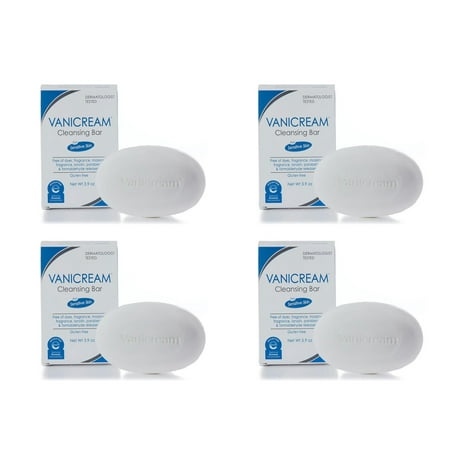
Vanicream Cleansing Bar For Sensitive Skin Gluten and Sulfate Free 3.9 oz (Pack of 4)
Analysis updated August 2026 · How Scout scores
At a glance
Summary
This cleansing bar contains petrolatum, which is criticized for potential contamination with polycyclic aromatic hydrocarbons (PAHs), impacting its safety profile. However, it avoids harsh surfactants like SLS and SLES, which is a positive aspect. The presence of PEG compounds and synthetic ingredients suggests a moderate level of processing, which affects the overall rating.
Key ingredients 18
Sodium Cocoyl IsethionateNeutral
Sodium Cocoyl Isethionate is a mild surfactant derived from coconut oil. It is commonly used in cleansing products for its ability to create a rich lather without stripping the skin. It is generally considered safe and non-irritating for most skin types.
Risks
There are minimal risks associated with this ingredient, though some individuals may experience mild irritation.
Benefits
It provides effective cleansing while being gentle on the skin, making it suitable for sensitive skin formulations.
Stearic AcidNeutral
Stearic Acid is a fatty acid used as an emulsifier and thickener in cosmetic formulations. It helps to stabilize products and improve texture. It is generally considered safe for use in skincare products.
Risks
There are minimal risks, though it may cause irritation in very sensitive individuals.
Benefits
It helps to maintain the stability and consistency of the product, contributing to a smooth application.
WaterNeutral
Water is a universal solvent used in cosmetic formulations to dissolve other ingredients. It is essential for the formulation of most skincare products.
Risks
There are no significant risks associated with water in cosmetic formulations.
Benefits
It acts as a base for the product, allowing other ingredients to be effectively delivered to the skin.
Coconut AcidNeutral
Coconut Acid is derived from coconut oil and is used as a surfactant and emulsifier in skincare products. It helps to cleanse the skin by breaking down oils and dirt.
Risks
Some individuals may experience mild irritation or allergic reactions.
Benefits
It provides gentle cleansing properties and is often used in formulations for sensitive skin.
Sodium IsethionateNeutral
Sodium Isethionate is a surfactant that helps to cleanse the skin by removing dirt and oils. It is known for being mild and non-drying.
Risks
There are minimal risks, though it may cause irritation in very sensitive skin.
Benefits
It is effective in cleansing while being gentle, making it suitable for sensitive skin formulations.
Sodium LaurateNeutral
Sodium Laurate is a surfactant used in cleansing products to help remove dirt and oils. It is derived from lauric acid, a fatty acid found in coconut oil.
Risks
There are minimal risks, though it may cause irritation in sensitive individuals.
Benefits
It provides effective cleansing properties and is commonly used in soap formulations.
SorbitolNeutral
Sorbitol is a sugar alcohol used as a humectant in skincare products. It helps to retain moisture in the skin, preventing dryness.
Risks
There are minimal risks, though it may cause irritation in very sensitive skin.
Benefits
It helps to keep the skin hydrated and is often used in formulations for dry or sensitive skin.
PropanediolNeutral
Propanediol is a glycol used as a solvent and humectant in cosmetic formulations. It helps to improve the texture and feel of products.
Risks
There are minimal risks, though it may cause irritation in very sensitive individuals.
Benefits
It enhances the absorption of other ingredients and provides a smooth application.
Cetearyl AlcoholNeutral
Cetearyl Alcohol is a fatty alcohol used as an emollient and emulsifier in skincare products. It helps to stabilize formulations and improve texture.
Risks
There are minimal risks, though it may cause irritation in very sensitive skin.
Benefits
It provides a creamy texture and helps to soften and smooth the skin.
Glyceryl StearateNeutral
Glyceryl Stearate is an emulsifier used to blend oil and water in formulations. It helps to stabilize products and improve texture.
Risks
There are minimal risks, though it may cause irritation in very sensitive skin.
Benefits
It provides a smooth application and helps to maintain the stability of the product.
SimethiconeNeutral
Simethicone is an anti-foaming agent used in cosmetic formulations to reduce surface tension and prevent foaming. It is generally considered safe for use in skincare products.
Risks
There are minimal risks associated with simethicone in cosmetic formulations.
Benefits
It helps to improve the texture and application of the product by reducing foaming.
Sodium ChlorideNeutral
Sodium Chloride, or table salt, is used as a thickening agent in cosmetic formulations. It helps to improve the texture and consistency of products.
Risks
There are minimal risks, though it may cause irritation in very sensitive skin.
Benefits
It helps to enhance the texture and stability of the product.
Ceteareth-20Neutral
Ceteareth-20 is an emulsifier used to blend oil and water in formulations. It helps to stabilize products and improve texture.
Risks
There are minimal risks, though it may cause irritation in very sensitive skin.
Benefits
It provides a smooth application and helps to maintain the stability of the product.
PEG-30 StearateNeutral
PEG-30 Stearate is an emulsifier used to blend oil and water in formulations. It helps to stabilize products and improve texture.
Risks
There are minimal risks, though it may cause irritation in very sensitive skin.
Benefits
It provides a smooth application and helps to maintain the stability of the product.
PEG-20Neutral
PEG-20 is a polyethylene glycol used as an emulsifier and solvent in cosmetic formulations. It helps to improve the texture and feel of products.
Risks
There are minimal risks, though it may cause irritation in very sensitive skin.
Benefits
It enhances the absorption of other ingredients and provides a smooth application.
Titanium DioxideNeutral
Titanium Dioxide is a mineral used as a pigment and UV filter in cosmetic formulations. It provides opacity and sun protection in products.
Risks
There are minimal risks, though inhalation of its powder form can be hazardous.
Benefits
It provides effective sun protection and is used to improve the appearance of products.
Sodium Lauroyl SarcosinateBad
Processed additive flagged under Scout's ingredient doctrine.
Risks
There are minimal risks, though it may cause irritation in very sensitive individuals.
Benefits
It provides effective cleansing without stripping the skin's natural oils, making it suitable for sensitive skin.
PetrolatumVery Bad
Petrolatum is a petroleum-derived ingredient used as an occlusive agent in skincare products. It forms a barrier on the skin to prevent moisture loss. However, it is heavily criticized for potential contamination with polycyclic aromatic hydrocarbons (PAHs) and environmental concerns.
Risks
There is a risk of contamination with PAHs, which are potential carcinogens, and it may clog pores.
Benefits
It is effective at preventing moisture loss and is used to protect and soothe dry skin.
Get the full breakdown in the Scout appTake Scout shopping
Scan any product to see lab results, healthy alternatives, and your personalized analysis.
Download on theApp Store GET IT ONGoogle PlayAmazon pricing & content
Amazon price as of . Product prices and availability are accurate as of the date/time indicated and are subject to change. Any price and availability information displayed on Amazon.com at the time of purchase will apply to the purchase of this product.
CERTAIN CONTENT THAT APPEARS ON THIS SITE COMES FROM AMAZON. THIS CONTENT IS PROVIDED “AS IS” AND IS SUBJECT TO CHANGE OR REMOVAL AT ANY TIME.