
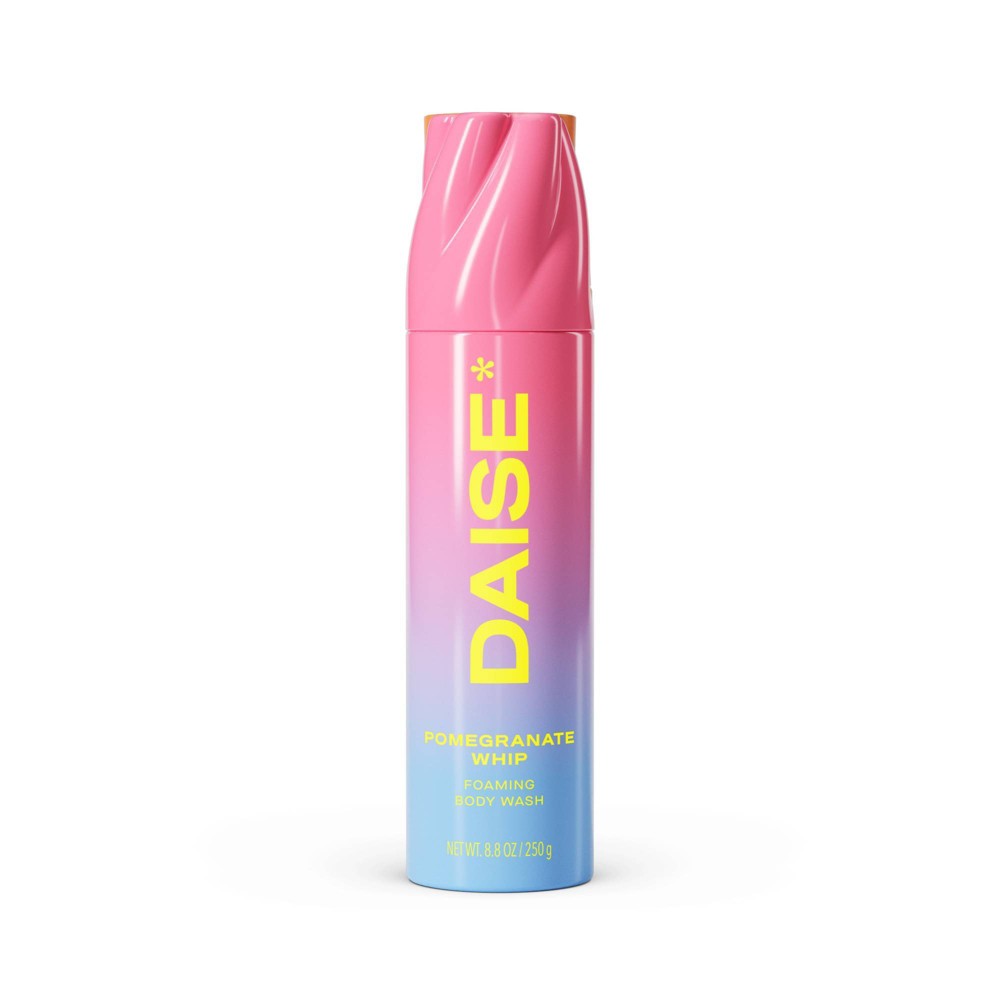
DAISE Pomegranate Foaming Body Wash - 8.8oz: Basic Cleansing, Whole Body, Aerosol Can, For Normal Skin
Analysis updated July 2026 · How Scout scores
At a glance
Summary
This body wash contains a mix of beneficial and harmful ingredients. While it includes gentle surfactants like Potassium Cocoyl Glycinate and moisturizing agents such as Glycerin, it also contains volatile organic compounds like Butane and Isobutane, which can contribute to air pollution and potential skin irritation. Additionally, the presence of Phenoxyethanol and Parfum raises concerns due to their potential for causing allergic reactions and irritation.
Key ingredients 24
Potassium Cocoyl GlycinateGood
Potassium Cocoyl Glycinate is a mild surfactant derived from coconut oil and glycine. It is known for its gentle cleansing properties and is less likely to irritate the skin compared to harsher surfactants. It is often used in products for sensitive skin due to its mild nature.
Benefits
Provides gentle cleansing without stripping the skin's natural oils.
GlycerinGood
Glycerin is a humectant that attracts moisture to the skin, helping to keep it hydrated. It is derived from natural sources and is widely used in skincare for its moisturizing properties. It is well-tolerated by most skin types and enhances the skin's barrier function.
Benefits
Helps maintain skin hydration and improves skin barrier function.
Coco-GlucosideGood
Coco-Glucoside is a mild, non-ionic surfactant derived from coconut oil and glucose. It is used for its gentle cleansing properties and is biodegradable, making it environmentally friendly. It is suitable for sensitive skin due to its mild nature.
Benefits
Provides gentle cleansing and is environmentally friendly.
Terminalia Ferdinandiana Fruit ExtractGood
Terminalia Ferdinandiana Fruit Extract, also known as Kakadu Plum extract, is rich in vitamin C and antioxidants. It is used for its skin-brightening and anti-aging properties. It is derived from a natural source and is beneficial for skin health.
Benefits
Rich in antioxidants and vitamin C, promoting skin health and brightness.
Tea-Cocoyl GlutamateGood
Tea-Cocoyl Glutamate is a mild surfactant derived from coconut oil and glutamic acid. It is used for its gentle cleansing properties and is suitable for sensitive skin. It is biodegradable and environmentally friendly.
Benefits
Provides gentle cleansing and is environmentally friendly.
AquaNeutral
Aqua, or water, is used as a solvent in many cosmetic products. It is generally considered safe and is a key component in formulations to dissolve other ingredients. No significant processing concerns are associated with its use in this product.
See more about Aqua →Cocamidopropyl BetaineNeutral
Cocamidopropyl Betaine is a surfactant derived from coconut oil and dimethylaminopropylamine. It is used to enhance the foaming properties of cleansers. While generally considered safe, it can cause skin irritation in some individuals.
Risks
May cause skin irritation or allergic reactions in sensitive individuals.
Benefits
Enhances foaming and cleansing properties of products.
Lauryl HydroxysultaineNeutral
Lauryl Hydroxysultaine is a surfactant used for its foaming and thickening properties. It is considered mild and is often used in formulations for sensitive skin. It is derived from coconut oil and is biodegradable.
Benefits
Provides foaming and thickening properties while being mild on the skin.
Hydrogenated Starch HydrolysateNeutral
Hydrogenated Starch Hydrolysate is a humectant and emollient derived from starch. It is used to improve skin hydration and texture. It is generally considered safe and non-irritating.
Benefits
Improves skin hydration and texture.
Potassium ChlorideNeutral
Potassium Chloride is used as a thickening agent and to adjust the viscosity of formulations. It is generally considered safe and non-irritating. It is a common ingredient in many cosmetic products.
See more about Potassium Chloride →Maltooligosyl GlucosideNeutral
Maltooligosyl Glucoside is a sugar-derived ingredient used for its moisturizing properties. It is considered safe and is often used in skincare products to enhance hydration. It is biodegradable and environmentally friendly.
Benefits
Enhances skin hydration and is environmentally friendly.
Potassium CocoateNeutral
Potassium Cocoate is a soap derived from coconut oil and potassium hydroxide. It is used for its cleansing properties and is considered mild. It is biodegradable and environmentally friendly.
Benefits
Provides cleansing properties and is environmentally friendly.
Sodium ChlorideNeutral
Sodium Chloride, or table salt, is used to thicken and stabilize formulations. It is generally considered safe and is a common ingredient in many cosmetic products. It can also help to enhance the texture of products.
See more about Sodium Chloride →PPG-10 SorbitolNeutral
PPG-10 Sorbitol is used as a humectant and emollient in cosmetic formulations. It helps to retain moisture in the skin and improve texture. It is generally considered safe and non-irritating.
Benefits
Helps retain moisture and improve skin texture.
Citric AcidNeutral
Citric Acid is used to adjust the pH of cosmetic formulations. It is derived from citrus fruits and is generally considered safe. It can also act as a mild exfoliant in skincare products.
Benefits
Helps adjust pH and can act as a mild exfoliant.
EthylhexylglycerinNeutral
Ethylhexylglycerin is used as a preservative and skin conditioning agent. It is considered safe and is often used to enhance the efficacy of other preservatives. It is derived from glycerin and is biodegradable.
Benefits
Enhances preservation and conditions the skin.
Sodium Lauryl Glycol CarboxylateNeutral
Sodium Lauryl Glycol Carboxylate is a surfactant used for its cleansing properties. It is considered mild and is often used in formulations for sensitive skin. It is biodegradable and environmentally friendly.
Benefits
Provides cleansing properties and is environmentally friendly.
ButaneBad
Butane is used as a propellant in aerosol products. It is a volatile organic compound that can contribute to air pollution and may cause skin irritation. Its use in cosmetics is regulated due to potential inhalation risks.
Risks
Inhalation of butane can lead to respiratory issues and it may cause skin irritation.
IsobutaneBad
Isobutane is another propellant used in aerosol products. Similar to butane, it is a volatile organic compound that can contribute to air pollution and may cause skin irritation. Its use is regulated due to potential inhalation risks.
Risks
Inhalation of isobutane can lead to respiratory issues and it may cause skin irritation.
PropaneBad
Propane is used as a propellant in aerosol products. It is a volatile organic compound that can contribute to air pollution and may cause skin irritation. Its use is regulated due to potential inhalation risks.
Risks
Inhalation of propane can lead to respiratory issues and it may cause skin irritation.
PhenoxyethanolBad
Phenoxyethanol is a preservative used to prevent microbial growth in cosmetic products. It is associated with skin irritation and allergic reactions in some individuals. Its use is regulated due to potential toxicity concerns.
Risks
May cause skin irritation and allergic reactions.
ParfumBad
Parfum, or fragrance, is used to impart scent to cosmetic products. It can contain a mixture of various chemicals, some of which may cause skin irritation or allergic reactions. The specific composition is often undisclosed, leading to potential safety concerns.
Risks
May cause skin irritation or allergic reactions due to undisclosed chemical composition.
BHTBad
BHT, or Butylated Hydroxytoluene, is an antioxidant used to prevent product spoilage. It is associated with potential health concerns, including skin irritation and endocrine disruption. Its use is regulated due to these potential risks.
Risks
May cause skin irritation and has potential endocrine-disrupting effects.
LimoneneBad
Processed additive flagged under Scout's ingredient doctrine.
Risks
May cause skin irritation or allergic reactions upon oxidation.
Benefits
Provides a pleasant citrus scent and is environmentally friendly.
Get the full breakdown in the Scout appTake Scout shopping
Scan any product to see lab results, healthy alternatives, and your personalized analysis.
Download on theApp Store GET IT ONGoogle PlayAmazon pricing & content
CERTAIN CONTENT THAT APPEARS ON THIS SITE COMES FROM AMAZON. THIS CONTENT IS PROVIDED “AS IS” AND IS SUBJECT TO CHANGE OR REMOVAL AT ANY TIME.