
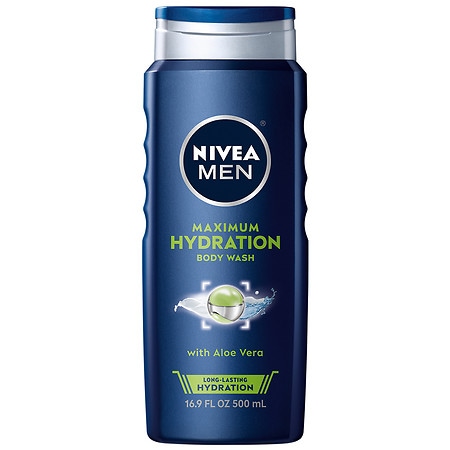
NIVEA MEN Maximum Hydration 3-in-1 Men s Body Wash for Dry Skin with Aloe Vera 16.9 fl oz
Analysis updated September 2026 · How Scout scores
At a glance
Summary
This body wash contains beneficial ingredients like glycerin and aloe vera, which provide hydration and soothing properties. However, the presence of sodium laureth sulfate, a surfactant with potential irritation and contamination risks, and synthetic fragrance, which can cause allergic reactions, detracts from its overall safety profile. The product is moderately processed with a mix of natural and synthetic components, leading to a balanced score.
Key ingredients 15
Aloe Barbadensis Leaf Juice PowderVery Good
Aloe Barbadensis Leaf Juice Powder is known for its soothing and moisturizing properties. It is derived from the aloe vera plant.
Risks
There are minimal risks; it is generally safe for most skin types.
Benefits
It helps to soothe irritated skin and provides hydration.
GlycerinGood
Glycerin is a humectant that attracts moisture to the skin, helping to keep it hydrated. It is well-tolerated by most skin types.
Risks
There are minimal risks associated with glycerin; it is generally safe for use.
Benefits
Glycerin helps to maintain skin hydration and improve skin barrier function.
Glyceryl GlucosideGood
Glyceryl Glucoside is a moisturizing agent that helps to enhance skin hydration. It is derived from glycerin and glucose.
Risks
There are no significant risks associated with glyceryl glucoside.
Benefits
It supports skin hydration and helps to maintain a healthy skin barrier.
Helianthus Annuus (Sunflower) Seed OilGood
Sunflower Seed Oil is a natural oil rich in fatty acids and vitamin E. It is used for its emollient properties.
Risks
There are minimal risks; it is generally safe for use.
Benefits
It helps to nourish and moisturize the skin, improving its texture.
WaterNeutral
Water is a common solvent used in cosmetics to dissolve other ingredients. It helps in forming the base of the product.
Risks
There are no significant risks associated with water in cosmetics.
Benefits
Water helps in hydrating the skin and acts as a carrier for other beneficial ingredients.
Cocamidopropyl BetaineNeutral
Cocamidopropyl Betaine is a mild surfactant derived from coconut oil. It is used to reduce irritation caused by other surfactants.
Risks
It can cause allergic reactions in some individuals, leading to skin irritation.
Benefits
It provides gentle cleansing and helps to stabilize foam in formulations.
PEG-7 Glyceryl CocoateNeutral
PEG-7 Glyceryl Cocoate is an emollient and surfactant that helps to soften the skin. It is derived from coconut oil and glycerin.
Risks
There is a potential risk of ethylene oxide contamination during production.
Benefits
It helps to moisturize the skin and improve the texture of the product.
Polyquaternium-7Neutral
Polyquaternium-7 is a conditioning agent that helps to improve the feel of the skin and hair. It is a synthetic polymer.
Risks
There are no significant risks associated with polyquaternium-7.
Benefits
It provides a smooth feel and helps to reduce static in hair care products.
PEG-40 Hydrogenated Castor OilNeutral
PEG-40 Hydrogenated Castor Oil is an emulsifier and surfactant that helps to mix oil and water. It is derived from castor oil.
Risks
There is a potential risk of ethylene oxide contamination during production.
Benefits
It helps to stabilize formulations and improve product texture.
Styrene CopolymerNeutral
Styrene Copolymer is used as a film-forming agent in cosmetics. It helps to provide a smooth texture.
Risks
There are no significant risks associated with styrene copolymer.
Benefits
It helps to improve the texture and application of the product.
PEG-200 Hydrogenated Glyceryl PalmateNeutral
PEG-200 Hydrogenated Glyceryl Palmate is an emulsifier and surfactant. It helps to stabilize formulations.
Risks
There is a potential risk of ethylene oxide contamination during production.
Benefits
It helps to improve the texture and stability of the product.
Citric AcidNeutral
Citric Acid is used to adjust the pH of cosmetic products. It is a weak organic acid found in citrus fruits.
Risks
In high concentrations, it may cause skin irritation.
Benefits
It helps to maintain the stability and effectiveness of the product.
Sodium Laureth SulfateBad
Sodium Laureth Sulfate is a surfactant that helps in creating foam and cleansing the skin. However, it can be irritating and has a risk of 1,4-dioxane contamination.
Risks
It may cause skin irritation and dryness, especially for sensitive skin types.
Benefits
It effectively removes dirt and oil from the skin, providing a clean feel.
Sodium BenzoateBad
Synthetic preservative that can form benzene in the presence of vitamin C.
Risks
There are minimal risks; it is generally safe for use in cosmetics.
Benefits
It helps to extend the shelf life of the product by preventing microbial contamination.
FragranceVery Bad
Fragrance is used to impart a pleasant scent to the product. However, it can cause allergic reactions and skin irritation.
Risks
It may cause skin irritation and allergic reactions in sensitive individuals.
Benefits
It provides a pleasant scent to the product, enhancing user experience.
Get the full breakdown in the Scout appTake Scout shopping
Scan any product to see lab results, healthy alternatives, and your personalized analysis.
Download on theApp Store GET IT ONGoogle PlayAmazon pricing & content
Amazon price as of . Product prices and availability are accurate as of the date/time indicated and are subject to change. Any price and availability information displayed on Amazon.com at the time of purchase will apply to the purchase of this product.
CERTAIN CONTENT THAT APPEARS ON THIS SITE COMES FROM AMAZON. THIS CONTENT IS PROVIDED “AS IS” AND IS SUBJECT TO CHANGE OR REMOVAL AT ANY TIME.