
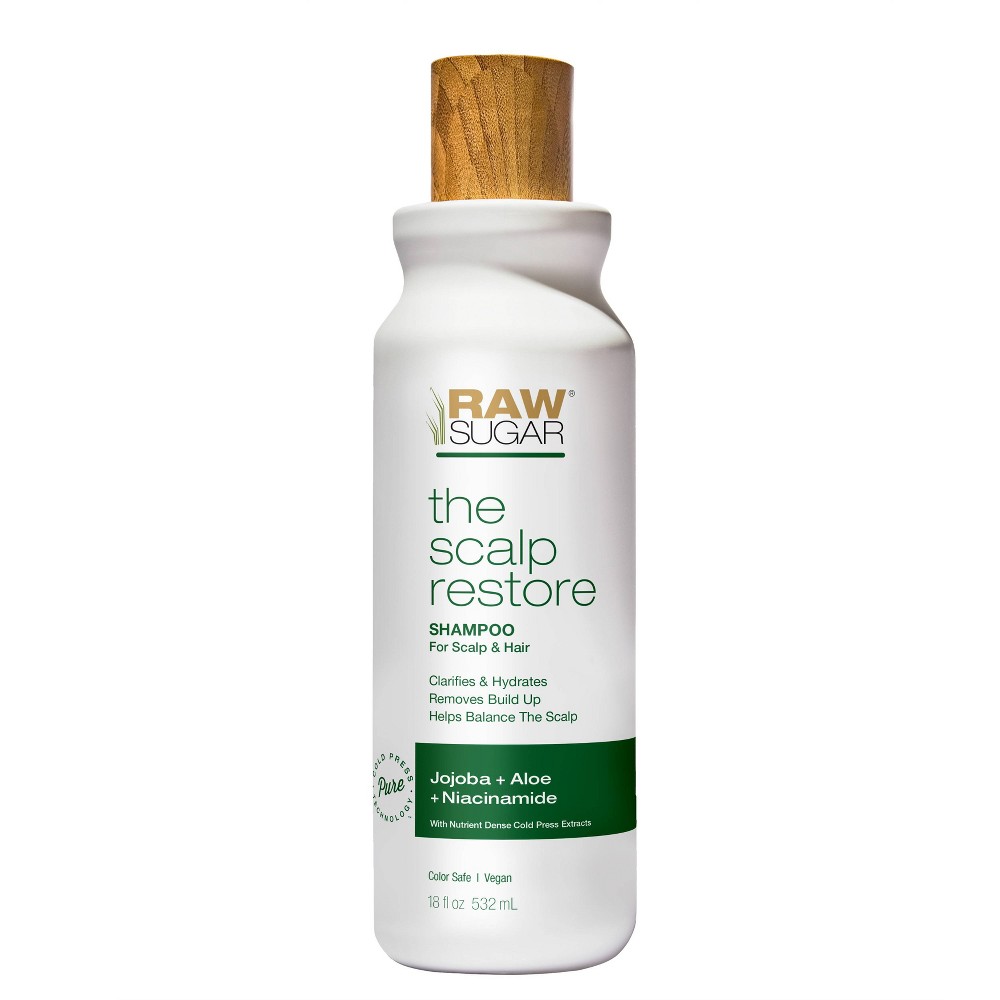

Raw Sugar The Scalp Restore Shampoo - Jojoba + Aloe + Niacinamide - 18 fl oz
Analysis updated August 2026 · How Scout scores
At a glance
Summary
This shampoo contains beneficial ingredients like jojoba oil, aloe vera, and niacinamide, which support scalp health and hydration. However, it also includes sodium C14-16 olefin sulfonate, a harsh surfactant that can strip natural oils, and synthetic fragrance, which may cause irritation. The presence of sodium chloride as a thickener further contributes to potential dryness, impacting the overall ingredient safety and hair health impact.
Key ingredients 16
Simmondsia Chinensis (Jojoba) Seed OilVery Good
Jojoba Oil is a natural emollient that closely resembles the scalp's natural oils. It conditions and protects the hair.
Risks
There are minimal risks associated with jojoba oil.
Benefits
It provides deep conditioning and helps maintain scalp health.
GlycerinGood
Glycerin is a humectant that attracts moisture to the hair and scalp. It helps maintain hydration and prevent dryness.
Risks
There are minimal risks associated with glycerin in hair care products.
Benefits
It enhances moisture retention, making hair feel softer and more manageable.
Hydrolyzed OatsGood
Hydrolyzed Oats are used for their conditioning properties. They help strengthen and protect the hair shaft.
Risks
There are minimal risks associated with hydrolyzed oats.
Benefits
They provide nourishment and improve hair texture.
NiacinamideGood
Niacinamide is a form of Vitamin B3 that supports scalp health. It helps improve the appearance of the scalp and hair.
Risks
There are minimal risks associated with niacinamide in hair care.
Benefits
It enhances scalp circulation and can improve hair growth.
Aloe Barbadensis Leaf JuiceGood
Aloe Vera is known for its soothing and moisturizing properties. It helps calm the scalp and hydrate the hair.
Risks
There are minimal risks associated with aloe vera in hair care.
Benefits
It provides hydration and can reduce scalp irritation.
Water (Aqua)Neutral
Water is the primary solvent in many cosmetic products. It helps dissolve other ingredients and provides a base for the formulation.
Risks
There are no significant risks associated with water in cosmetic formulations.
Benefits
Water helps in the even distribution of the product on the scalp and hair.
Cocamidopropyl BetaineNeutral
Cocamidopropyl Betaine is a mild surfactant derived from coconut oil. It is used to reduce irritation potential of other surfactants.
Risks
Some individuals may experience allergic reactions or irritation.
Benefits
It provides gentle cleansing and helps in foaming.
Dimethyl Lauramide/MyristamideNeutral
Dimethyl Lauramide/Myristamide is used as a surfactant and emulsifier. It helps in mixing oil and water components.
Risks
There are no significant risks associated with this ingredient in hair care.
Benefits
It aids in the stability and consistency of the product.
PhospholipidsNeutral
Phospholipids are used for their emulsifying properties. They help in maintaining the stability of the product.
Risks
There are no significant risks associated with phospholipids in hair care.
Benefits
They help in the even distribution of the product.
Hydroxypropyl Guar Hydroxypropyltrimonium ChlorideNeutral
This ingredient is used as a conditioning agent. It helps improve the texture and manageability of hair.
Risks
There are no significant risks associated with this ingredient.
Benefits
It enhances hair softness and reduces static.
Citric AcidNeutral
Citric Acid is used to adjust the pH of the product. It helps maintain the stability and effectiveness of the formulation.
Risks
In high concentrations, it may cause irritation, but it is generally safe in cosmetic formulations.
Benefits
It helps maintain the product's pH balance.
Sodium ChlorideNeutral
Standard formulation ingredient — neither beneficial nor harmful at typical use.
Risks
It may cause dryness and irritation, especially for sensitive scalps.
Benefits
It helps in achieving the desired consistency of the product.
Sodium C14-16 Olefin SulfonateBad
Sodium C14-16 Olefin Sulfonate is a surfactant used for its cleansing properties. It can be harsh and strip natural oils from the hair and scalp.
Risks
This ingredient may cause dryness and irritation for sensitive scalps.
Benefits
It effectively removes dirt and oil from the hair.
Sodium BenzoateBad
Synthetic preservative that can form benzene in the presence of vitamin C.
Risks
There are minimal risks associated with sodium benzoate in cosmetic formulations.
Benefits
It ensures the product remains safe and effective over time.
Potassium SorbateBad
Synthetic preservative — flagged in daily-use products.
Risks
There are minimal risks associated with potassium sorbate.
Benefits
It helps maintain the product's freshness and safety.
Fragrance (Parfum)Very Bad
Fragrance is used to impart a pleasant scent to the product. However, synthetic fragrances can cause irritation and allergic reactions.
Risks
It may cause skin irritation or allergic reactions in sensitive individuals.
Benefits
It provides a pleasant scent to the product.
Processing
Processed Foods
Get the full breakdown in the Scout appTake Scout shopping
Scan any product to see lab results, healthy alternatives, and your personalized analysis.
Download on theApp Store GET IT ONGoogle PlayAmazon pricing & content
Amazon price as of . Product prices and availability are accurate as of the date/time indicated and are subject to change. Any price and availability information displayed on Amazon.com at the time of purchase will apply to the purchase of this product.
CERTAIN CONTENT THAT APPEARS ON THIS SITE COMES FROM AMAZON. THIS CONTENT IS PROVIDED “AS IS” AND IS SUBJECT TO CHANGE OR REMOVAL AT ANY TIME.