Drift Car Scent Wood Refill Open Air
Swap it for
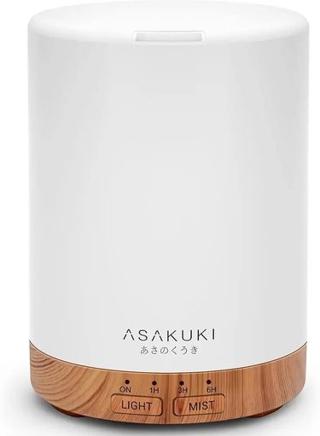
 ASAKUKI Essential Oil Diffuser 500 ml View on Amazon · $20.89 See all Air Fresheners, ranked
At a glance
Summary
This product contains a high number of synthetic fragrance components, which are common allergens and irritants. While it includes some natural essential oils like eucalyptus and cedarwood, the presence of multiple processed additives and undisclosed fragrance mixtures significantly impacts its safety for indoor use. The overall formulation leans towards a more chemically complex profile, which affects its environmental and health considerations.
Key ingredients 36
Fragrance (parfum)Very Bad
Undisclosed fragrance mixture — the most common allergen/irritant flag in personal care.
Risks
Potential risks include skin irritation and allergic reactions.
Benefits
There are no significant benefits as it is primarily used for scent.
LinaloolBad
Processed additive flagged under Scout's ingredient doctrine.
Risks
It can cause allergic reactions in sensitive individuals.
Benefits
It provides a pleasant scent and may have calming effects.
CitralBad
Processed additive flagged under Scout's ingredient doctrine.
Risks
It can cause allergic reactions in sensitive individuals.
Benefits
It provides a fresh lemon scent and may have antimicrobial properties.
VanillinBad
Processed additive flagged under Scout's ingredient doctrine.
Risks
It may cause skin irritation in sensitive individuals.
Benefits
It adds a sweet vanilla note to the fragrance profile.
EugenolBad
Processed additive flagged under Scout's ingredient doctrine.
Risks
It can cause allergic reactions in sensitive individuals.
Benefits
It provides a spicy scent and may have antimicrobial properties.
Benzyl alcoholBad
Processed additive flagged under Scout's ingredient doctrine.
Risks
It may cause skin irritation in sensitive individuals.
Benefits
It adds a mild scent and acts as a preservative.
LimoneneBad
Processed additive flagged under Scout's ingredient doctrine.
Risks
It can cause allergic reactions in sensitive individuals.
Benefits
It provides a fresh citrus scent and may have antimicrobial properties.
PineneBad
Processed additive flagged under Scout's ingredient doctrine.
Risks
It can cause allergic reactions in sensitive individuals.
Benefits
It provides a fresh pine scent and may have antimicrobial properties.
IsopropylideneglycerolNeutral
Isopropylideneglycerol is a solvent used in various cosmetic and fragrance products. It helps dissolve other substances and can enhance the stability of the product.
Risks
There are minimal risks associated with its use in small quantities.
Benefits
It can improve the texture and stability of the product.
Trimethylhexyl acetateNeutral
Trimethylhexyl acetate is a fragrance ingredient used to impart a fruity odor. It is commonly used in perfumes and personal care products.
Risks
There are minimal risks when used in small amounts.
Benefits
It contributes to the overall fragrance profile of the product.
Dimethyl octenolNeutral
Dimethyl octenol is a fragrance ingredient used to provide a fresh, citrus-like scent. It is commonly used in perfumes and air fresheners.
Risks
Potential risks include skin irritation if used in high concentrations.
Benefits
It enhances the fragrance profile with a fresh scent.
Methyl phenylbutanolNeutral
Methyl phenylbutanol is a fragrance ingredient used for its floral scent. It is commonly found in perfumes and scented products.
Risks
It may cause skin irritation in sensitive individuals.
Benefits
It adds a floral note to the fragrance profile.
Linalyl acetateNeutral
Linalyl acetate is a naturally occurring phytochemical found in many flowers and spice plants. It is used for its pleasant floral scent.
Risks
It can cause allergic reactions in sensitive individuals.
Benefits
It provides a pleasant scent and may have calming effects.
Dimethylcyclohexylethoxy isobutylpropanoateNeutral
Dimethylcyclohexylethoxy isobutylpropanoate is a synthetic fragrance ingredient. It is used to impart a specific scent to products.
Risks
There are minimal risks when used in small amounts.
Benefits
It contributes to the overall fragrance profile of the product.
Cedrol methyl etherNeutral
Cedrol methyl ether is a fragrance ingredient used for its woody scent. It is commonly used in perfumes and air fresheners.
Risks
There are minimal risks when used in small amounts.
Benefits
It adds a woody note to the fragrance profile.
GeraniolNeutral
Geraniol is a naturally occurring monoterpenoid and alcohol. It is used for its sweet rose-like scent.
Risks
It can cause allergic reactions in sensitive individuals.
Benefits
It provides a pleasant scent and may have insect-repelling properties.
Methyl benzodioxepinoneNeutral
Methyl benzodioxepinone is a synthetic fragrance ingredient. It is used to impart a specific scent to products.
Risks
There are minimal risks when used in small amounts.
Benefits
It contributes to the overall fragrance profile of the product.
CitronellolNeutral
Citronellol is a naturally occurring monoterpenoid. It is used for its sweet, floral scent.
Risks
It can cause allergic reactions in sensitive individuals.
Benefits
It provides a pleasant scent and may have insect-repelling properties.
Citronellyl acetateNeutral
Citronellyl acetate is a fragrance ingredient used for its floral scent. It is commonly found in perfumes and scented products.
Risks
It may cause skin irritation in sensitive individuals.
Benefits
It adds a floral note to the fragrance profile.
Benzyl acetateNeutral
Benzyl acetate is a fragrance ingredient used for its sweet, floral scent. It is commonly found in perfumes and scented products.
Risks
It may cause skin irritation in sensitive individuals.
Benefits
It adds a floral note to the fragrance profile.
Phenethyl alcoholNeutral
Phenethyl alcohol is a fragrance ingredient used for its floral scent. It is commonly found in perfumes and scented products.
Risks
It may cause skin irritation in sensitive individuals.
Benefits
It adds a floral note to the fragrance profile.
IsopropylphenylbutanalNeutral
Isopropylphenylbutanal is a synthetic fragrance ingredient. It is used to impart a specific scent to products.
Risks
There are minimal risks when used in small amounts.
Benefits
It contributes to the overall fragrance profile of the product.
Ethyl dimethylhydrocinnamalNeutral
Ethyl dimethylhydrocinnamal is a synthetic fragrance ingredient. It is used to impart a specific scent to products.
Risks
There are minimal risks when used in small amounts.
Benefits
It contributes to the overall fragrance profile of the product.
MethoxyhydratropaldehydeNeutral
Methoxyhydratropaldehyde is a synthetic fragrance ingredient. It is used to impart a specific scent to products.
Risks
There are minimal risks when used in small amounts.
Benefits
It contributes to the overall fragrance profile of the product.
Ethyl acetoacetateNeutral
Ethyl acetoacetate is a synthetic fragrance ingredient. It is used to impart a specific scent to products.
Risks
There are minimal risks when used in small amounts.
Benefits
It contributes to the overall fragrance profile of the product.
Methyl dihydrojasmonateNeutral
Methyl dihydrojasmonate is a synthetic fragrance ingredient. It is used to impart a specific scent to products.
Risks
There are minimal risks when used in small amounts.
Benefits
It contributes to the overall fragrance profile of the product.
Methyl iononesNeutral
Methyl ionones are synthetic fragrance ingredients. They are used to impart a specific scent to products.
Risks
There are minimal risks when used in small amounts.
Benefits
They contribute to the overall fragrance profile of the product.
HydroxycitronellalNeutral
Hydroxycitronellal is a synthetic fragrance ingredient. It is used to impart a specific scent to products.
Risks
There are minimal risks when used in small amounts.
Benefits
It contributes to the overall fragrance profile of the product.
Geranyl acetateNeutral
Geranyl acetate is a naturally occurring ester used for its sweet, floral scent. It is commonly found in perfumes and scented products.
Risks
It can cause allergic reactions in sensitive individuals.
Benefits
It provides a pleasant scent and may have calming effects.
Triethyl citrateNeutral
Triethyl citrate is a fragrance ingredient used to stabilize and enhance the longevity of scents. It is commonly used in perfumes and scented products.
Risks
There are minimal risks when used in small amounts.
Benefits
It helps stabilize and prolong the fragrance of the product.
HydroxycitronellolNeutral
Hydroxycitronellol is a synthetic fragrance ingredient. It is used to impart a specific scent to products.
Risks
There are minimal risks when used in small amounts.
Benefits
It contributes to the overall fragrance profile of the product.
Dipropylene glycolNeutral
Dipropylene glycol is a solvent used in various cosmetic and fragrance products. It helps dissolve other substances and can enhance the stability of the product.
Risks
There are minimal risks associated with its use in small quantities.
Benefits
It can improve the texture and stability of the product.
Alpha-isomethyl iononeNeutral
Alpha-isomethyl ionone is a synthetic fragrance ingredient. It is used to impart a specific scent to products.
Risks
There are minimal risks when used in small amounts.
Benefits
It contributes to the overall fragrance profile of the product.
Alder wood blockNeutral
Alder wood block is used as a natural carrier for the fragrance. It helps diffuse the scent into the air.
Risks
There are minimal risks associated with its use.
Benefits
It provides a natural and sustainable way to diffuse fragrance.
Eucalyptus globulus leaf oilGood
Eucalyptus globulus leaf oil is a natural essential oil known for its fresh, camphoraceous scent. It is often used for its aromatic and potential antimicrobial properties.
Risks
It can cause skin irritation if used in high concentrations.
Benefits
It provides a fresh scent and may have antimicrobial properties.
Cedarwood oilGood
Cedarwood oil is a natural essential oil known for its warm, woody scent. It is often used for its aromatic and potential calming properties.
Risks
It can cause skin irritation if used in high concentrations.
Benefits
It provides a woody scent and may have calming properties.
Get the full breakdown in the Scout appTake Scout shopping
Scan any product to see lab results, healthy alternatives, and your personalized analysis.
Amazon pricing & content
Amazon price for ASAKUKI Essential Oil Diffuser as of . Product prices and availability are accurate as of the date/time indicated and are subject to change. Any price and availability information displayed on Amazon.com at the time of purchase will apply to the purchase of this product.
CERTAIN CONTENT THAT APPEARS ON THIS SITE COMES FROM AMAZON. THIS CONTENT IS PROVIDED “AS IS” AND IS SUBJECT TO CHANGE OR REMOVAL AT ANY TIME.