
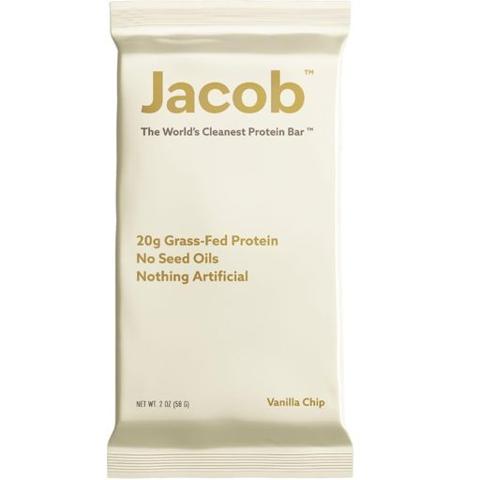


Jacob Protein Bar
At a glance
Summary
Jacob Protein Bar scores 96/100. A remarkably clean 10-ingredient bar built on a grass-fed protein blend (whey isolate, milk protein isolate, bovine collagen, whey concentrate) delivering 20g protein. Sweetened with organic honey and dates, uses grass-fed beef tallow as the fat source instead of seed oils, and includes organic almond butter and unsweetened chocolate. No emulsifiers, no natural flavors, no artificial sweeteners — one of the cleanest protein bars available.
Key ingredients 13
Grass-fed whey protein isolateVery Good
Premium complete protein with excellent bioavailability and full amino acid profile from pasture-raised cows.
Risks
May cause digestive discomfort in people with lactose sensitivity; not suitable for milk allergy.
Benefits
Complete protein with excellent bioavailability; supports muscle repair and growth; full amino acid profile from pasture-raised cows.
Grass-fed whey protein concentrateVery Good
Retains more bioactive compounds than isolate; complete protein from pasture-raised cows.
Risks
Contains more lactose than isolate; may not suit severe lactose intolerance.
Benefits
Retains more bioactive compounds than isolate; supports immunity and recovery.
Organic almond butterVery Good
Whole-food fat source rich in vitamin E, magnesium, and heart-healthy monounsaturated fats.
Risks
Tree nut allergen; calorie-dense so portion control matters.
Benefits
Healthy fats, vitamin E, and protein.
Milk protein isolateGood
Provides both casein and whey proteins for sustained amino acid release; supports muscle maintenance.
Risks
Not suitable for dairy allergy or strict vegan diets.
Benefits
Slow-digesting protein that supports satiety and muscle maintenance; casein and whey blend.
Bovine collagenGood
Supports joint, skin, and gut health; provides glycine and proline for connective tissue repair.
Risks
Sourced from cattle; quality depends on farming practices.
Benefits
Supports joint, skin, hair, and gut health; provides glycine and proline.
Organic tapioca fiberGood
Prebiotic fiber supporting digestive health and gut regularity.
Risks
May cause bloating or gas in some people when consumed in large amounts.
Benefits
Prebiotic fiber that supports digestive health and gut regularity.
Organic honeyGood
Natural whole-food sweetener with antioxidant and antimicrobial properties.
Risks
High in sugar; moderate intake advised for blood sugar management.
Benefits
Natural sweetener with trace enzymes and antioxidants.
Grass-fed beef tallowGood
Traditional heat-stable fat rich in fat-soluble vitamins; clean alternative to seed oils.
Risks
Saturated fat; consume as part of a balanced diet.
Benefits
Heat-stable fat; source of fat-soluble vitamins; no seed oils.
Organic datesGood
Whole-food sweetener rich in fiber, potassium, and antioxidants.
Risks
High in natural sugars; calorie-dense.
Benefits
Natural sweetness with fiber and minerals like potassium.
Organic unsweetened chocolateGood
Rich in cocoa flavanols and antioxidants without added sugar.
Risks
Minimal when used in typical bar amounts; enjoy as part of a balanced diet.
Benefits
Antioxidants and flavonoids with minimal processing.
Organic cacao powderGood
Concentrated source of polyphenols and minerals like magnesium and iron.
Risks
None significant in the small amount used in this bar.
Benefits
Rich in antioxidants and minerals like magnesium.
Sea saltGood
Unrefined sea salt — a minimally processed, natural source of sodium and essential trace minerals, and a legitimate whole-food seasoning. Treated as a positive ingredient.
Risks
Excess sodium can affect blood pressure; use in moderation.
Benefits
Adds flavor and trace minerals in small amounts.
Organic chocolate extractNeutral
Natural flavoring derived from chocolate; minimal nutritional impact.
Risks
Minimal; used in small amounts for flavor only.
Benefits
Adds chocolate flavor without added sugar.
Processing
Processed Foods
Get the full breakdown in the Scout appTake Scout shopping
Scan any product to see lab results, healthy alternatives, and your personalized analysis.
Download on theApp Store GET IT ONGoogle Play