
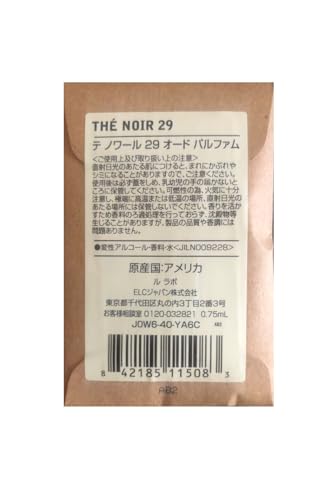


Le Labo The Noir 29 Eau de Parfum
At a glance
Summary
Le Labo Thé Noir 29 Eau de Parfum scores 16/100. The black-tea scent carries the heaviest visible load of the tea-and-wood Le Labos: eight declared EU allergens (limonene, eugenol, linalool, citronellol, geraniol, benzyl alcohol, citral, farnesol), unrectified-grade bergamot peel oil (phototoxic furanocoumarin risk), IFRA-restricted rose ketones, and isoeugenyl acetate — an ester regulators cap alongside isoeugenol because it converts to the parent sensitizer on skin. The formula history matters too: older label revisions still shown on some retailer sites contained Butylphenyl Methylpropional (Lilial), banned in the EU in 2022 as a Category 1B reproductive toxin — the current official label no longer lists it, evidence of a quiet cleanup. As across the line, the undisclosed 'Parfum' core with no exclusion pledges caps the score; no dyes, no UV filters, no BHT, and disclosed Virginia cedarwood and patchouli keep it above the designer pack.
Key ingredients 26
Parfum (Fragrance)Very Bad
Trade-secret blanket term concealing the bulk of the formula. Le Labo (Estée Lauder-owned) publishes no exclusion pledge for polycyclic musks (Galaxolide, Tonalide) or phthalate carriers and carries no clean-beauty certification, so the blend cannot be independently verified — unlike certified brands whose pledges are vetted. Older revisions of this formula (still shown on some retailer sites) listed Lilial, EU-banned in 2022 as a reproductive toxin; the current label no longer carries it.
See more about Parfum (Fragrance) →LimoneneBad
IFRA / EU-declared fragrance allergen; required on the label because it exceeds 0.001% in this leave-on product. Oxidizes on skin and in the bottle into stronger sensitizers.
See more about Limonene →EugenolBad
IFRA / EU-declared fragrance allergen; required on the label because it exceeds 0.001% in this leave-on product. Clove-derived sensitizer with a high patch-test positivity rate.
See more about Eugenol →LinaloolBad
IFRA / EU-declared fragrance allergen; required on the label because it exceeds 0.001% in this leave-on product. Air-oxidized linalool hydroperoxides are confirmed contact sensitizers.
See more about Linalool →CitronellolBad
IFRA / EU-declared fragrance allergen; required on the label because it exceeds 0.001% in this leave-on product.
See more about Citronellol →GeraniolBad
IFRA / EU-declared fragrance allergen; required on the label because it exceeds 0.001% in this leave-on product.
See more about Geraniol →Benzyl AlcoholBad
IFRA / EU-declared fragrance allergen; required on the label because it exceeds 0.001% in this leave-on product. Among the milder declared allergens; also functions as a preservative/solvent.
See more about Benzyl Alcohol →CitralBad
IFRA / EU-declared fragrance allergen; required on the label because it exceeds 0.001% in this leave-on product. IFRA restricts maximum use levels in leave-on products because of its high contact-allergy rate.
See more about Citral →FarnesolBad
IFRA / EU-declared fragrance allergen; required on the label because it exceeds 0.001% in this leave-on product.
See more about Farnesol →Citrus Aurantium Bergamia (Bergamot) Peel OilBad
Cold-pressed bergamot peel oil contains furanocoumarins (bergapten) that are phototoxic on sun-exposed skin. The label does not state a furanocoumarin-free (FCF) grade, and fragrance is sprayed on the neck and wrists — exactly the sun-exposed zones.
See more about Citrus Aurantium Bergamia (Bergamot) Peel Oil →Rose KetonesBad
Damascone-class aromachemicals that IFRA restricts to low maximum levels in leave-on products because of sensitization potency.
See more about Rose Ketones →Isoeugenyl AcetateBad
Ester of isoeugenol — IFRA restricts it alongside the parent compound because it hydrolyzes back to isoeugenol (one of the most potent regulated contact allergens) on skin.
See more about Isoeugenyl Acetate →Alcohol Denat.Neutral
Denatured ethanol solvent carrier. Drying to skin but inert.
See more about Alcohol Denat. →Aqua (Water)Neutral
Solvent; safe.
See more about Aqua (Water) →Tetramethyl Acetyloctahydronaphthalenes (Iso E Super)Neutral
Synthetic wood-amber aromachemical disclosed outside the Parfum blanket. Well-tolerated, low sensitization; persistent synthetic.
See more about Tetramethyl Acetyloctahydronaphthalenes (Iso E Super) →Linalyl AcetateNeutral
Lavender-derived ester; benign.
See more about Linalyl Acetate →Beta-CaryophylleneNeutral
Spicy terpene; low sensitization.
See more about Beta-Caryophyllene →PineneNeutral
Terpene aroma constituent; oxidation-prone but not EU-declarable.
See more about Pinene →Rose Flower Oil/ExtractNeutral
Natural rose oil, disclosed; its own citronellol/geraniol content contributes to the allergen load above.
See more about Rose Flower Oil/Extract →Geranyl AcetateNeutral
Fruity-rose ester; low concern.
See more about Geranyl Acetate →TerpineolNeutral
Lilac-scented terpene alcohol; low concern.
See more about Terpineol →TerpinoleneNeutral
Terpene aroma constituent; oxidation-prone but not EU-declarable.
See more about Terpinolene →Alpha TerpineneNeutral
Citrus terpene; low concern at these levels.
See more about Alpha Terpinene →Acetyl CedreneNeutral
Synthetic woody aromachemical; low sensitization, moderately persistent.
See more about Acetyl Cedrene →Juniperus Virginiana OilGood
Natural Virginia cedarwood oil, individually disclosed.
See more about Juniperus Virginiana Oil →Pogostemon Cablin (Patchouli) OilGood
Natural patchouli oil, individually disclosed; low sensitization profile.
See more about Pogostemon Cablin (Patchouli) Oil →Get the full breakdown in the Scout appTake Scout shopping
Scan any product to see lab results, healthy alternatives, and your personalized analysis.
Download on theApp Store GET IT ONGoogle PlayAmazon pricing & content
Amazon price as of . Product prices and availability are accurate as of the date/time indicated and are subject to change. Any price and availability information displayed on Amazon.com at the time of purchase will apply to the purchase of this product.
CERTAIN CONTENT THAT APPEARS ON THIS SITE COMES FROM AMAZON. THIS CONTENT IS PROVIDED “AS IS” AND IS SUBJECT TO CHANGE OR REMOVAL AT ANY TIME.