Takis Fuego
Swap it for
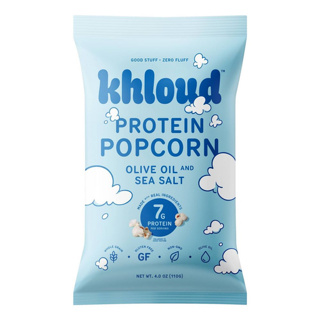
 Khloud Protein Popcorn Khloud · 1 oz · 18 pack View on Amazon · $49.50 See all Chips & Salty Snacks, ranked
At a glance
Summary
Takis Fuego scores 3/100. A NOVA 4 ultra-processed corn snack with one of the most aggressive additive profiles in the salty snack category. Corn flour processed with lime is fried in a triple seed oil blend (palm, soybean, and/or canola oil). The seasoning system is a chemical assault: maltodextrin, MSG, hydrolyzed soy protein (hidden MSG), two petroleum-derived artificial dyes (Red 40 Lake, Yellow 6 Lake), natural and artificial flavors, TBHQ (a synthetic preservative linked to tumor growth in animal studies), and a triple glutamate enhancer stack (MSG + disodium inosinate + disodium guanylate). Distributed by Barcel USA, a company of Grupo Bimbo.
Contaminants 8
Source: Consumer Reports, Contaminants in Kids' Snacks (August 2026) — three samples from 2–3 lots bought at retail, ISO 17025-accredited lab
Acrylamide 71 ppb (1.99 mcg per 28 g serving) High
One serving carries about 10 times California's Prop 65 no-significant-risk level for acrylamide (0.2 mcg per day) — Consumer Reports' own threshold flags anything over that level at a serving a day. Context matters: every fried or baked starchy snack forms acrylamide, and among the nine chips and crackers CR tested Takis sat mid-pack (Lay's Classic measured 263 ppb, Doritos 53 ppb). The EU's manufacturing benchmark for potato crisps is 750 µg/kg; 71 ppb is well under it.
Consumer Reports' August 2026 kids' snacks test (acrylamide by LC-MS/MS, J. Agric. Food Chem. 54:7001 (2006)) on three Takis Fuego samples from two to three lots: 71 ppb, which is 1.99 mcg in the 28 g (about 12 pieces) serving. CR's reference values: OEHHA NSRL 0.2 mcg/day, MADL 140 mcg/day, EPA reference dose 2 mcg/kg body weight/day.
Glycidyl esters 122 ppb (3.41 mcg per 28 g serving) High
Glycidyl esters form when seed oils are refined at high heat and turn into glycidol in the gut — a probable human carcinogen with no safe intake set by EFSA. One serving is about 6 times California's no-significant-risk level for glycidol (0.54 mcg per day), the reference CR applied. The chips' palm, soybean and canola oil blend is the source; this was the highest glycidyl ester level of the nine chips and crackers CR tested (Doritos 102 ppb, Lay's Classic 55 ppb).
Consumer Reports' August 2026 kids' snacks test (glycidyl esters by GC-MS/MS, AOAC 2018.03) on three Takis Fuego samples from two to three lots: 122 ppb, which is 3.41 mcg per 28 g serving. CR's reference value: OEHHA NSRL for glycidol 0.54 mcg/day. The EU caps GE in retail vegetable oils at 1,000 µg/kg as glycidol; the U.S. has no limit.
3-MCPD 160 ppb (4.48 mcg per 28 g serving) Low
3-MCPD is another by-product of refining vegetable oil at high heat. EFSA's tolerable daily intake is 2 mcg per kg of body weight — about 46 mcg a day for a 23 kg child — so one serving is roughly a tenth of that. It was still the highest 3-MCPD level of the nine chips and crackers CR tested (Lay's Classic 63 ppb, Snyder's pretzels not detected).
Consumer Reports' August 2026 kids' snacks test (3-MCPD by GC-MS/MS, AOAC 2018.03) on three Takis Fuego samples from two to three lots: 160 ppb, which is 4.48 mcg per 28 g serving. Reference: EFSA tolerable daily intake 2 mcg/kg body weight/day (2018).
Lead 4.02 ppb (0.11 mcg per 28 g serving) Low
Detected at a low level — one serving is about a fifth of California's Prop 65 maximum allowable dose for lead (0.5 mcg per day). No level of lead is considered beneficial, and children are the most sensitive group; CR rated this result Very Good.
Consumer Reports' August 2026 kids' snacks test (lead by ICP-QQQ-MS, AOAC 2015.01) on three Takis Fuego samples from two to three lots: 4.02 ppb, which is 0.11 mcg per 28 g serving, against the OEHHA MADL of 0.5 mcg/day.
Cadmium 3.72 ppb (0.10 mcg per 28 g serving) Safe
Detected, but one serving is about 2% of California's Prop 65 maximum allowable dose for cadmium (4.1 mcg per day) — trivial relative to the health reference. CR rated this result Very Good.
Consumer Reports' August 2026 kids' snacks test (cadmium by ICP-QQQ-MS, AOAC 2015.01) on three Takis Fuego samples from two to three lots: 3.72 ppb, which is 0.10 mcg per 28 g serving, against the OEHHA MADL of 4.1 mcg/day.
Arsenic 3.79 ppb total (0.1 mcg per 28 g serving) Safe
Total arsenic was low enough that CR did not run the inorganic-arsenic follow-up it applied to high-arsenic products; one serving is about 1% of California's no-significant-risk level for inorganic arsenic (10 mcg per day). CR rated this result Excellent.
Consumer Reports' August 2026 kids' snacks test (total arsenic by ICP-QQQ-MS, AOAC 2015.01) on three Takis Fuego samples from two to three lots: 3.79 ppb, which is 0.1 mcg per 28 g serving; inorganic arsenic was not tested because total arsenic was low.
Mercury Not detected Not detected
Not detected — below the laboratory's method detection limit in every sample. CR rated this result Excellent.
Consumer Reports' August 2026 kids' snacks test (mercury by ICP-QQQ-MS, AOAC 2015.01) on three Takis Fuego samples from two to three lots: not detected in any sample.
DEHP (phthalate) 16 ppb (439 ng per 28 g serving) Safe
DEHP is a plasticiser that migrates from processing equipment and packaging. One serving is about 0.1% of California's Prop 65 maximum allowable dose for DEHP (410 mcg per day) and well under EPA's reference dose; CR rated this result Very Good. Total phthalates were the same 439 ng, so DEHP was the only one found.
Consumer Reports' August 2026 kids' snacks test (phthalates by GC-MS/MS, GB 5009.271-2016 mod.) on three Takis Fuego samples from two to three lots: DEHP 16 ppb, which is 439 ng per 28 g serving; total phthalates 439 ng. References: OEHHA MADL 410 mcg/day, NSRL 310 mcg/day, EPA reference dose 20 mcg/kg body weight/day.
Key ingredients 11
Vegetable OilVery Bad
Sources: Palm and/or Soybean and/or Canola Oil. Triple seed oil blend — all inflammatory, highly refined, chemically extracted oils high in omega-6 fatty acids.
See more about Vegetable Oil →Red 40 LakeVery Bad
Petroleum-derived artificial dye linked to hyperactivity in children, behavioral issues, and potential carcinogenicity. Banned in several European countries.
See more about Red 40 Lake →Yellow 6 LakeVery Bad
Petroleum-derived artificial dye (Sunset Yellow) linked to allergic reactions, hyperactivity, and potential carcinogenicity. Requires warning labels in the EU.
See more about Yellow 6 Lake →TBHQ (Preservative)Very Bad
Tertiary butylhydroquinone — a synthetic antioxidant preservative linked to tumor growth, liver enlargement, and neurotoxic effects in animal studies. Banned in Japan and restricted in the EU.
See more about TBHQ (Preservative) →Soybean OilVery Bad
Additional seed oil in the seasoning on top of the frying oil. Double seed oil exposure.
See more about Soybean Oil →MaltodextrinBad
Highly refined starch filler with a glycemic impact above table sugar.
See more about Maltodextrin →Monosodium Glutamate (MSG)Bad
Excitotoxic flavor enhancer that overstimulates taste receptors. Stacked with disodium inosinate and disodium guanylate for amplified effect.
See more about Monosodium Glutamate (MSG) →Hydrolyzed Soy ProteinBad
Processed protein used as a hidden source of free glutamate (MSG by another name). Adds umami flavor through chemical hydrolysis.
See more about Hydrolyzed Soy Protein →Natural and Artificial FlavorsBad
Zero transparency. Artificial flavors are synthetic chemical compounds with no nutritional value.
See more about Natural and Artificial Flavors →Disodium Inosinate and Disodium GuanylateBad
Flavor enhancers that amplify MSG's excitotoxic effect. Triple glutamate enhancer stack is a hallmark of ultra-processed food.
See more about Disodium Inosinate and Disodium Guanylate →Corn Flour (Processed with Lime)Neutral
Nixtamalized corn — a traditional processing method that improves niacin bioavailability. The base ingredient itself is acceptable.
See more about Corn Flour (Processed with Lime) →Processing
Ultra-Processed Foods
Get the full breakdown in the Scout appTake Scout shopping
Scan any product to see lab results, healthy alternatives, and your personalized analysis.
Are you Takis? Fix an error Get the badge Get tested
Amazon pricing & content
Amazon price for Khloud Protein Popcorn as of . Product prices and availability are accurate as of the date/time indicated and are subject to change. Any price and availability information displayed on Amazon.com at the time of purchase will apply to the purchase of this product.
CERTAIN CONTENT THAT APPEARS ON THIS SITE COMES FROM AMAZON. THIS CONTENT IS PROVIDED “AS IS” AND IS SUBJECT TO CHANGE OR REMOVAL AT ANY TIME.