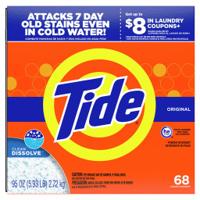
Tide Original Liquid Laundry Detergent 100 Loads
Swap it for
 Molly's Suds Baby Laundry Detergent Powder Fragrance Free Molly's Suds, LLC View on Amazon · $24.99 See all Laundry, ranked
At a glance
Summary
This laundry detergent contains several harsh and potentially harmful ingredients, including sodium lauryl sulfate, which is a strong irritant, and ethoxylated surfactants that may be contaminated with 1,4-dioxane, a potential carcinogen. Additionally, the presence of synthetic fragrances and dyes contributes to environmental concerns and potential skin irritation. While it includes beneficial enzymes for stain removal, the overall formulation is heavily chemical-based, impacting its safety and environmental profile. Its disclosed fragrance includes butylphenyl methylpropional (lilial), which the EU has banned from cosmetics since 2022 as a reproductive toxicant.
Key ingredients 29
Sodium Lauryl SulfateVery Bad
Sodium Lauryl Sulfate is a harsh surfactant known for its strong cleaning power. However, it is a strong skin irritant and can cause dryness and irritation.
Risks
Strong skin irritant, can cause dryness and irritation.
Benefits
Highly effective in removing dirt and grease.
C10-16 AlkethBad
C10-16 Alketh is an ethoxylated surfactant, which can be contaminated with 1,4-dioxane. This compound is a potential carcinogen and poses environmental concerns.
Risks
Potential contamination with 1,4-dioxane, a probable human carcinogen.
Benefits
It acts as a surfactant, helping to remove dirt and oils from fabrics.
Polyethyleneimines AlkoxylatedBad
Polyethyleneimines alkoxylated are ethoxylated compounds that may contain 1,4-dioxane. This poses a risk due to its potential carcinogenicity.
Risks
Possible contamination with 1,4-dioxane, a probable human carcinogen.
Benefits
Enhances cleaning performance by improving soil removal.
Sodium and MEA Laureth SulfateBad
Sodium and MEA Laureth Sulfate are ethoxylated surfactants that can be contaminated with 1,4-dioxane. They are milder than SLS but still pose irritation risks.
Risks
Potential contamination with 1,4-dioxane and skin irritation.
Benefits
Effective in removing oils and dirt from fabrics.
FragrancesBad
Fragrances are often synthetic and can cause allergic reactions or skin irritation. They are not essential for cleaning efficacy.
Risks
Potential allergens and skin irritants.
Benefits
Provides a pleasant scent to the product.
BenzisothiazolinoneBad
Benzisothiazolinone is a preservative that can cause skin sensitization and allergic reactions. It is used to prevent microbial growth in products.
Risks
Potential skin sensitizer and allergen.
Benefits
Prevents microbial growth, extending product shelf life.
Polyoxyalkylene Substituted Chromophore (Blue)Bad
This is a synthetic dye used for coloring purposes. It does not contribute to cleaning efficacy and can persist in the environment.
Risks
Potential environmental persistence and no cleaning function.
Benefits
Provides color to the product for aesthetic purposes.
Polyoxyalkylene Substituted Chromophore (Violet)Bad
This is a synthetic dye used for coloring purposes. It does not contribute to cleaning efficacy and can persist in the environment.
Risks
Potential environmental persistence and no cleaning function.
Benefits
Provides color to the product for aesthetic purposes.
WaterNeutral
Water is a common solvent used in many cleaning products. It helps to dissolve other ingredients and facilitate their application. It does not contribute to cleaning efficacy directly.
Risks
There are no significant risks associated with water in cleaning products.
Benefits
Water acts as a carrier for other ingredients, allowing them to be evenly distributed.
Sodium and MEA C10-16 AlkylbenzenesulfonateNeutral
This ingredient is a surfactant used to help remove dirt and stains. It is effective in breaking down oils and greases.
Risks
Can cause skin irritation with prolonged exposure.
Benefits
Effective in cleaning and removing stains from fabrics.
AlcoholNeutral
Alcohol is used as a solvent and can help dissolve other ingredients. It also has some antimicrobial properties.
Risks
Can cause skin dryness and irritation with prolonged exposure.
Benefits
Helps dissolve other ingredients and can enhance cleaning efficacy.
C10-16 Alkyldimethylamine OxideNeutral
This ingredient is a surfactant that helps to stabilize foam and improve cleaning performance. It is generally considered safe for use in cleaning products.
Risks
May cause mild skin irritation in sensitive individuals.
Benefits
Improves cleaning performance and stabilizes foam.
PEG Propylene Glycol Terephthalic Acid PolymerNeutral
This polymer is used to enhance the texture and stability of the product. It does not contribute directly to cleaning efficacy.
Risks
Generally considered safe, but can cause irritation in sensitive individuals.
Benefits
Improves product texture and stability.
Sodium CumenesulfonateNeutral
Sodium Cumenesulfonate is used as a hydrotrope to improve the solubility of other ingredients. It does not contribute directly to cleaning efficacy.
Risks
Generally considered safe with minimal risks.
Benefits
Improves solubility of other ingredients in the formulation.
Tetrasodium Glutamate DiacetateNeutral
This ingredient is a chelating agent that helps to bind metal ions, improving the stability and effectiveness of the product.
Risks
Generally considered safe with minimal risks.
Benefits
Enhances product stability and effectiveness by binding metal ions.
Hydrogenated Castor OilNeutral
Hydrogenated Castor Oil is used as an emollient and thickening agent. It does not contribute directly to cleaning efficacy.
Risks
Generally considered safe with minimal risks.
Benefits
Improves product texture and provides emollient properties.
DiethylenetriamineNeutral
Diethylenetriamine is used as a chelating agent to bind metal ions. It helps improve the stability and effectiveness of the product.
Risks
Can cause skin irritation with prolonged exposure.
Benefits
Enhances product stability by binding metal ions.
Methyl Di-t-butyl HydroxyhydrocinnamateNeutral
This ingredient is an antioxidant used to prevent the degradation of other ingredients. It does not contribute directly to cleaning efficacy.
Risks
Generally considered safe with minimal risks.
Benefits
Prevents degradation of other ingredients, enhancing product stability.
Phenylpropyl Ethyl MethiconeNeutral
Phenylpropyl Ethyl Methicone is a silicone-based compound used to improve the texture and spreadability of the product. It does not contribute directly to cleaning efficacy.
Risks
Generally considered safe with minimal risks.
Benefits
Improves product texture and spreadability.
EthanolamineNeutral
Ethanolamine is used as a pH adjuster and stabilizer in cleaning products. It helps maintain the effectiveness of the formulation.
Risks
Can cause skin and eye irritation with prolonged exposure.
Benefits
Maintains product stability and effectiveness by adjusting pH.
Sodium and MEA Salts of C12-18 Fatty AcidsNeutral
These salts are used as surfactants to help remove dirt and oils. They are generally considered safe for use in cleaning products.
Risks
Generally considered safe with minimal risks.
Benefits
Effective in removing dirt and oils from fabrics.
Calcium FormateNeutral
Calcium Formate is used as a stabilizer and pH adjuster in cleaning products. It helps maintain the effectiveness of the formulation.
Risks
Generally considered safe with minimal risks.
Benefits
Maintains product stability and effectiveness by adjusting pH.
SimethiconeNeutral
Simethicone is used as an anti-foaming agent to reduce excessive foaming during washing. It does not contribute directly to cleaning efficacy.
Risks
Generally considered safe with minimal risks.
Benefits
Reduces excessive foaming, improving washing efficiency.
TrimethylsiloxysilicateNeutral
Trimethylsiloxysilicate is a silicone-based compound used to improve the texture and spreadability of the product. It does not contribute directly to cleaning efficacy.
Risks
Generally considered safe with minimal risks.
Benefits
Improves product texture and spreadability.
Sodium and MEA CitrateGood
Sodium and MEA Citrate are used as water softeners and pH adjusters. They help improve the effectiveness of surfactants in hard water.
Risks
Generally considered safe with minimal risks.
Benefits
Enhances cleaning performance by softening water and adjusting pH.
SubtilisinGood
Subtilisin is an enzyme that helps break down protein-based stains. It enhances the cleaning power of the detergent.
Risks
Can cause allergic reactions in sensitive individuals.
Benefits
Effective in breaking down protein stains, improving cleaning performance.
Amylase EnzymeGood
Amylase is an enzyme that helps break down starch-based stains. It enhances the cleaning power of the detergent.
Risks
Can cause allergic reactions in sensitive individuals.
Benefits
Effective in breaking down starch stains, improving cleaning performance.
Cellulase EnzymeGood
Cellulase is an enzyme that helps break down cellulose-based stains. It enhances the cleaning power of the detergent.
Risks
Can cause allergic reactions in sensitive individuals.
Benefits
Effective in breaking down cellulose stains, improving cleaning performance.
Mannanase EnzymeGood
Mannanase is an enzyme that helps break down mannan-based stains. It enhances the cleaning power of the detergent.
Risks
Can cause allergic reactions in sensitive individuals.
Benefits
Effective in breaking down mannan stains, improving cleaning performance.
Get the full breakdown in the Scout appTake Scout shopping
Scan any product to see lab results, healthy alternatives, and your personalized analysis.
Are you Procter & Gamble? Fix an error Get the badge Get tested
Amazon pricing & content
Amazon price for Molly's Suds Baby Laundry Detergent Powder Fragrance Free as of . Product prices and availability are accurate as of the date/time indicated and are subject to change. Any price and availability information displayed on Amazon.com at the time of purchase will apply to the purchase of this product.
CERTAIN CONTENT THAT APPEARS ON THIS SITE COMES FROM AMAZON. THIS CONTENT IS PROVIDED “AS IS” AND IS SUBJECT TO CHANGE OR REMOVAL AT ANY TIME.