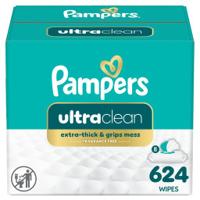
Pampers Sensitive

At a glance
Summary
Fragrance-, dye- and alcohol-free and accepted by the National Eczema Association, but the lotion includes PEG-40 hydrogenated castor oil (an ethoxylated ingredient that can carry 1,4-dioxane residue) and disodium EDTA, and unlike Pampers Ultra Clean the cloth contains polypropylene plastic.
Key ingredients 11
PolypropyleneNeutral
Polypropylene is a synthetic polymer commonly used in nonwoven fabrics for its durability and resistance to moisture. It is generally considered safe for use in personal care products. However, it is not biodegradable and can contribute to environmental pollution.
Risks
There are environmental concerns due to its non-biodegradable nature.
Benefits
It provides durability and moisture resistance in products.
Regenerated celluloseNeutral
Regenerated cellulose is derived from natural sources and used for its absorbent properties. It is generally considered safe and biodegradable. However, the processing involved can sometimes involve chemicals.
Risks
Processing may involve chemicals that could be of concern.
Benefits
It is biodegradable and provides absorbency.
WaterNeutral
Water is a universal solvent used in many formulations to dissolve other ingredients. It is safe and essential for hydration. However, it does not provide any active benefits on its own.
Benefits
It acts as a solvent and hydrates the skin.
Citric acidNeutral
Citric acid is used to adjust the pH of products and has mild preservative properties. It is generally safe but can cause irritation in sensitive individuals. It helps maintain product stability.
Risks
May cause irritation in sensitive skin.
Benefits
Helps maintain pH balance and product stability.
PEG-40 hydrogenated castor oilNeutral
PEG-40 hydrogenated castor oil is an emulsifier that helps blend oil and water-based ingredients. It is generally considered safe but may contain impurities from the ethoxylation process. It improves product texture and consistency.
Risks
Potential impurities from ethoxylation process.
Benefits
Improves texture and consistency of products.
Sodium citrateNeutral
Sodium citrate is used as a buffering agent to control pH levels in formulations. It is generally recognized as safe. It helps maintain the stability of the product.
Benefits
Helps maintain pH balance and product stability.
Sorbitan caprylateNeutral
Sorbitan caprylate is an emulsifier and skin conditioning agent. It is considered safe for use in cosmetics. It helps to stabilize formulations and improve skin feel.
Benefits
Stabilizes formulations and improves skin feel.
Isoamyl laurateNeutral
Isoamyl laurate is an emollient that provides a silky feel to the skin. It is considered safe for use in cosmetics. It improves the texture and spreadability of products.
Benefits
Improves texture and spreadability of products.
Xanthan gumNeutral
Xanthan gum is a thickening agent used to stabilize and thicken formulations. It is generally recognized as safe. It enhances the texture and consistency of products.
Benefits
Stabilizes and thickens formulations.
Sodium benzoateBad
Synthetic preservative that can form benzene in the presence of vitamin C.
Risks
May cause irritation in sensitive skin.
Benefits
Prevents microbial growth and extends shelf life.
Disodium EDTABad
Processed additive flagged under Scout's ingredient doctrine.
Risks
Potential environmental concerns due to persistence.
Benefits
Stabilizes formulations and enhances preservative efficacy.
Get the full breakdown in the Scout appTake Scout shopping
Scan any product to see lab results, healthy alternatives, and your personalized analysis.
Are you Procter & Gamble? Fix an error Get the badge Get tested