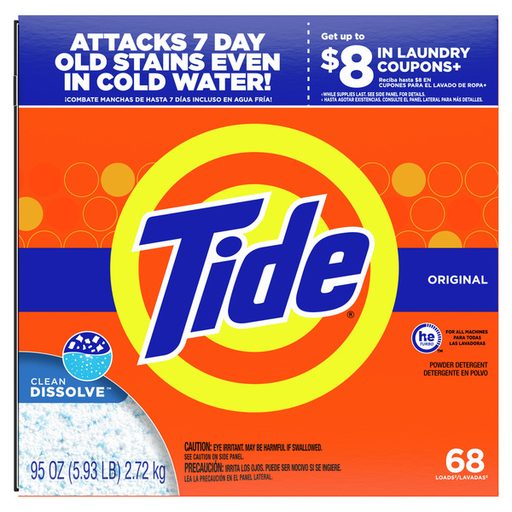
Tide Tide Powder Laundry Detergent Original Scent
At a glance
Summary
This laundry detergent contains several ingredients that raise environmental and safety concerns, such as C10-16 Pareth, which can be contaminated with 1,4-dioxane, and undisclosed fragrance, a common allergen. Additionally, the presence of optical brighteners like Fluorescent Brightener 71 and Disodium Distyrylbiphenyl Disulfonate, which do not contribute to cleaning and persist in the environment, further impacts its score negatively. However, the inclusion of biodegradable enzymes like subtilisin and amylase provides some redeeming qualities.
Key ingredients 20
SubtilisinGood
Subtilisin is an enzyme used to break down protein stains. It enhances the cleaning power of detergents. It is derived from natural sources and is biodegradable.
Risks
May cause allergic reactions in sensitive individuals.
Benefits
Effective in breaking down protein stains and is biodegradable.
Amylase EnzymeGood
Amylase enzyme is used to break down starch-based stains. It enhances the cleaning power of detergents. It is derived from natural sources and is biodegradable.
Risks
May cause allergic reactions in sensitive individuals.
Benefits
Effective in breaking down starch-based stains and is biodegradable.
Sodium SulfateNeutral
Sodium sulfate is a common filler in powdered detergents. It helps to evenly distribute the active ingredients. It does not contribute to cleaning efficacy.
Risks
There are no significant risks associated with sodium sulfate in laundry detergents.
Benefits
It helps in the even distribution of detergent components.
Sodium CarbonateNeutral
Sodium carbonate, also known as washing soda, is used to soften water and enhance cleaning efficiency. It is a common ingredient in many cleaning products. It is generally considered safe for use in laundry detergents.
Risks
Excessive exposure can cause skin irritation.
Benefits
It improves the effectiveness of the detergent by softening water.
Sodium C10-16 AlkylbenzenesulfonateNeutral
This is a surfactant that helps to remove dirt and stains from fabrics. It is effective in breaking down grease and oils. It is commonly used in many cleaning products.
Risks
May cause skin irritation with prolonged exposure.
Benefits
Effective in removing grease and oil stains.
Sodium Carbonate PeroxideNeutral
Sodium carbonate peroxide is an oxygen-based bleaching agent. It helps to remove stains and brighten fabrics. It is considered a safer alternative to chlorine bleach.
Risks
Can cause eye and skin irritation if not handled properly.
Benefits
Provides effective stain removal and fabric brightening.
Sodium SilicateNeutral
Sodium silicate is used as a corrosion inhibitor in detergents. It helps to protect metal parts of washing machines. It also stabilizes the detergent formula.
Risks
May cause skin and eye irritation upon contact.
Benefits
Protects metal parts from corrosion and stabilizes detergent.
Zeolite (Sodium Silicoaluminate)Neutral
Zeolites are used as water softeners in detergents. They help to enhance cleaning performance by removing calcium and magnesium ions. They are considered environmentally friendly alternatives to phosphates.
Risks
Inhalation of dust can cause respiratory irritation.
Benefits
Environmentally friendly water softener that improves cleaning performance.
WaterNeutral
Water is used as a solvent in many cleaning products. It helps to dissolve and distribute other ingredients. It is essential for the formulation of liquid detergents.
Benefits
Acts as a solvent and helps in the distribution of ingredients.
TAEDNeutral
TAED is a bleach activator used in detergents to enhance stain removal. It works by activating oxygen-based bleaches at lower temperatures. It is considered safe for use in laundry products.
Benefits
Enhances stain removal at lower temperatures.
Sodium PolyacrylateNeutral
Sodium polyacrylate is used as a water-absorbing agent in detergents. It helps to prevent redeposition of dirt on fabrics. It is commonly used in various cleaning products.
Risks
Inhalation of dust can cause respiratory irritation.
Benefits
Prevents redeposition of dirt on fabrics.
Cellulose GumNeutral
Cellulose gum is used as a thickener and stabilizer in detergents. It helps to maintain the consistency of the product. It is derived from natural cellulose and is considered safe.
Benefits
Helps maintain product consistency and stability.
C16-18 Fatty Acids Sodium SaltNeutral
This ingredient acts as a surfactant in detergents. It helps to break down and remove dirt and grease. It is derived from natural fatty acids and is generally considered safe.
Risks
May cause skin irritation with prolonged exposure.
Benefits
Effective in breaking down and removing dirt and grease.
Anionic Modified PolyesterNeutral
Anionic modified polyester is used as a dispersing agent in detergents. It helps to prevent soil redeposition on fabrics. It is considered safe for use in laundry products.
Benefits
Prevents soil redeposition on fabrics.
Organosilicone CopolymerNeutral
Organosilicone copolymers are used as antifoaming agents in detergents. They help to control foam levels during washing. They are generally considered safe for use in cleaning products.
Benefits
Controls foam levels during washing.
C10-16 ParethBad
C10-16 Pareth is an ethoxylated surfactant used for its cleaning properties. It can be contaminated with 1,4-dioxane, a potential carcinogen. It is effective in removing dirt and grease.
Risks
Potential contamination with 1,4-dioxane poses health risks.
Benefits
Effective in removing dirt and grease from fabrics.
Fluorescent Brightener 71Bad
Fluorescent brighteners are used to make fabrics appear whiter and brighter. They do not contribute to cleaning and can persist in the environment. They are often criticized for their environmental impact.
Risks
Persistent in the environment and may cause skin irritation.
Benefits
Makes fabrics appear whiter and brighter.
Disodium Distyrylbiphenyl DisulfonateBad
This is an optical brightener used to enhance the appearance of fabrics. It does not contribute to cleaning and can persist in the environment. It is often criticized for its environmental impact.
Risks
Persistent in the environment and may cause skin irritation.
Benefits
Enhances the appearance of fabrics by making them look brighter.
Pigment Blue 15Bad
Pigment Blue 15 is a synthetic dye used for coloring. It does not contribute to cleaning efficacy. Synthetic dyes can pose environmental concerns due to persistence.
Risks
May cause skin irritation and environmental persistence.
Benefits
Provides color to the product.
FragranceVery Bad
Undisclosed fragrance mixture — the most common allergen/irritant flag in personal care.
Risks
May cause allergic reactions and skin irritation.
Benefits
Provides a pleasant scent to the product.
Get the full breakdown in the Scout appTake Scout shopping
Scan any product to see lab results, healthy alternatives, and your personalized analysis.
Are you Procter & Gamble? Fix an error Get the badge Get tested