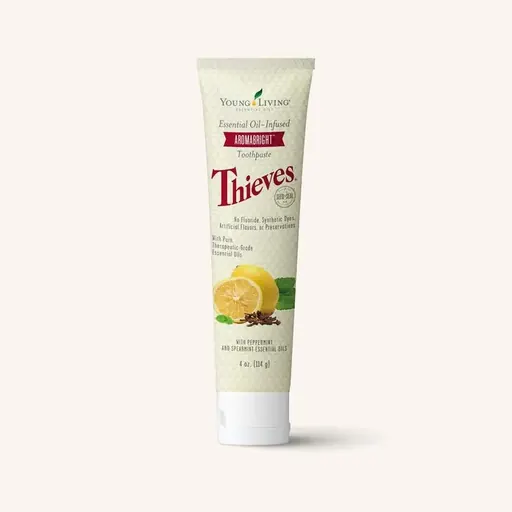
Young Living Thieves AromaBright Toothpaste
At a glance
Summary
Young Living Thieves AromaBright Toothpaste scores 94/100. A fluoride-free paste of calcium carbonate, coconut oil, baking soda, glycerin and xylitol, flavored with peppermint and spearmint oils and Young Living's Thieves blend (clove, cinnamon, lemon, eucalyptus, rosemary) plus ocotea, sweetened with stevia and thickened with xanthan gum and lecithin. No SLS, fluoride or artificial sweeteners.
Key ingredients 17
XylitolVery Good
Xylitol is a natural sweetener that has been shown to reduce cavity-causing bacteria in the mouth. It helps in preventing tooth decay and is considered highly beneficial in oral care products. It is a preferred sweetener in toothpaste formulations.
Risks
There are minimal risks associated with xylitol in toothpaste.
Benefits
Xylitol helps reduce cavity-causing bacteria and promotes oral health.
Cocos Nucifera (Coconut) OilGood
Coconut oil is known for its natural antibacterial properties, which can help reduce harmful bacteria in the mouth. It is also used in oil pulling practices for oral health benefits. It is considered a beneficial ingredient in oral care products.
Risks
There are minimal risks associated with coconut oil in toothpaste.
Benefits
Coconut oil can help reduce harmful bacteria and improve oral hygiene.
Sodium BicarbonateGood
Sodium bicarbonate, or baking soda, is a gentle abrasive that helps clean teeth and neutralize acids in the mouth. It is effective in reducing plaque and maintaining oral pH balance. It is considered a beneficial ingredient in toothpaste.
Risks
Overuse of baking soda can lead to enamel wear if used excessively.
Benefits
It helps in cleaning teeth and neutralizing acids, promoting oral health.
Mentha Piperita (Peppermint) OilGood
Peppermint oil is known for its natural antimicrobial properties and ability to freshen breath. It is commonly used in oral care products for its flavor and health benefits. It is considered a beneficial ingredient in toothpaste.
Risks
There are minimal risks associated with peppermint oil in toothpaste.
Benefits
Peppermint oil helps freshen breath and has antimicrobial properties.
Mentha Spicata (Spearmint) Leaf OilGood
Spearmint oil provides a refreshing flavor and has natural antimicrobial properties. It is used in oral care products to enhance flavor and promote oral health. It is considered a beneficial ingredient in toothpaste.
Risks
There are minimal risks associated with spearmint oil in toothpaste.
Benefits
Spearmint oil helps freshen breath and has antimicrobial properties.
Eugenia Caryophyllus (Clove) Bud OilGood
Clove bud oil is known for its natural analgesic and antimicrobial properties. It is used in oral care products for its ability to soothe gums and reduce bacteria. It is considered a beneficial ingredient in toothpaste.
Risks
There are minimal risks associated with clove bud oil in toothpaste.
Benefits
Clove bud oil helps soothe gums and has antimicrobial properties.
Cinnamomum Zeylanicum (Cinnamon) Bark OilGood
Cinnamon bark oil is known for its antimicrobial properties and ability to freshen breath. It is used in oral care products for its flavor and health benefits. It is considered a beneficial ingredient in toothpaste.
Risks
There are minimal risks associated with cinnamon bark oil in toothpaste.
Benefits
Cinnamon bark oil helps freshen breath and has antimicrobial properties.
Eucalyptus Radiata (Eucalyptus) Leaf OilGood
Eucalyptus leaf oil is known for its antimicrobial properties and ability to freshen breath. It is used in oral care products for its flavor and health benefits. It is considered a beneficial ingredient in toothpaste.
Risks
There are minimal risks associated with eucalyptus leaf oil in toothpaste.
Benefits
Eucalyptus leaf oil helps freshen breath and has antimicrobial properties.
Rosmarinus Officinalis (Rosemary) OilGood
Rosemary oil is known for its antimicrobial properties and ability to freshen breath. It is used in oral care products for its flavor and health benefits. It is considered a beneficial ingredient in toothpaste.
Risks
There are minimal risks associated with rosemary oil in toothpaste.
Benefits
Rosemary oil helps freshen breath and has antimicrobial properties.
WaterNeutral
Water is a common solvent used in toothpaste formulations. It helps dissolve other ingredients and provides the necessary consistency. It does not have direct oral health benefits or risks.
Risks
There are no significant risks associated with water in toothpaste.
Benefits
Water helps in maintaining the desired texture and consistency of the toothpaste.
Calcium CarbonateNeutral
Calcium carbonate is used as a mild abrasive in toothpaste to help remove plaque and surface stains. It is generally considered safe and effective for this purpose. However, it does not provide additional oral health benefits beyond its abrasive action.
Risks
Excessive use of abrasives can potentially wear down enamel over time.
Benefits
It helps in cleaning teeth by removing plaque and surface stains.
GlycerinNeutral
Glycerin is used in toothpaste to maintain moisture and prevent the paste from drying out. It also provides a sweet taste without promoting tooth decay. It is generally considered safe and neutral in terms of oral health impact.
Risks
There are no significant risks associated with glycerin in toothpaste.
Benefits
Glycerin helps maintain moisture and provides a pleasant taste.
Xanthan GumNeutral
Xanthan gum is used as a thickening agent in toothpaste to provide the desired consistency. It does not have direct oral health benefits or risks. It is generally considered safe for use in oral care products.
Risks
There are no significant risks associated with xanthan gum in toothpaste.
Benefits
Xanthan gum helps maintain the desired consistency of the toothpaste.
Stevia Rebaudiana (Stevia) Leaf ExtractNeutral
Stevia leaf extract is used as a natural sweetener in toothpaste. It provides sweetness without contributing to tooth decay. It is generally considered safe and neutral in terms of oral health impact.
Risks
There are no significant risks associated with stevia leaf extract in toothpaste.
Benefits
Stevia provides sweetness without promoting tooth decay.
Ocotea Quixos (Ocotea) Leaf OilNeutral
Ocotea leaf oil is used for its aromatic properties and potential antimicrobial effects. It is not commonly used in oral care products, and its specific benefits in toothpaste are not well-documented. It is generally considered safe.
Risks
There are no significant risks associated with ocotea leaf oil in toothpaste.
Benefits
Ocotea leaf oil may provide antimicrobial benefits and a pleasant aroma.
Citrus Limon (Lemon) Peel OilNeutral
Lemon peel oil is used for its aromatic properties and potential antimicrobial effects. It is not commonly used in oral care products, and its specific benefits in toothpaste are not well-documented. It is generally considered safe.
Risks
There are no significant risks associated with lemon peel oil in toothpaste.
Benefits
Lemon peel oil may provide antimicrobial benefits and a pleasant aroma.
LecithinBad
Processed additive flagged under Scout's ingredient doctrine.
Risks
There are no significant risks associated with lecithin in toothpaste.
Benefits
Lecithin helps blend ingredients and maintain consistency.
Get the full breakdown in the Scout appTake Scout shopping
Scan any product to see lab results, healthy alternatives, and your personalized analysis.
Amazon pricing & content
Amazon price as of . Product prices and availability are accurate as of the date/time indicated and are subject to change. Any price and availability information displayed on Amazon.com at the time of purchase will apply to the purchase of this product.
CERTAIN CONTENT THAT APPEARS ON THIS SITE COMES FROM AMAZON. THIS CONTENT IS PROVIDED “AS IS” AND IS SUBJECT TO CHANGE OR REMOVAL AT ANY TIME.