


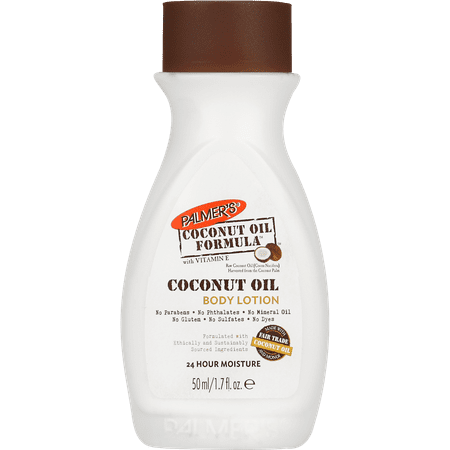
Palmer s Cocoa Butter Formula Body Lotion Tahitian Vanilla 20 fl oz
Analysis updated August 2026 · How Scout scores
At a glance
Summary
This body lotion contains several beneficial natural ingredients such as shea butter, coconut oil, and cocoa butter, which are known for their moisturizing and skin-soothing properties. However, the presence of synthetic fragrance (parfum) and phenoxyethanol, which can cause irritation and allergic reactions, detracts from its overall safety profile. The product has a mix of natural and synthetic components, leading to a moderate processing level.
Key ingredients 31
Butyrospermum Parkii ButterVery Good
Shea butter is a natural fat extracted from the nuts of the shea tree. It is known for its moisturizing and anti-inflammatory properties.
Risks
Rarely, it may cause allergic reactions in individuals sensitive to nuts.
Benefits
Shea butter deeply moisturizes the skin and can help soothe irritation.
Cocos Nucifera OilVery Good
Coconut oil is a natural oil known for its moisturizing and antibacterial properties. It is widely used in cosmetics for its skin benefits.
Risks
It may clog pores in some individuals, leading to acne.
Benefits
Coconut oil deeply moisturizes the skin and can help protect against microbial infections.
TocopherolVery Good
Tocopherol, or Vitamin E, is a powerful antioxidant that helps protect the skin from damage caused by free radicals.
Risks
It is generally safe, but high concentrations may cause skin irritation.
Benefits
Vitamin E helps to nourish and protect the skin, promoting a healthy appearance.
Theobroma Cacao Seed ButterVery Good
Cocoa butter is a natural fat extracted from cocoa beans, known for its moisturizing and skin-soothing properties.
Risks
It may cause allergic reactions in individuals sensitive to cocoa.
Benefits
Cocoa butter deeply moisturizes the skin and helps to improve skin elasticity.
Prunus Amygdalus Dulcis OilVery Good
Sweet almond oil is a natural oil rich in vitamins and fatty acids, used for its moisturizing and nourishing properties.
Risks
It may cause allergic reactions in individuals with nut allergies.
Benefits
Almond oil helps to soften and smooth the skin, providing deep hydration.
Macadamia Ternifolia Seed OilVery Good
Macadamia oil is a natural oil rich in fatty acids, known for its moisturizing and skin-repairing properties.
Risks
It may cause allergic reactions in individuals with nut allergies.
Benefits
Macadamia oil helps to nourish and protect the skin, improving its texture and appearance.
SqualaneVery Good
Squalane is a highly effective emollient and natural antioxidant, known for its moisturizing properties.
Risks
There are minimal risks associated with squalane in cosmetics.
Benefits
Squalane helps to hydrate and protect the skin, enhancing its suppleness and elasticity.
Vanilla Tahitensis Fruit ExtractGood
Vanilla extract is used for its fragrance and potential antioxidant properties. It adds a pleasant scent to cosmetics.
Risks
There are minimal risks associated with vanilla extract in cosmetics.
Benefits
It provides a natural fragrance and may offer antioxidant benefits.
Vanilla Planifolia Fruit ExtractGood
Similar to Vanilla Tahitensis, this extract is used for its fragrance and potential antioxidant properties.
Risks
There are minimal risks associated with vanilla extract in cosmetics.
Benefits
It provides a natural fragrance and may offer antioxidant benefits.
Tocopheryl AcetateGood
Tocopheryl acetate is a stable form of Vitamin E used in cosmetics for its antioxidant properties.
Risks
It is generally safe, but high concentrations may cause skin irritation.
Benefits
It helps to protect the skin from oxidative stress and supports skin health.
Gardenia Taitensis Flower ExtractGood
Gardenia extract is used for its fragrance and potential antioxidant properties. It adds a natural scent to cosmetics.
Risks
There are minimal risks associated with gardenia extract in cosmetics.
Benefits
It provides a natural fragrance and may offer antioxidant benefits.
Helianthus Annuus Seed ExtractGood
Sunflower seed extract is used for its emollient and antioxidant properties. It helps to nourish and protect the skin.
Risks
There are minimal risks associated with sunflower seed extract in cosmetics.
Benefits
It helps to moisturize the skin and protect it from environmental damage.
WaterNeutral
Water is a common solvent used in cosmetics to dissolve other ingredients. It helps in the application and absorption of the lotion.
Risks
There are no significant risks associated with water in cosmetics.
Benefits
Water hydrates the skin and helps in the distribution of other beneficial ingredients.
Cetyl AlcoholNeutral
Cetyl alcohol is a fatty alcohol used as an emollient and thickening agent in cosmetics. It helps to stabilize and thicken formulations.
Risks
It is generally considered safe, but in rare cases, it may cause skin irritation.
Benefits
Cetyl alcohol helps to soften and smooth the skin.
Palmitic AcidNeutral
Palmitic acid is a fatty acid used in cosmetics for its emollient properties. It helps to improve the texture and feel of the product.
Risks
There are minimal risks associated with palmitic acid in cosmetics.
Benefits
It helps to moisturize and protect the skin.
Isopropyl MyristateNeutral
Isopropyl myristate is used as an emollient and thickening agent in cosmetics. It helps to enhance the absorption of other ingredients.
Risks
It may cause skin irritation in sensitive individuals.
Benefits
It provides a smooth application and helps to lock in moisture.
Stearic AcidNeutral
Stearic acid is a fatty acid used as an emulsifier and thickening agent in cosmetics. It helps to stabilize formulations.
Risks
There are minimal risks associated with stearic acid in cosmetics.
Benefits
It helps to improve the texture and consistency of the product.
CarbomerNeutral
Carbomer is a synthetic polymer used as a thickening agent in cosmetics. It helps to stabilize and thicken formulations.
Risks
There are minimal risks associated with carbomer in cosmetics.
Benefits
It helps to improve the texture and consistency of the product.
Citric AcidNeutral
Citric acid is used to adjust the pH of cosmetic formulations. It also acts as a mild exfoliant.
Risks
In high concentrations, it may cause skin irritation.
Benefits
It helps to maintain the stability of the product and can improve skin texture.
EthylhexylglycerinNeutral
Ethylhexylglycerin is used as a skin-conditioning agent and preservative enhancer in cosmetics.
Risks
There are minimal risks associated with ethylhexylglycerin in cosmetics.
Benefits
It helps to improve the skin feel and enhance the efficacy of preservatives.
PEG-40 StearateNeutral
PEG-40 stearate is used as an emulsifier and surfactant in cosmetics. It helps to blend oil and water-based ingredients.
Risks
There is a potential risk of contamination with 1,4-dioxane, a byproduct of ethoxylation.
Benefits
It helps to stabilize formulations and improve texture.
Stearyl AlcoholNeutral
Stearyl alcohol is a fatty alcohol used as an emollient and thickening agent in cosmetics. It helps to stabilize and thicken formulations.
Risks
It is generally considered safe, but in rare cases, it may cause skin irritation.
Benefits
Stearyl alcohol helps to soften and smooth the skin.
Tetrasodium EDTANeutral
Tetrasodium EDTA is used as a chelating agent in cosmetics. It helps to improve the stability and efficacy of the product.
Risks
There are minimal risks associated with tetrasodium EDTA in cosmetics.
Benefits
It helps to enhance the performance of preservatives and improve product stability.
HexamethylindanopyranNeutral
Hexamethylindanopyran is a synthetic fragrance ingredient used to impart scent to cosmetics.
Risks
There are minimal risks associated with this ingredient in cosmetics.
Benefits
It provides a long-lasting fragrance to the product.
Benzyl BenzoateNeutral
Benzyl benzoate is used as a fragrance ingredient and solvent in cosmetics. It helps to enhance the scent of the product.
Risks
It may cause skin irritation or allergic reactions in sensitive individuals.
Benefits
It provides a pleasant scent and helps to dissolve other fragrance ingredients.
TrimethylbenzenepropanolNeutral
Trimethylbenzenepropanol is a fragrance ingredient used to impart scent to cosmetics.
Risks
There are minimal risks associated with this ingredient in cosmetics.
Benefits
It provides a long-lasting fragrance to the product.
Propylene GlycolBad
Processed additive flagged under Scout's ingredient doctrine.
Risks
In rare cases, it may cause skin irritation or allergic reactions.
Benefits
It helps to keep the skin hydrated and enhances the penetration of other ingredients.
ParfumBad
Fragrance is used to impart scent to cosmetics. However, it can be a mixture of various chemicals, some of which may cause irritation.
Risks
Fragrance can cause allergic reactions and skin irritation, especially in sensitive individuals.
Benefits
It provides a pleasant scent to the product.
Aminomethyl PropanolBad
Processed additive flagged under Scout's ingredient doctrine.
Risks
There are minimal risks associated with aminomethyl propanol in cosmetics.
Benefits
It helps to ensure the product remains effective and safe for use.
PhenoxyethanolBad
Phenoxyethanol is a preservative used in cosmetics to prevent microbial growth. However, it can cause skin irritation and allergic reactions in some individuals.
Risks
It may cause skin irritation and allergic reactions, especially in sensitive individuals.
Benefits
It helps to preserve the product and extend its shelf life.
VanillinBad
Processed additive flagged under Scout's ingredient doctrine.
Risks
There are minimal risks associated with vanillin in cosmetics.
Benefits
It provides a natural fragrance and may offer antioxidant benefits.
Get the full breakdown in the Scout appTake Scout shopping
Scan any product to see lab results, healthy alternatives, and your personalized analysis.
Download on theApp Store GET IT ONGoogle PlayAmazon pricing & content
Amazon price as of . Product prices and availability are accurate as of the date/time indicated and are subject to change. Any price and availability information displayed on Amazon.com at the time of purchase will apply to the purchase of this product.
CERTAIN CONTENT THAT APPEARS ON THIS SITE COMES FROM AMAZON. THIS CONTENT IS PROVIDED “AS IS” AND IS SUBJECT TO CHANGE OR REMOVAL AT ANY TIME.