
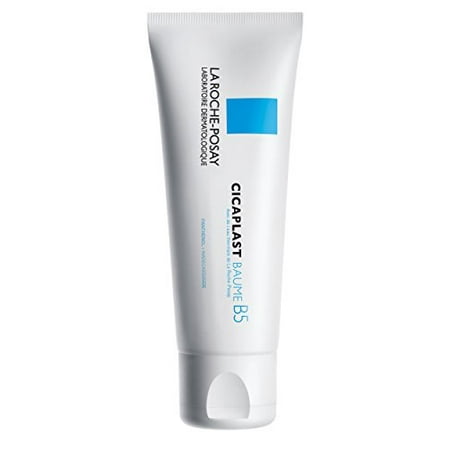
La Roche-Posay Cicaplast Baume B5 Soothing Multi-Purpose Balm Cream for Dry Skin 1.35 Fl. Oz.
Analysis updated August 2026 · How Scout scores
At a glance
Summary
This balm contains beneficial ingredients like shea butter, panthenol, and madecassoside, which are known for their moisturizing and soothing properties. However, the presence of PEG compounds and synthetic ingredients like dimethicone and aluminum starch octenylsuccinate slightly lowers its rating. The product is moderately processed, which also impacts its overall score.
Key ingredients 22
Butyrospermum Parkii Butter/Shea ButterVery Good
Shea Butter is a natural fat extracted from the nuts of the shea tree, known for its moisturizing and anti-inflammatory properties. It is rich in vitamins and fatty acids, making it an excellent emollient for dry skin. It is highly beneficial for improving skin elasticity and soothing irritation.
Risks
There are minimal risks, though individuals with nut allergies should exercise caution.
Benefits
It deeply moisturizes and nourishes the skin, providing anti-inflammatory benefits.
PanthenolVery Good
Panthenol, also known as provitamin B5, is a moisturizing agent that helps improve skin hydration and elasticity. It has anti-inflammatory properties and aids in skin healing. It is widely used in skincare for its soothing and repairing effects.
Risks
There are minimal risks, though it may cause mild irritation in very sensitive skin.
Benefits
It enhances skin hydration and promotes healing and repair.
MadecassosideVery Good
Madecassoside is a compound derived from Centella Asiatica, known for its soothing and healing properties. It helps reduce inflammation and promotes skin repair. It is highly beneficial for sensitive and irritated skin.
Risks
There are minimal risks, though it may cause irritation in very sensitive skin.
Benefits
It soothes and heals the skin, promoting repair and reducing inflammation.
GlycerinGood
Glycerin is a humectant that attracts moisture to the skin, making it an effective moisturizer. It is a natural compound that is safe and beneficial for most skin types. It helps maintain skin hydration and improves skin barrier function.
Risks
There are minimal risks associated with glycerin, though it may cause irritation in very sensitive skin.
Benefits
It effectively hydrates the skin and enhances its barrier function.
Zinc GluconateGood
Zinc Gluconate is a zinc salt used for its anti-inflammatory and antimicrobial properties. It helps soothe irritated skin and can aid in the treatment of acne. It is beneficial for maintaining skin health and reducing inflammation.
Risks
There are minimal risks, though excessive use may lead to skin dryness.
Benefits
It provides anti-inflammatory and antimicrobial benefits, aiding in skin health.
Aqua/WaterNeutral
Water is a common solvent used in cosmetic formulations. It helps dissolve other ingredients and provides a base for the product. It does not have any direct benefits or risks.
Risks
There are no significant risks associated with water in cosmetics.
Benefits
Water helps in the application and absorption of the product.
Hydrogenated PolyisobuteneNeutral
Hydrogenated Polyisobutene is a synthetic polymer used as an emollient and moisturizer. It provides a smooth application and helps retain moisture in the skin. It is generally considered safe for use in cosmetics.
Risks
There are minimal risks associated with its use, primarily related to potential skin irritation in sensitive individuals.
Benefits
It helps in moisturizing the skin and improving the texture of the product.
Butylene GlycolNeutral
Butylene Glycol is a common solvent and conditioning agent in cosmetics. It helps improve the texture and spreadability of products. It is generally considered safe for use in skincare.
Risks
There are minimal risks, though it may cause irritation in sensitive skin.
Benefits
It enhances product texture and helps in moisture retention.
Aluminum Starch OctenylsuccinateNeutral
Aluminum Starch Octenylsuccinate is used as an absorbent and anti-caking agent in cosmetics. It helps control oil and provides a matte finish. It is considered safe for use in skincare products.
Risks
There are minimal risks, though it may cause irritation in sensitive skin.
Benefits
It helps control oil and provides a smooth, matte finish.
PropanediolNeutral
Propanediol is a glycol used as a solvent and skin-conditioning agent. It helps improve the texture and absorption of products. It is generally considered safe for use in cosmetics.
Risks
There are minimal risks, though it may cause irritation in sensitive skin.
Benefits
It enhances product absorption and provides a smooth application.
Cetyl PEG/PPG-10/1 DimethiconeNeutral
Cetyl PEG/PPG-10/1 Dimethicone is a silicone-based surfactant used to improve the spreadability of products. It provides a smooth application and enhances the texture of formulations. It is generally considered safe for use in cosmetics.
Risks
There are minimal risks, though it may cause irritation in sensitive skin.
Benefits
It improves product spreadability and provides a smooth texture.
TrihydroxystearinNeutral
Trihydroxystearin is a thickening agent used to stabilize emulsions in cosmetics. It helps maintain the consistency and texture of products. It is considered safe for use in skincare formulations.
Risks
There are minimal risks, though it may cause irritation in sensitive skin.
Benefits
It stabilizes emulsions and maintains product consistency.
Manganese GluconateNeutral
Manganese Gluconate is a manganese salt used for its antioxidant properties. It helps protect the skin from oxidative stress. It is generally considered safe for use in cosmetics.
Risks
There are minimal risks, though it may cause irritation in sensitive skin.
Benefits
It provides antioxidant protection, helping to protect the skin from damage.
Magnesium SulfateNeutral
Magnesium Sulfate, also known as Epsom salt, is used as a bulking agent and to improve the texture of products. It is generally considered safe for use in cosmetics. It does not have significant direct benefits or risks.
Risks
There are minimal risks, though it may cause irritation in sensitive skin.
Benefits
It helps improve product texture and consistency.
Copper GluconateNeutral
Copper Gluconate is a copper salt used for its antioxidant and skin-conditioning properties. It helps protect the skin from oxidative stress and supports skin health. It is generally considered safe for use in cosmetics.
Risks
There are minimal risks, though it may cause irritation in sensitive skin.
Benefits
It provides antioxidant protection and supports skin health.
Acetylated Glycol StearateNeutral
Acetylated Glycol Stearate is an emulsifier used to stabilize formulations and improve texture. It helps maintain the consistency of products. It is generally considered safe for use in cosmetics.
Risks
There are minimal risks, though it may cause irritation in sensitive skin.
Benefits
It stabilizes formulations and improves product texture.
Polyglyceryl-4 IsostearateNeutral
Polyglyceryl-4 Isostearate is an emulsifier used to blend oil and water components in formulations. It helps improve the texture and stability of products. It is generally considered safe for use in cosmetics.
Risks
There are minimal risks, though it may cause irritation in sensitive skin.
Benefits
It enhances product stability and texture.
Chlorhexidine DigluconateNeutral
Chlorhexidine Digluconate is an antimicrobial agent used to prevent bacterial growth in cosmetics. It helps maintain product hygiene and safety. It is generally considered safe for use in cosmetics.
Risks
There are minimal risks, though it may cause irritation in sensitive skin.
Benefits
It provides antimicrobial protection, maintaining product hygiene.
CI 77891/Titanium DioxideNeutral
Titanium Dioxide is a mineral used as a pigment and UV filter in cosmetics. It provides opacity and sun protection in formulations. It is generally considered safe for use in cosmetics.
Risks
There are minimal risks, though inhalation of fine particles may pose respiratory concerns.
Benefits
It provides UV protection and enhances product opacity.
DimethiconeBad
Occlusive silicone film-former — flagged under clean-beauty doctrine.
Risks
Some individuals may experience skin irritation or breakouts from silicones.
Benefits
It helps in smoothing the skin and locking in moisture.
Disodium EDTABad
Processed additive flagged under Scout's ingredient doctrine.
Risks
There are minimal risks, though it may cause irritation in sensitive skin.
Benefits
It enhances product stability and shelf life.
Sodium BenzoateBad
Synthetic preservative that can form benzene in the presence of vitamin C.
Risks
There are minimal risks, though it may cause irritation in sensitive skin.
Benefits
It prevents microbial growth, extending product shelf life.
Processing
Processed Foods
Get the full breakdown in the Scout appTake Scout shopping
Scan any product to see lab results, healthy alternatives, and your personalized analysis.
Download on theApp Store GET IT ONGoogle PlayAmazon pricing & content
Amazon price as of . Product prices and availability are accurate as of the date/time indicated and are subject to change. Any price and availability information displayed on Amazon.com at the time of purchase will apply to the purchase of this product.
CERTAIN CONTENT THAT APPEARS ON THIS SITE COMES FROM AMAZON. THIS CONTENT IS PROVIDED “AS IS” AND IS SUBJECT TO CHANGE OR REMOVAL AT ANY TIME.