
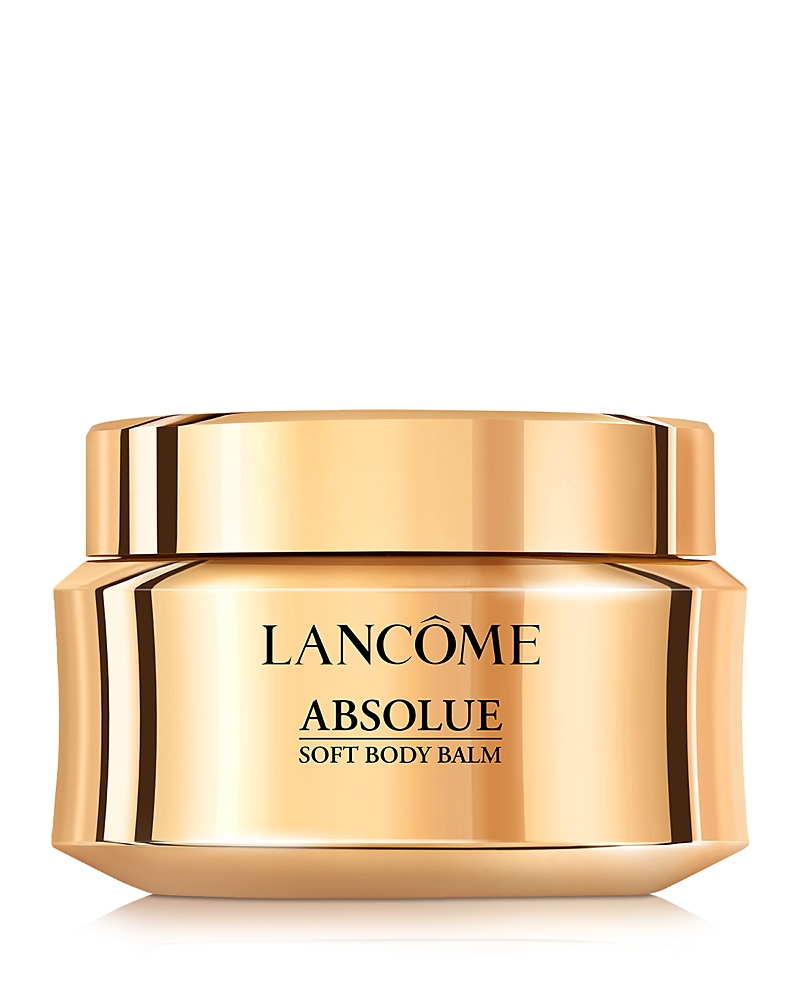


Lancome Absolue Soft Body Balm 6.7 oz.
Analysis updated August 2026 · How Scout scores
At a glance
Summary
This body balm contains beneficial ingredients such as niacinamide, shea butter, and macadamia oil, which provide moisturizing and nourishing benefits. However, it also includes several fragrance components like limonene, linalool, and citronellol, which are potential allergens and can cause skin irritation. The presence of alcohol and synthetic fragrance further detracts from its overall safety profile, leading to a moderate processing level.
Key ingredients 48
Butyrospermum Parkii Butter / Shea ButterVery Good
Shea Butter is a natural fat extracted from the nuts of the shea tree. It is known for its moisturizing and anti-inflammatory properties. It is beneficial for dry and sensitive skin types.
Risks
Rarely causes allergic reactions.
Benefits
Provides deep moisturization and anti-inflammatory benefits.
Macadamia Integrifolia Seed OilVery Good
Macadamia Oil is a natural oil rich in fatty acids that nourish and moisturize the skin. It is easily absorbed and helps to improve skin elasticity. It is beneficial for dry and mature skin types.
Risks
Rarely causes irritation or allergic reactions.
Benefits
Nourishes and moisturizes the skin, improving elasticity.
TocopherolVery Good
Tocopherol, also known as Vitamin E, is a powerful antioxidant that helps to protect the skin from free radical damage. It also has moisturizing properties. It is beneficial for maintaining healthy skin.
Risks
Rarely causes irritation or allergic reactions.
Benefits
Protects the skin from free radical damage and provides moisturization.
GlycerinGood
Glycerin is a humectant that attracts moisture to the skin, helping to keep it hydrated. It is widely used in skincare for its moisturizing properties. It is considered safe and beneficial for most skin types.
Risks
Rarely causes irritation or allergic reactions.
Benefits
Helps to keep the skin hydrated and moisturized.
Caprylic/Capric TriglycerideGood
Caprylic/Capric Triglyceride is an emollient derived from coconut oil and glycerin. It helps to smooth and soften the skin. It is well-tolerated by most skin types and provides a lightweight, non-greasy feel.
Risks
Generally considered safe with minimal risk of irritation.
Benefits
Smooths and softens the skin, providing a lightweight feel.
NiacinamideGood
Niacinamide is a form of Vitamin B3 that offers multiple skin benefits, including improving skin tone and texture. It is known for its anti-inflammatory and brightening properties. It is well-tolerated by most skin types.
Risks
Rarely causes irritation or redness.
Benefits
Improves skin tone, texture, and provides anti-inflammatory benefits.
Rosa Damascena Flower WaterGood
Rosa Damascena Flower Water is known for its soothing and anti-inflammatory properties. It helps to calm and hydrate the skin. It is beneficial for sensitive and irritated skin types.
Risks
Rarely causes irritation or allergic reactions.
Benefits
Soothes and hydrates the skin, providing anti-inflammatory benefits.
Capryloyl Salicylic AcidGood
Capryloyl Salicylic Acid is a derivative of salicylic acid that offers exfoliating and anti-inflammatory benefits. It helps to improve skin texture and reduce blemishes. It is beneficial for acne-prone skin.
Risks
May cause irritation in sensitive skin types.
Benefits
Exfoliates and improves skin texture, reducing blemishes.
AdenosineGood
Adenosine is known for its anti-aging and skin-soothing properties. It helps to improve the appearance of fine lines and wrinkles. It is beneficial for mature skin types.
Risks
Rarely causes irritation or allergic reactions.
Benefits
Improves the appearance of fine lines and wrinkles, providing anti-aging benefits.
Ceramide NPGood
Ceramide NP is a lipid that helps to restore and maintain the skin's natural barrier. It is beneficial for improving skin hydration and reducing dryness. It is well-tolerated by most skin types.
Risks
Rarely causes irritation or allergic reactions.
Benefits
Restores and maintains the skin's natural barrier, improving hydration.
Theobroma Cacao Extract / Cocoa ExtractGood
Cocoa Extract is rich in antioxidants and provides moisturizing benefits. It helps to protect the skin from free radical damage. It is beneficial for maintaining healthy skin.
Risks
Rarely causes irritation or allergic reactions.
Benefits
Provides antioxidant protection and moisturization.
Salicylic AcidGood
Salicylic Acid is a beta hydroxy acid known for its exfoliating and anti-inflammatory properties. It helps to unclog pores and reduce acne. It is beneficial for acne-prone skin.
Risks
May cause irritation in sensitive skin types.
Benefits
Exfoliates and unclogs pores, reducing acne.
Rosa Hybrid Flower ExtractGood
Rosa Hybrid Flower Extract is known for its soothing and antioxidant properties. It helps to calm and protect the skin from free radical damage. It is beneficial for sensitive and irritated skin types.
Risks
Rarely causes irritation or allergic reactions.
Benefits
Soothes and protects the skin, providing antioxidant benefits.
Aqua / Water / EauNeutral
Water is a common solvent used in cosmetics to dissolve other ingredients. It helps in the application and absorption of the product. It does not provide any direct benefits or risks.
Benefits
Acts as a solvent and helps in the application of the product.
Butylene GlycolNeutral
Butylene Glycol is used as a solvent and conditioning agent in cosmetics. It helps in improving the texture and spreadability of the product. It is generally considered safe for use in cosmetics.
Risks
May cause irritation in sensitive skin types.
Benefits
Improves texture and spreadability of the product.
Behenyl AlcoholNeutral
Behenyl Alcohol is a fatty alcohol used as an emollient and thickener in cosmetics. It helps to improve the texture and stability of the product. It is not drying like other alcohols and is generally safe for use.
Risks
Minimal risk of irritation or sensitization.
Benefits
Improves texture and stability of the product.
Pentylene GlycolNeutral
Pentylene Glycol is used as a solvent and skin-conditioning agent. It helps to improve the texture and moisture retention of the product. It is generally considered safe for use in cosmetics.
Risks
May cause irritation in sensitive individuals.
Benefits
Improves texture and moisture retention of the product.
Dicaprylyl CarbonateNeutral
Dicaprylyl Carbonate is an emollient that provides a silky feel to the skin. It helps to improve the spreadability of the product. It is generally well-tolerated and safe for use.
Risks
Minimal risk of irritation.
Benefits
Provides a silky feel and improves spreadability.
Cetearyl AlcoholNeutral
Cetearyl Alcohol is a fatty alcohol used as an emollient and emulsifier. It helps to stabilize and thicken formulations. It is not drying and is generally safe for use.
Risks
Minimal risk of irritation or sensitization.
Benefits
Stabilizes and thickens formulations.
1,2-HexanediolNeutral
1,2-Hexanediol is used as a solvent and preservative booster in cosmetics. It helps to improve the stability and shelf-life of the product. It is generally considered safe for use.
Risks
May cause irritation in sensitive skin types.
Benefits
Improves stability and shelf-life of the product.
C14-22 AlcoholsNeutral
C14-22 Alcohols are fatty alcohols used as emollients and thickeners. They help to improve the texture and stability of the product. They are generally considered safe for use.
Risks
Minimal risk of irritation.
Benefits
Improve texture and stability of the product.
C12-16 AlcoholsNeutral
C12-16 Alcohols are fatty alcohols used as emollients and thickeners. They help to improve the texture and stability of the product. They are generally considered safe for use.
Risks
Minimal risk of irritation.
Benefits
Improve texture and stability of the product.
Hydroxypropyl TetrahydropyrantriolNeutral
Hydroxypropyl Tetrahydropyrantriol is a synthetic ingredient used for its anti-aging properties. It helps to improve skin firmness and elasticity. It is generally considered safe for use.
Risks
Minimal risk of irritation.
Benefits
Improves skin firmness and elasticity.
TromethamineNeutral
Tromethamine is used as a pH adjuster in cosmetics. It helps to maintain the stability and efficacy of the product. It is generally considered safe for use.
Risks
Minimal risk of irritation.
Benefits
Maintains stability and efficacy of the product.
Hydroxyethyl Acrylate/Sodium Acryloyldimethyl Taurate CopolymerNeutral
This copolymer is used as a thickener and stabilizer in cosmetics. It helps to improve the texture and consistency of the product. It is generally considered safe for use.
Risks
Minimal risk of irritation.
Benefits
Improves texture and consistency of the product.
C12-20 Alkyl GlucosideNeutral
C12-20 Alkyl Glucoside is used as an emulsifier in cosmetics. It helps to blend oil and water-based ingredients. It is generally considered safe for use.
Risks
Minimal risk of irritation.
Benefits
Helps to blend oil and water-based ingredients.
Palmitic AcidNeutral
Palmitic Acid is a fatty acid used as an emollient and thickener in cosmetics. It helps to improve the texture and stability of the product. It is generally considered safe for use.
Risks
Minimal risk of irritation.
Benefits
Improves texture and stability of the product.
Hydrogenated LecithinNeutral
Hydrogenated Lecithin is used as an emulsifier and skin-conditioning agent. It helps to improve the texture and moisture retention of the product. It is generally considered safe for use.
Risks
Minimal risk of irritation.
Benefits
Improves texture and moisture retention of the product.
CarbomerNeutral
Carbomer is used as a thickener and stabilizer in cosmetics. It helps to improve the texture and consistency of the product. It is generally considered safe for use.
Risks
Minimal risk of irritation.
Benefits
Improves texture and consistency of the product.
EthylhexylglycerinNeutral
Ethylhexylglycerin is used as a preservative and skin-conditioning agent. It helps to improve the shelf-life and texture of the product. It is generally considered safe for use.
Risks
Minimal risk of irritation.
Benefits
Improves shelf-life and texture of the product.
Sorbitan IsostearateNeutral
Sorbitan Isostearate is used as an emulsifier in cosmetics. It helps to blend oil and water-based ingredients. It is generally considered safe for use.
Risks
Minimal risk of irritation.
Benefits
Helps to blend oil and water-based ingredients.
Cetyl PalmitateNeutral
Cetyl Palmitate is used as an emollient and thickener in cosmetics. It helps to improve the texture and stability of the product. It is generally considered safe for use.
Risks
Minimal risk of irritation.
Benefits
Improves texture and stability of the product.
Sorbitan OlivateNeutral
Sorbitan Olivate is used as an emulsifier in cosmetics. It helps to blend oil and water-based ingredients. It is generally considered safe for use.
Risks
Minimal risk of irritation.
Benefits
Helps to blend oil and water-based ingredients.
Sorbitan PalmitateNeutral
Sorbitan Palmitate is used as an emulsifier in cosmetics. It helps to blend oil and water-based ingredients. It is generally considered safe for use.
Risks
Minimal risk of irritation.
Benefits
Helps to blend oil and water-based ingredients.
PropanediolNeutral
Propanediol is used as a solvent and humectant in cosmetics. It helps to improve the texture and moisture retention of the product. It is generally considered safe for use.
Risks
May cause irritation in sensitive skin types.
Benefits
Improves texture and moisture retention of the product.
DextrinNeutral
Dextrin is used as a binding agent in cosmetics. It helps to improve the texture and stability of the product. It is generally considered safe for use.
Risks
Minimal risk of irritation.
Benefits
Improves texture and stability of the product.
ArginineNeutral
Arginine is an amino acid used for its moisturizing and skin-conditioning properties. It helps to improve skin hydration and texture. It is generally considered safe for use.
Risks
Minimal risk of irritation.
Benefits
Improves skin hydration and texture.
Citric AcidNeutral
Citric Acid is used as a pH adjuster and exfoliant in cosmetics. It helps to maintain the stability and efficacy of the product. It is generally considered safe for use.
Risks
May cause irritation in sensitive skin types.
Benefits
Maintains stability and efficacy of the product.
AlcoholNeutral
Standard formulation ingredient — neither beneficial nor harmful at typical use.
Risks
Can cause skin dryness and irritation.
Benefits
Acts as a solvent and helps in product formulation.
CI 17200 / Red 33Neutral
Red 33 is a synthetic dye used for coloring cosmetics. It helps to provide a red hue to the product. It is generally considered safe for use.
Risks
May cause allergic reactions in sensitive individuals.
Benefits
Provides a red hue to the product.
Acrylates/C10-30 Alkyl Acrylate CrosspolymerBad
Processed additive flagged under Scout's ingredient doctrine.
Risks
Minimal risk of irritation.
Benefits
Improves texture and consistency of the product.
Propylene GlycolBad
Processed additive flagged under Scout's ingredient doctrine.
Risks
May cause irritation in sensitive skin types.
Benefits
Improves texture and moisture retention of the product.
LimoneneBad
Limonene is a fragrance component that can cause skin irritation and sensitization. It is often used for its citrus scent. It is considered a potential allergen in cosmetics.
Risks
Can cause skin irritation and allergic reactions.
Benefits
Provides a citrus scent to the product.
LinaloolBad
Linalool is a fragrance component that can cause skin irritation and sensitization. It is often used for its floral scent. It is considered a potential allergen in cosmetics.
Risks
Can cause skin irritation and allergic reactions.
Benefits
Provides a floral scent to the product.
CitronellolBad
Citronellol is a fragrance component that can cause skin irritation and sensitization. It is often used for its rose-like scent. It is considered a potential allergen in cosmetics.
Risks
Can cause skin irritation and allergic reactions.
Benefits
Provides a rose-like scent to the product.
Benzyl AlcoholBad
Benzyl Alcohol is used as a preservative and fragrance component. It can cause skin irritation and sensitization. It is considered a potential allergen in cosmetics.
Risks
Can cause skin irritation and allergic reactions.
Benefits
Acts as a preservative and provides fragrance.
Ci 19140 / Yellow 5Very Bad
Heavily flagged ingredient class under Scout's doctrine.
Risks
May cause allergic reactions in sensitive individuals.
Benefits
Provides a yellow hue to the product.
Parfum / FragranceVery Bad
Fragrance is a common cause of skin irritation and allergic reactions in cosmetics. It is often used to provide a pleasant scent to the product. It is considered a potential allergen and irritant.
Risks
Can cause skin irritation and allergic reactions.
Benefits
Provides a pleasant scent to the product.
Get the full breakdown in the Scout appTake Scout shopping
Scan any product to see lab results, healthy alternatives, and your personalized analysis.
Download on theApp Store GET IT ONGoogle PlayAmazon pricing & content
Amazon price as of . Product prices and availability are accurate as of the date/time indicated and are subject to change. Any price and availability information displayed on Amazon.com at the time of purchase will apply to the purchase of this product.
CERTAIN CONTENT THAT APPEARS ON THIS SITE COMES FROM AMAZON. THIS CONTENT IS PROVIDED “AS IS” AND IS SUBJECT TO CHANGE OR REMOVAL AT ANY TIME.