


At a glance
Summary
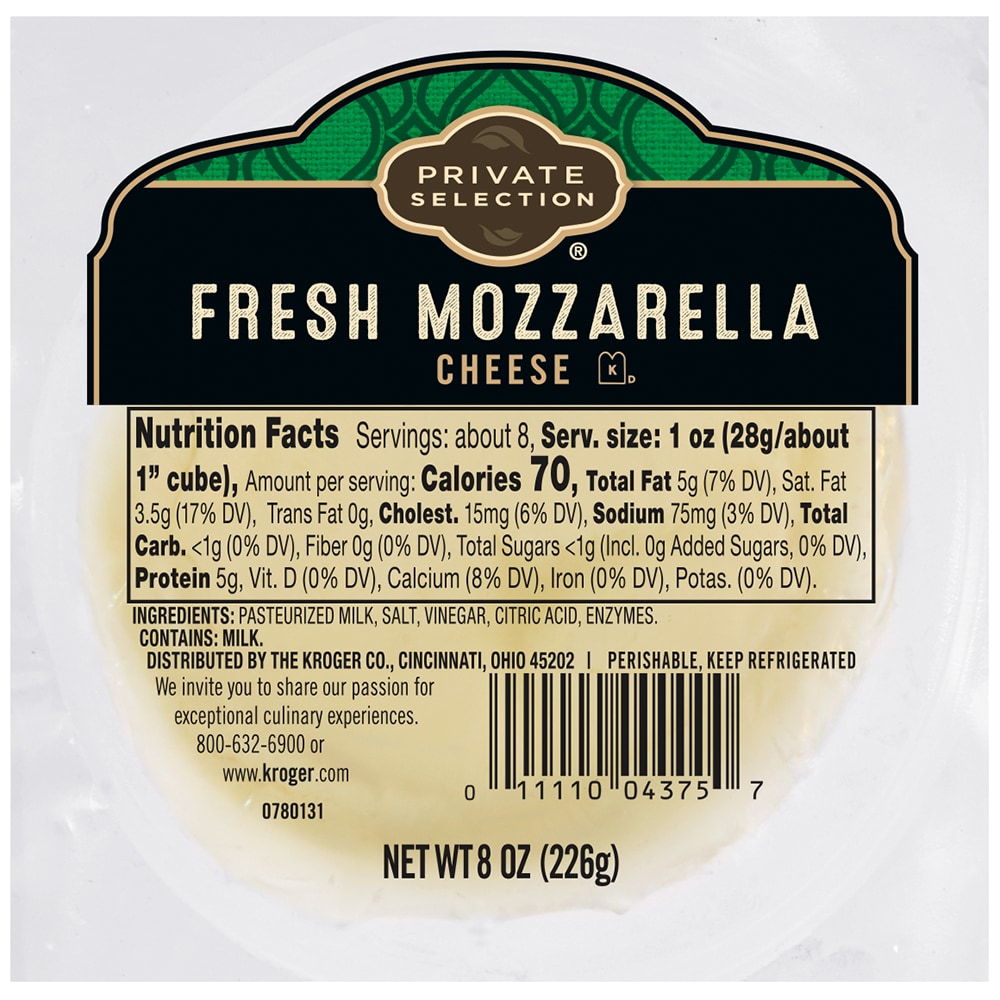
This fresh mozzarella cheese is made from a simple ingredient list including pasteurized milk, salt, vinegar, citric acid, and enzymes, which are typical for traditional cheese production. The product is processed but lacks harmful additives or seed oils, maintaining a clean label. Its processing level limits the score, but the high-quality ingredients and minimal additives support a strong rating within its category.
Key ingredients 5
Pasteurized milkGood
Pasteurized milk is a primary ingredient in cheese, providing essential nutrients like calcium and protein. The pasteurization process ensures safety by eliminating harmful bacteria. It is a high-quality source of animal-based protein, which is beneficial for muscle maintenance and bone health.
Benefits
Rich in calcium and protein, supporting bone health and muscle maintenance. Provides essential vitamins and minerals necessary for overall health.
SaltNeutral
Salt is used in cheese for flavor enhancement and preservation. It is a refined ingredient without the trace minerals found in unrefined salts. While necessary for flavor, excessive consumption can lead to health issues like hypertension.
Risks
Excessive salt intake can contribute to high blood pressure and cardiovascular issues.
Benefits
Enhances flavor and acts as a preservative in cheese production.
VinegarNeutral
Vinegar is used in cheese making to aid in curdling milk. It is a natural ingredient that helps in the cheese production process. While it has no significant nutritional benefits, it is essential for the texture and formation of cheese.
Benefits
Aids in the cheese-making process by helping to curdle milk, contributing to the texture and formation of cheese.
Citric acidNeutral
Citric acid is used in cheese making to adjust acidity and aid in curd formation. It is a naturally occurring acid found in citrus fruits. While it has no direct nutritional benefits, it is crucial for the cheese-making process.
Benefits
Helps in adjusting acidity levels and aids in curd formation during cheese production.
EnzymesNeutral
Enzymes are essential in cheese making for coagulating milk and developing flavor. They are typically derived from animal or microbial sources. While they do not provide direct nutritional benefits, they are crucial for the texture and taste of cheese.
Benefits
Essential for coagulating milk and developing the flavor and texture of cheese.
Processing
Processed Foods
Get the full breakdown in the Scout appTake Scout shopping
Scan any product to see lab results, healthy alternatives, and your personalized analysis.
Download on theApp Store GET IT ONGoogle Play