
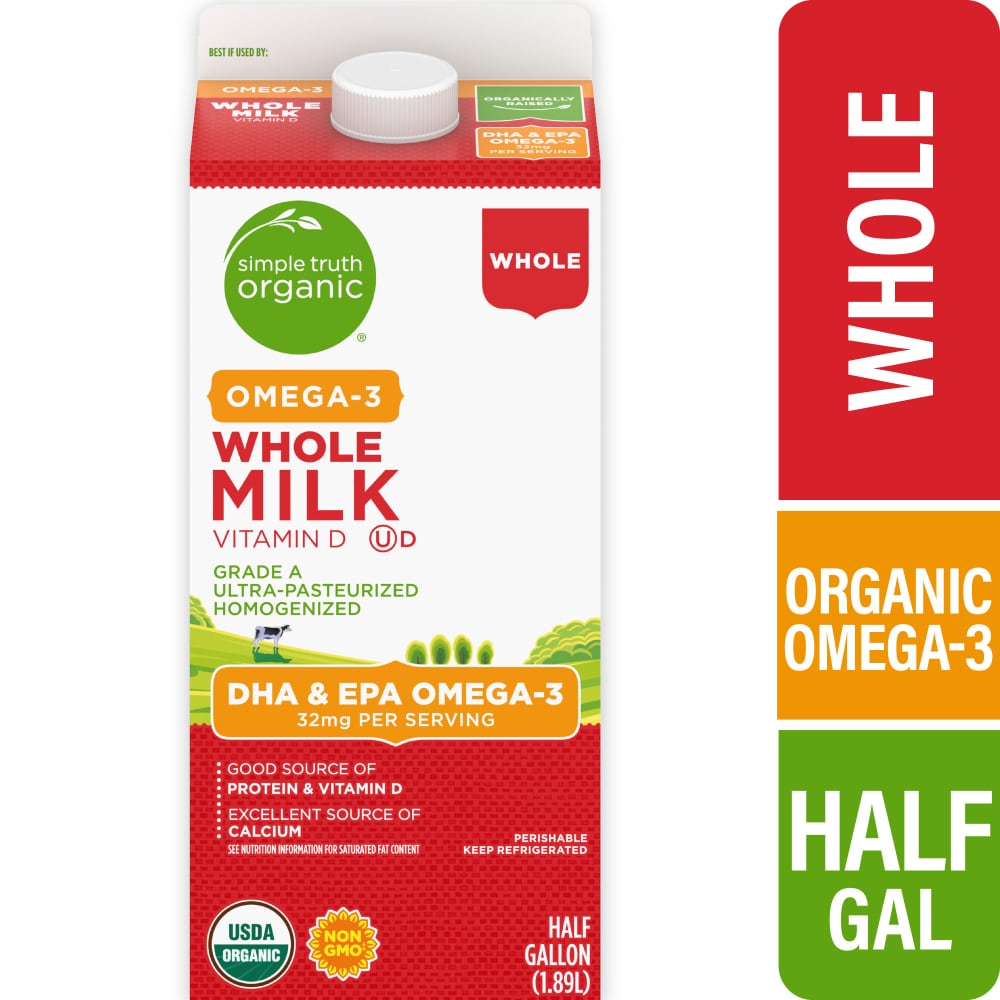



Kroger simply truth organic whole milk
KrogerAnalysis updated September 2026 · How Scout scores
At a glance
Summary
This product is made from organic milk, which is a high-quality source of protein and essential nutrients like calcium and vitamin D, contributing positively to its nutritional profile. However, it is classified as ultra-processed due to the presence of a food additive used as a stabilizer, which detracts from its overall healthiness. Despite its beneficial ingredients, the level of processing limits its score potential.
Key ingredients 5
Organic milkGood
Organic milk is a high-quality source of protein and essential nutrients like calcium and vitamin D. Being organic, it is free from synthetic pesticides and hormones, which enhances its nutritional profile. It provides a balanced source of macronutrients and supports bone health.
Benefits
Rich in calcium and vitamin D, which are crucial for maintaining strong bones and teeth. Provides high-quality protein and essential fatty acids.
Vitamin D3Good
Vitamin D3 is essential for calcium absorption and bone health. It is often added to dairy products to enhance their nutritional profile. Adequate vitamin D levels are crucial for immune function and overall health.
Benefits
Enhances calcium absorption and supports bone health. Contributes to immune system function.
Refined fish oilNeutral
Refined fish oil is used to fortify foods with omega-3 fatty acids, which are beneficial for heart and brain health. The refining process removes impurities but may also reduce some beneficial compounds. It is a common additive in fortified foods to enhance nutritional value.
Risks
Potential risk of contamination with heavy metals if not properly refined, though this is minimized in high-quality products.
Benefits
Provides omega-3 fatty acids, which support cardiovascular health and cognitive function.
Fish gelatinNeutral
Fish gelatin is used as a stabilizer and thickening agent in various food products. It is derived from fish and is a source of collagen, which may support joint health. It is a natural alternative to synthetic stabilizers.
Risks
May cause allergic reactions in individuals with fish allergies.
Benefits
Contains collagen, which may support skin and joint health.
En:e428Bad
En:e428 is a food additive used as a stabilizer or thickener. It is considered less desirable due to its highly processed nature. While it serves a functional purpose, it does not contribute to nutritional value.
Risks
May cause digestive discomfort in sensitive individuals when consumed in large amounts.
Processing
Ultra-Processed Foods
Get the full breakdown in the Scout appTake Scout shopping
Scan any product to see lab results, healthy alternatives, and your personalized analysis.
Download on theApp Store GET IT ONGoogle Play