
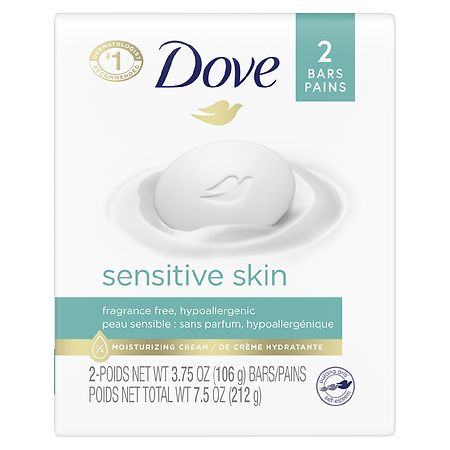
Dove Beauty Bar Soap For Sensitive Skin Sensitive Fragrance Free And Hypoallergenic 3.75 oz 2 Bars
Analysis updated August 2026 · How Scout scores
At a glance
Summary
This product contains a mix of safe and synthetic ingredients. While it includes glycerin, which is beneficial for skin hydration, it also contains synthetic compounds like tetrasodium EDTA and tetrasodium etidronate, which are used as preservatives and chelating agents. The absence of fragrance is a positive aspect, reducing the risk of irritation for sensitive skin, but the presence of multiple synthetic ingredients lowers its overall rating.
Key ingredients 14
GLYCERINGood
Glycerin is a humectant that attracts moisture to the skin. It helps to keep the skin hydrated and soft. It is widely used in skincare for its moisturizing properties.
Risks
Generally considered safe with minimal risk of irritation.
Benefits
Provides excellent hydration and improves skin barrier function.
SODIUM LAUROYL ISETHIONATENeutral
Sodium lauroyl isethionate is a mild surfactant used to create a creamy lather. It is less irritating than traditional sulfates. It is generally well-tolerated by sensitive skin.
Risks
May cause mild irritation in very sensitive individuals.
Benefits
Provides gentle cleansing without stripping natural oils.
STEARIC ACIDNeutral
Stearic acid is a fatty acid used as an emollient and thickener. It helps to stabilize formulations and improve texture. It is generally considered safe for use in cosmetics.
Risks
Rarely, it may cause mild irritation or allergic reactions.
Benefits
Helps to soften and smooth the skin.
LAURIC ACIDNeutral
Lauric acid is a fatty acid that can act as an emulsifier and surfactant. It is derived from coconut oil and is known for its antimicrobial properties. It is commonly used in personal care products.
Risks
May cause irritation if used in high concentrations.
Benefits
Offers antimicrobial benefits and helps to cleanse the skin.
SODIUM OLEATENeutral
Sodium oleate is a surfactant and emulsifying agent derived from oleic acid. It helps to cleanse and stabilize formulations. It is generally considered safe for use in cosmetics.
Risks
Can cause irritation in sensitive skin types.
Benefits
Assists in cleansing and maintaining product stability.
WATER (EAU)Neutral
Water is a universal solvent used in cosmetics to dissolve other ingredients. It is essential for the formulation of many products. It is safe and non-irritating.
Benefits
Acts as a solvent and hydrates the skin.
SODIUM ISETHIONATENeutral
Sodium isethionate is a surfactant that helps to cleanse the skin. It is known for being mild and non-drying. It is often used in products for sensitive skin.
Risks
May cause mild irritation in very sensitive individuals.
Benefits
Provides gentle cleansing suitable for sensitive skin.
SODIUM STEARATENeutral
Sodium stearate is a surfactant and emulsifier used to stabilize formulations. It helps to create a solid structure in bar soaps. It is generally considered safe for use in cosmetics.
Risks
May cause irritation in sensitive skin types.
Benefits
Contributes to the solid form and stability of soap bars.
COCAMIDOPROPYL BETAINENeutral
Cocamidopropyl betaine is a surfactant derived from coconut oil. It is used to enhance foam and improve cleansing. It is generally mild but can cause irritation in some individuals.
Risks
Potential for skin irritation or allergic reactions.
Benefits
Enhances foam and provides mild cleansing.
SODIUM LAURATENeutral
Sodium laurate is a surfactant used for its cleansing properties. It helps to remove dirt and oil from the skin. It is generally considered safe for use in cosmetics.
Risks
May cause irritation in sensitive skin types.
Benefits
Effective in cleansing and removing impurities.
TETRASODIUM ETIDRONATENeutral
Tetrasodium etidronate is a chelating agent that helps to stabilize formulations. It prevents the deterioration of products by binding metal ions. It is generally considered safe for use in cosmetics.
Risks
May cause irritation in sensitive skin types.
Benefits
Enhances product stability and longevity.
TETRASODIUM EDTANeutral
Tetrasodium EDTA is a chelating agent used to improve product stability. It binds metal ions to prevent spoilage and maintain efficacy. It is generally considered safe for use in cosmetics.
Risks
May cause irritation in sensitive skin types.
Benefits
Improves product stability and shelf life.
SODIUM CHLORIDENeutral
Sodium chloride, or table salt, is used as a thickening agent in cosmetics. It helps to improve the texture and viscosity of products. It is generally considered safe for use in cosmetics.
Risks
May cause irritation in sensitive skin types.
Benefits
Enhances product texture and consistency.
TITANIUM DIOXIDE (CI 77891)Neutral
Titanium dioxide is a mineral used as a pigment and UV filter. It provides opacity and sun protection in formulations. It is generally considered safe for use in cosmetics.
Risks
Inhalation of fine particles may pose health risks.
Benefits
Offers UV protection and improves product opacity.
Processing
Processed Foods
Get the full breakdown in the Scout appTake Scout shopping
Scan any product to see lab results, healthy alternatives, and your personalized analysis.
Download on theApp Store GET IT ONGoogle PlayAmazon pricing & content
Amazon price as of . Product prices and availability are accurate as of the date/time indicated and are subject to change. Any price and availability information displayed on Amazon.com at the time of purchase will apply to the purchase of this product.
CERTAIN CONTENT THAT APPEARS ON THIS SITE COMES FROM AMAZON. THIS CONTENT IS PROVIDED “AS IS” AND IS SUBJECT TO CHANGE OR REMOVAL AT ANY TIME.