
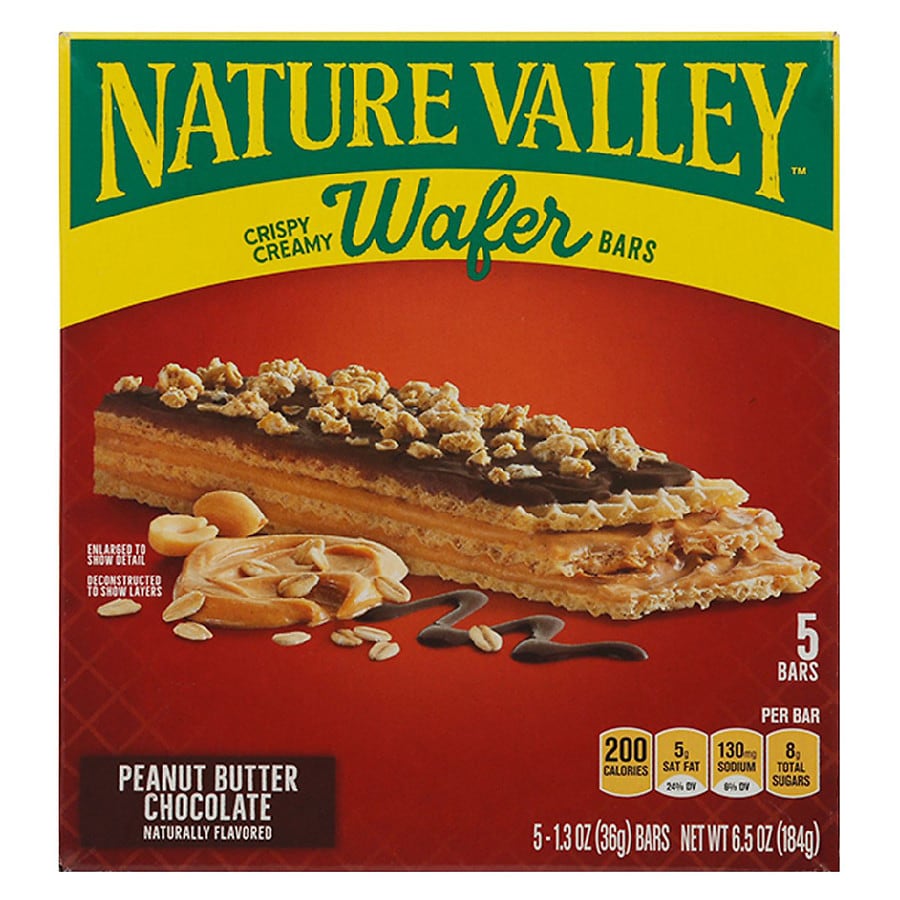
Nature Valley Peanut Butter Chocolate Crispy Creamy Wafer Bar
Summary
This snack bar contains beneficial ingredients like peanut butter and whole grains, which provide healthy fats and fiber. However, it is heavily processed and includes refined sugar, palm oil, and natural flavors, which are less desirable. The presence of multiple additives and its ultra-processed nature significantly impact its overall healthiness.
At a glance
Key ingredients 14
Peanut ButterGood
Peanut butter is a source of healthy fats and protein. It provides essential nutrients like vitamin E, magnesium, and potassium. The presence of salt in peanut butter can enhance flavor but should be consumed in moderation.
Risks
Potential allergen for individuals with peanut allergies.
Benefits
Rich in monounsaturated fats and protein, supporting heart health and muscle maintenance.
SugarBad
Refined sugar is a high-calorie ingredient with no essential nutrients. Excessive consumption can lead to health issues such as obesity and diabetes. It is often used to enhance sweetness in processed foods.
Risks
High intake may contribute to obesity, insulin resistance, and dental cavities.
Palm and Palm Kernel OilBad
Palm oil is high in saturated fats, which can raise cholesterol levels. Its production is associated with deforestation and environmental concerns. It is often used for its stability and texture in processed foods.
Risks
High saturated fat content may increase the risk of heart disease.
Benefits
Provides a stable fat source for cooking and food processing.
Whole Grain Wheat FlourGood
Whole grain wheat flour is a source of dietary fiber and essential nutrients. It supports digestive health and provides sustained energy. The use of whole grains is preferable to refined grains due to higher nutrient content.
Risks
Contains gluten, which may be problematic for individuals with celiac disease or gluten sensitivity.
Benefits
Rich in fiber, vitamins, and minerals, supporting overall health and digestion.
Peanut FlourGood
Peanut flour is a protein-rich ingredient derived from peanuts. It is low in fat and provides essential amino acids. Often used to enhance protein content in foods.
Risks
Potential allergen for individuals with peanut allergies.
Benefits
High protein content supports muscle growth and repair.
Whole Grain OatsGood
Whole grain oats are a rich source of soluble fiber, particularly beta-glucan. They help lower cholesterol levels and support heart health. Oats provide a slow-release energy source, beneficial for blood sugar control.
Benefits
Supports heart health and provides sustained energy due to high fiber content.
Corn StarchNeutral
Corn starch is a refined carbohydrate used as a thickening agent. It has minimal nutritional value and is primarily used for texture in food products. It is generally considered safe for consumption.
See more about Corn Starch →CocoaNeutral
Cocoa is a source of antioxidants and can provide a rich chocolate flavor. It contains flavonoids that may support heart health. The health benefits depend on the cocoa content and processing methods.
Benefits
Contains antioxidants that may support cardiovascular health.
Milk PowderNeutral
Milk powder is a dehydrated form of milk that retains most of its nutrients. It provides calcium and protein but can be high in lactose. Used to enhance creaminess and nutritional content in foods.
Risks
May cause digestive issues for lactose-intolerant individuals.
Benefits
Provides calcium and protein, supporting bone health and muscle maintenance.
SaltNeutral
Salt is used to enhance flavor and preserve food. It is essential for maintaining fluid balance and nerve function. Excessive intake can lead to hypertension and cardiovascular issues.
Risks
High sodium intake may increase the risk of hypertension.
Benefits
Essential for fluid balance and nerve function in the body.
HoneyNeutral
Honey is a natural sweetener with some antioxidant properties. It is less processed than refined sugar but still high in calories. Used for its flavor and potential health benefits in moderation.
Risks
High in sugars, which can contribute to weight gain if consumed in excess.
Benefits
Contains antioxidants and may have antimicrobial properties.
Natural FlavorBad
Natural flavors are additives used to enhance taste, derived from natural sources. They can be highly processed and lack transparency regarding their composition. Often criticized for being a catch-all term with unclear health impacts.
Risks
Lack of transparency may pose concerns for individuals with allergies or sensitivities.
Soy LecithinNeutral
Soy lecithin is an emulsifier that helps blend ingredients. It is derived from soybeans and is generally considered safe. Used to improve texture and shelf life in processed foods.
Risks
May cause allergic reactions in individuals sensitive to soy.
Benefits
Helps maintain product consistency and extend shelf life.
Baking SodaNeutral
Baking soda is a leavening agent used to help baked goods rise. It is a simple chemical compound with no significant nutritional value. Generally recognized as safe when used in appropriate amounts.
Risks
Excessive consumption may lead to alkalosis or digestive discomfort.
Processing
Ultra-Processed Foods
Get the full breakdown in the Scout app
Scan any product to see lab results, healthy alternatives, and your personalized analysis.
Download on theApp Store