
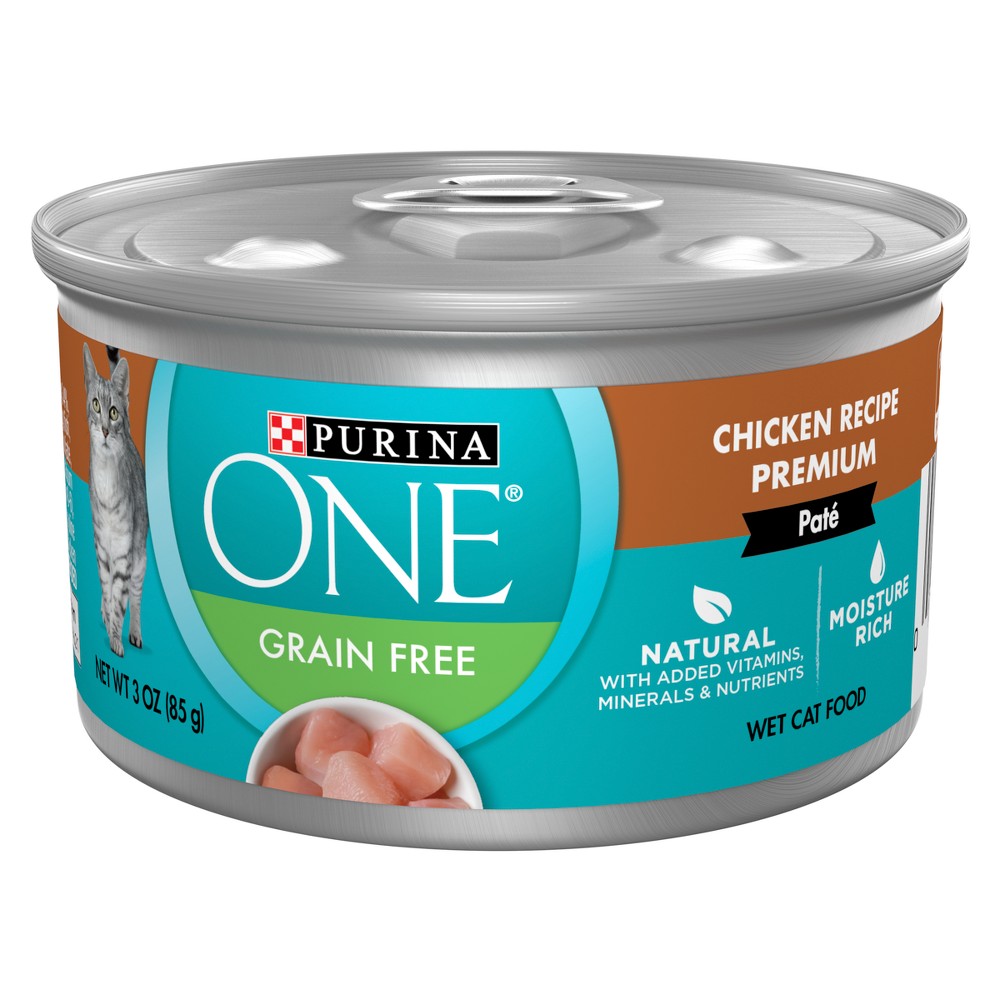
Purina ONE Grain-Free Chicken Wet Cat Food - 3oz
Analysis updated August 2026 · How Scout scores
At a glance
Summary
This cat food contains high-quality animal proteins like chicken, liver, and fish, which are beneficial for feline health. It also includes essential vitamins and minerals, such as taurine and vitamin E, which support overall well-being. However, the presence of 'natural flavors' and its processed nature slightly reduce its score, as these factors introduce some uncertainty and additional processing.
Key ingredients 24
ChickenVery Good
Chicken is a high-quality source of animal protein, essential for muscle maintenance and growth. It provides a complete amino acid profile necessary for cats. Sourced from whole meat, it is minimally processed.
Benefits
Rich in essential amino acids and provides high biological value protein necessary for cats' health.
LiverGood
Liver is a nutrient-dense organ meat providing essential vitamins and minerals. It is particularly rich in vitamin A and iron, supporting vision and blood health. When included in moderation, it enhances nutritional value.
Risks
Excessive consumption can lead to vitamin A toxicity due to high concentrations.
Benefits
Provides essential nutrients like vitamin A, iron, and other minerals beneficial for overall health.
Chicken BrothGood
Chicken broth adds flavor and moisture, making the food more palatable. It is a source of hydration and can contain some nutrients from the cooking process. Typically low in calories, it supports hydration.
Benefits
Enhances flavor and provides hydration, making the food more appealing and nutritious.
Pork LungsGood
Pork lungs are a source of protein and essential nutrients. They provide a variety of vitamins and minerals, contributing to a balanced diet. As an organ meat, they are nutrient-dense and beneficial in moderation.
Benefits
Rich in protein and essential nutrients, supporting overall health and nutrition.
FishGood
Fish is a high-quality protein source rich in omega-3 fatty acids. It supports heart health and provides essential nutrients like vitamin D. The inclusion of fish enhances the nutritional profile of the food.
Risks
Potential for mercury contamination if not sourced responsibly.
Benefits
Provides omega-3 fatty acids and high-quality protein, beneficial for heart and overall health.
TaurineGood
Taurine is an essential amino acid for cats, crucial for heart and eye health. It is naturally found in animal tissues and is vital for feline health. Supplementation ensures adequate intake in cat diets.
Benefits
Essential for heart and eye health in cats, ensuring proper physiological function.
Vitamin E SupplementGood
Vitamin E is an antioxidant that protects cells from oxidative damage. It supports immune function and skin health. Supplementation ensures adequate intake in diets lacking natural sources.
Benefits
Protects cells from oxidative damage and supports immune function.
NiacinGood
Beneficial ingredient — whole-food or functional value in this product class.
Risks
Excessive intake can cause flushing and liver damage.
Benefits
Supports energy metabolism and DNA repair, contributing to overall health.
Vitamin A SupplementGood
Vitamin A is essential for vision, immune function, and skin health. It is often supplemented to ensure adequate intake in diets lacking natural sources. It is crucial for maintaining overall health.
Risks
Excessive intake can lead to vitamin A toxicity, affecting liver function.
Benefits
Supports vision, immune function, and skin health, essential for overall well-being.
Vitamin B-12 SupplementGood
Vitamin B-12 is essential for nerve function and red blood cell formation. It is often supplemented to ensure adequate intake, especially in diets lacking animal products. It is crucial for maintaining overall health.
Benefits
Supports nerve function and red blood cell formation, essential for overall well-being.
Pyridoxine HydrochlorideGood
Beneficial ingredient — whole-food or functional value in this product class.
Benefits
Supports protein metabolism and cognitive development, contributing to overall health.
Vitamin D-3 SupplementGood
Vitamin D-3 is essential for calcium absorption and bone health. It is often supplemented to ensure adequate intake, especially in diets lacking natural sources. It is crucial for maintaining overall health.
Risks
Excessive intake can lead to vitamin D toxicity, affecting calcium balance.
Benefits
Supports calcium absorption and bone health, essential for overall well-being.
BiotinGood
Beneficial ingredient — whole-food or functional value in this product class.
Benefits
Supports metabolism of carbohydrates, fats, and proteins, contributing to overall health.
Potassium ChlorideNeutral
Potassium chloride is used as a potassium supplement and salt substitute. It helps maintain electrolyte balance and supports nerve function. It is generally safe when used in appropriate amounts.
Risks
Excessive intake can lead to hyperkalemia, affecting heart function.
Benefits
Supports electrolyte balance and nerve function, contributing to overall health.
Magnesium ProteinateNeutral
Magnesium proteinate is a chelated form of magnesium, enhancing absorption. It supports muscle and nerve function and is essential for various biochemical reactions. It is generally well-tolerated and beneficial in appropriate amounts.
Benefits
Improves magnesium absorption, supporting muscle and nerve function.
Zinc SulfateNeutral
Zinc sulfate is a source of zinc, an essential mineral for immune function and enzyme activity. It is commonly used in supplements to prevent zinc deficiency. It is effective in small, controlled amounts.
Risks
Excessive intake can lead to zinc toxicity, affecting immune function.
Benefits
Supports immune function and enzyme activity, contributing to overall health.
Ferrous SulfateNeutral
Ferrous sulfate is a form of iron used to prevent or treat iron deficiency. It is essential for oxygen transport and energy production. It is effective in small, controlled amounts.
Risks
Excessive intake can lead to iron toxicity, causing gastrointestinal distress.
Benefits
Supports oxygen transport and energy production, essential for overall health.
L-Lysine MonohydrochlorideNeutral
L-Lysine is an essential amino acid important for protein synthesis and immune function. It is often supplemented to support health and prevent deficiencies. It is generally safe and beneficial in appropriate amounts.
Benefits
Supports protein synthesis and immune function, contributing to overall health.
Calcium PantothenateNeutral
Calcium pantothenate, or vitamin B-5, is important for energy metabolism and synthesis of coenzyme A. It is commonly included in supplements to prevent deficiencies. It is generally safe and beneficial in appropriate amounts.
Benefits
Supports energy metabolism and synthesis of coenzyme A, contributing to overall health.
Thiamine MononitrateNeutral
Thiamine, or vitamin B-1, is essential for carbohydrate metabolism and nerve function. It is often supplemented to prevent deficiencies. It is generally safe and beneficial in appropriate amounts.
Benefits
Supports carbohydrate metabolism and nerve function, contributing to overall health.
Riboflavin SupplementNeutral
Riboflavin, or vitamin B-2, is important for energy production and cellular function. It is commonly included in supplements to prevent deficiencies. It is generally safe and beneficial in appropriate amounts.
Benefits
Supports energy production and cellular function, contributing to overall health.
Folic AcidNeutral
Folic acid, or vitamin B-9, is essential for DNA synthesis and cell division. It is often supplemented to prevent deficiencies, especially in pregnant individuals. It is generally safe and beneficial in appropriate amounts.
Risks
Excessive intake can mask vitamin B-12 deficiency.
Benefits
Supports DNA synthesis and cell division, contributing to overall health.
Menadione Sodium Bisulfite ComplexNeutral
Menadione is a synthetic form of vitamin K used in pet foods. It supports blood clotting and bone health. It is generally safe in small amounts but controversial due to synthetic origin.
Risks
Potential for toxicity if consumed in large amounts.
Benefits
Supports blood clotting and bone health, contributing to overall well-being.
Natural FlavorsBad
Natural flavors are often used to enhance taste but lack transparency in their composition. They can include a variety of substances, some of which may not be beneficial. The lack of specificity makes it difficult to assess their health impact.
Risks
Potential for undisclosed additives or allergens, which may cause sensitivities.
Benefits
Enhances flavor, making the product more palatable.
Processing
Processed Foods
Get the full breakdown in the Scout appTake Scout shopping
Scan any product to see lab results, healthy alternatives, and your personalized analysis.
Download on theApp Store GET IT ONGoogle Play