
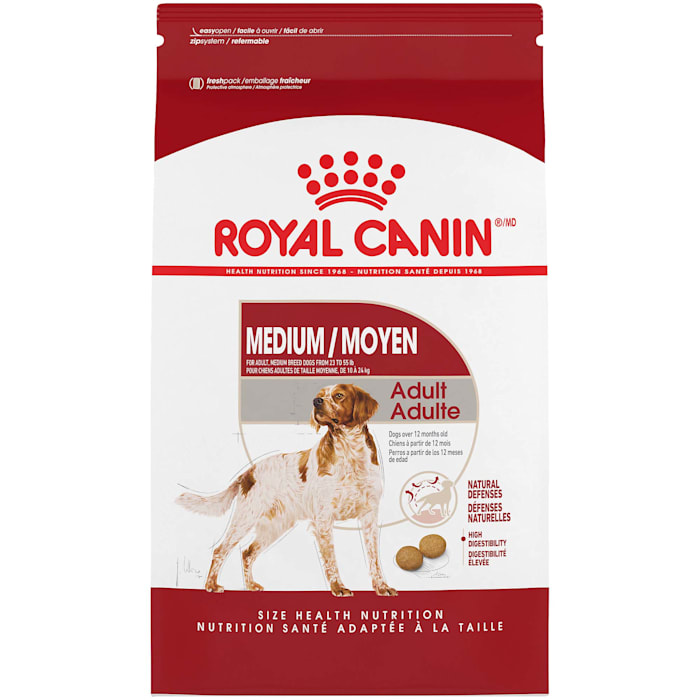
Royal Canin Medium Breed Adult Dry Dog Food, 17 lb bag (B013DQWPXW)
Analysis updated September 2026 · How Scout scores
At a glance
Summary
This dog food is ultra-processed, which limits its score potential. While it contains beneficial ingredients like oat groats, chicken fat, and fish oil that support health, the presence of natural flavors and the overall processing level reduce its rating. The ingredient list is moderately long, which also impacts the score negatively.
Key ingredients 15
Oat groatsGood
Oat groats are the whole, minimally processed form of oats, providing fiber and nutrients. They support digestive health and provide sustained energy. Their whole grain nature retains more nutrients compared to refined grains.
Benefits
Rich in fiber, which aids in digestion and helps maintain stable blood sugar levels.
Chicken fatGood
Chicken fat is a high-quality fat source that provides essential fatty acids. It enhances palatability and supports skin and coat health. It is a natural source of energy for dogs.
Benefits
Rich in linoleic acid, which supports healthy skin and coat.
Dried plain beet pulpGood
Dried plain beet pulp is a fiber source that aids in digestion and stool quality. It is a by-product of sugar beet processing but retains beneficial fiber. It supports gut health and regularity in dogs.
Benefits
Provides soluble fiber that supports healthy digestion and regular bowel movements.
Fish oilGood
Fish oil is a rich source of omega-3 fatty acids, which support heart, skin, and joint health. It is often derived from cold-water fish and is beneficial for reducing inflammation. High-quality fish oil is purified to remove contaminants.
Benefits
Rich in EPA and DHA, which support cognitive function and reduce inflammation.
Brewers riceNeutral
Brewers rice is a by-product of the rice milling process and serves as a carbohydrate source. It is less nutritious than whole grains but provides energy. It lacks significant vitamins and minerals compared to whole rice.
Risks
May contribute to a less balanced diet if overused as a primary ingredient.
Benefits
Provides a source of energy through carbohydrates, which can be beneficial for active dogs.
Chicken by-product mealNeutral
Chicken by-product meal includes ground, rendered parts of the chicken carcass. It is a concentrated protein source but varies in quality. It lacks the consistency and quality of whole meat sources.
Risks
Potential for variable quality and nutritional content depending on the source.
Benefits
Offers a high protein content that supports muscle maintenance and growth in dogs.
WheatNeutral
Wheat is a common grain used as a carbohydrate source in pet foods. It provides energy but can be an allergen for some dogs. Whole wheat offers more nutrients than refined wheat products.
Risks
Potential allergen for dogs with wheat sensitivities.
Benefits
Provides carbohydrates for energy and some protein content.
Corn protein mealNeutral
Corn protein meal is a by-product of corn processing, used as a protein source. It is less digestible than animal proteins and may lack essential amino acids. It is often used to boost protein content in pet foods.
Risks
May not provide a complete amino acid profile compared to animal-based proteins.
Benefits
Contributes to the overall protein content of the diet, supporting muscle maintenance.
Calcium carbonateNeutral
Calcium carbonate is a mineral supplement used to provide calcium, essential for bone health. It is a common additive in pet foods to ensure adequate calcium intake. It is generally safe and well-tolerated.
Risks
Excessive intake can lead to imbalances in calcium and phosphorus levels.
Benefits
Supports strong bones and teeth by providing necessary calcium.
Vegetable oilNeutral
Vegetable oil is used as a fat source, but its composition can vary widely. In pet food, it is often a blend of oils like soybean or canola. It provides energy but lacks the specific benefits of more targeted oils like fish or olive oil.
Risks
Potential for high omega-6 content, which may promote inflammation if not balanced with omega-3s.
Benefits
Provides a source of energy and essential fatty acids.
Potassium chlorideNeutral
Potassium chloride is used as a potassium supplement and salt substitute. It helps maintain electrolyte balance and supports nerve and muscle function. It is a common additive in pet foods to ensure adequate potassium intake.
Risks
Excessive intake can lead to hyperkalemia, affecting heart and muscle function.
Benefits
Supports proper muscle function and electrolyte balance.
Monocalcium phosphateNeutral
Monocalcium phosphate is a source of calcium and phosphorus, essential for bone health. It is used to balance the calcium-phosphorus ratio in pet foods. It is generally safe and effective for maintaining bone strength.
Risks
Imbalances in calcium and phosphorus can affect bone health if not properly managed.
Benefits
Provides essential minerals that support bone and dental health.
SaltNeutral
Salt is used to enhance flavor and provide sodium, an essential electrolyte. It is necessary for maintaining fluid balance and nerve function. In moderation, it is a safe and necessary component of pet diets.
Risks
Excessive salt intake can lead to hypertension and other health issues.
Benefits
Supports fluid balance and nerve function when used in appropriate amounts.
Choline chlorideNeutral
Choline chloride is a source of choline, important for liver function and brain health. It is a common additive in pet foods to ensure adequate choline intake. It supports cognitive function and fat metabolism.
Benefits
Supports brain health and liver function by providing essential choline.
Natural flavorsBad
Natural flavors are additives used to enhance taste, but their exact composition is often undisclosed. They can mask the quality of the underlying ingredients. The lack of transparency can be concerning for ingredient-sensitive pets.
Risks
Potential for undisclosed allergens or additives that may affect sensitive pets.
Benefits
Enhances the palatability of the food, making it more appealing to pets.
Processing
Ultra-Processed Foods
Get the full breakdown in the Scout appTake Scout shopping
Scan any product to see lab results, healthy alternatives, and your personalized analysis.
Download on theApp Store GET IT ONGoogle Play