
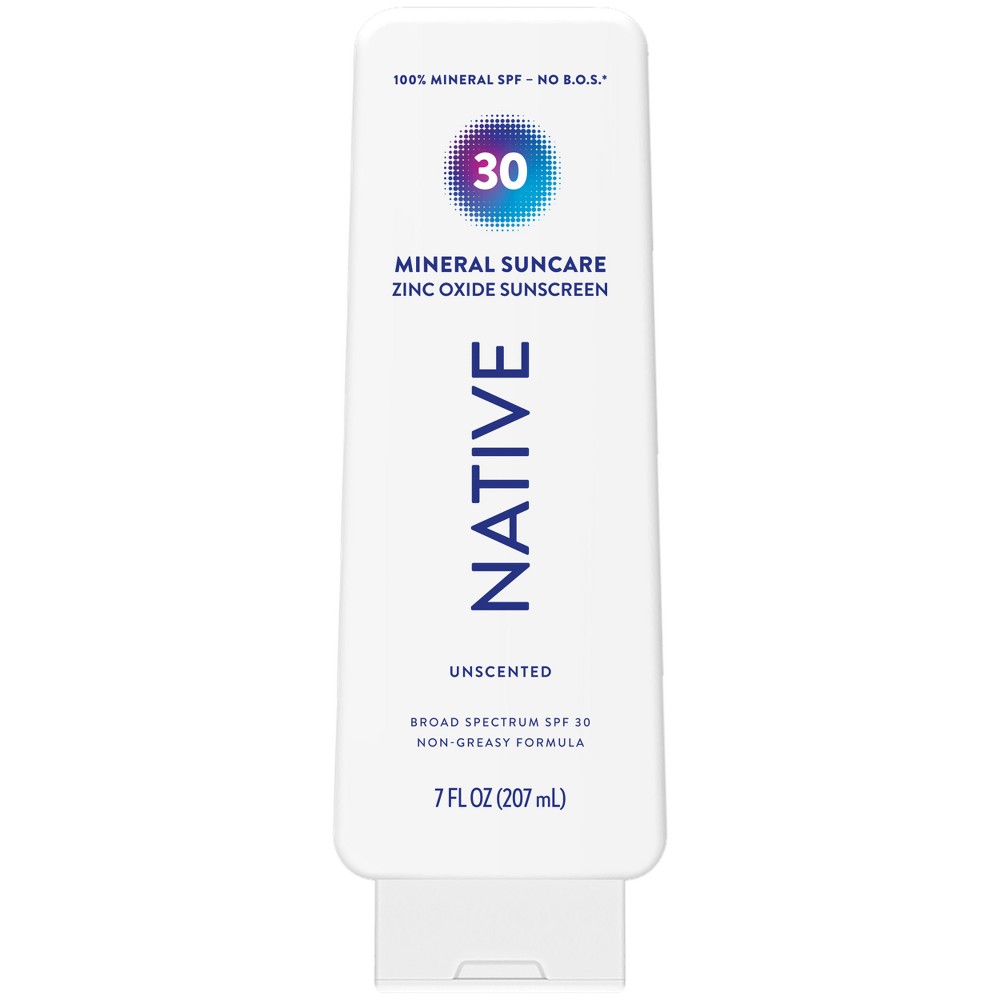


Native Mineral Sunscreen with Zinc Oxide - Unscented - SPF 30 - 7oz
Analysis updated August 2026 · How Scout scores
At a glance
Summary
This sunscreen features a clean formulation with beneficial ingredients like zinc oxide, which provides effective UV protection, and natural emollients such as caprylic/capric triglyceride and coconut alkanes. The absence of synthetic fragrances and harmful chemical UV filters contributes to its high rating. Despite being processed, the product maintains a minimal and safe ingredient list, which supports its strong score.
Key ingredients 8
Caprylic/Capric TriglycerideGood
This ingredient provides a lightweight, non-greasy moisturizer that helps improve skin feel and texture.
See more about Caprylic/Capric Triglyceride →Coconut AlkanesGood
Coconut Alkanes serve as a skin-conditioning agent, offering a smooth application and a pleasant feel.
See more about Coconut Alkanes →GlycerinGood
Glycerin is a humectant that attracts moisture to the skin, helping to keep it hydrated.
See more about Glycerin →Coco-GlucosideGood
Coco-Glucoside is a gentle surfactant that helps cleanse the skin without stripping moisture.
See more about Coco-Glucoside →Arachidyl AlcoholGood
Arachidyl Alcohol acts as an emollient, helping to soften and smooth the skin.
See more about Arachidyl Alcohol →Zinc OxideGood
Zinc Oxide provides mineral-based sun protection, shielding the skin from harmful UV rays naturally.
See more about Zinc Oxide →WaterNeutral
Water acts as a base for the formulation, helping to hydrate the skin and evenly distribute other ingredients.
See more about Water →Cetearyl AlcoholNeutral
Cetearyl Alcohol functions as an emollient and stabilizer, contributing to the product's creamy texture.
See more about Cetearyl Alcohol →Processing
Processed Foods
Get the full breakdown in the Scout appTake Scout shopping
Scan any product to see lab results, healthy alternatives, and your personalized analysis.
Download on theApp Store GET IT ONGoogle PlayAmazon pricing & content
Amazon price as of . Product prices and availability are accurate as of the date/time indicated and are subject to change. Any price and availability information displayed on Amazon.com at the time of purchase will apply to the purchase of this product.
CERTAIN CONTENT THAT APPEARS ON THIS SITE COMES FROM AMAZON. THIS CONTENT IS PROVIDED “AS IS” AND IS SUBJECT TO CHANGE OR REMOVAL AT ANY TIME.