
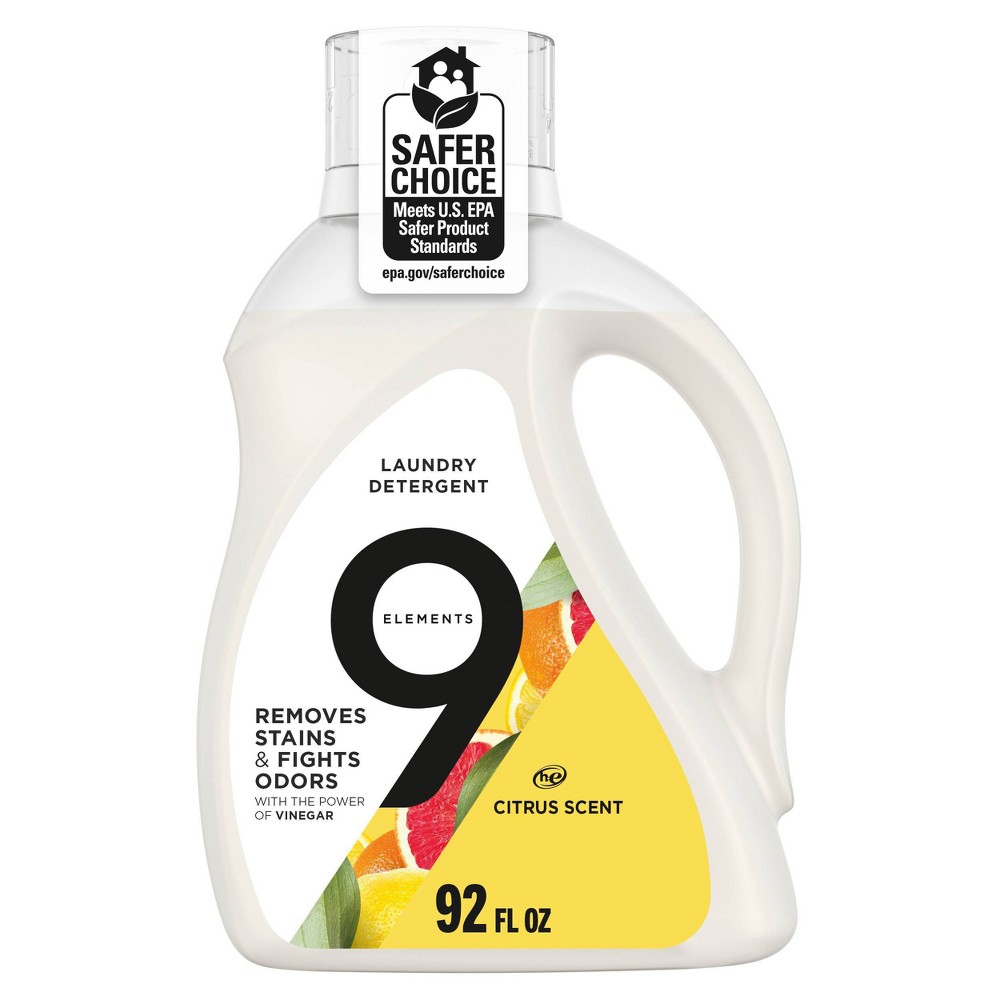



9 Elements Citrus Scent Liquid Laundry Detergent - 92 fl oz: 64 Uses, High Efficiency, Dermatologist Tested
Analysis updated September 2026 · How Scout scores
At a glance
Summary
This laundry detergent contains beneficial ingredients like citric acid, sodium citrate, and vinegar, which are biodegradable and environmentally friendly. However, the inclusion of synthetic fragrances, which can contain allergens or irritants, slightly detracts from its overall safety and environmental impact. The product is moderately processed, with a mix of natural and synthetic components, but lacks harsh chemicals like SLS or bleach.
Key ingredients 8
WaterNeutral
Water is a common solvent used in many cleaning products. It helps to dissolve other ingredients and facilitate their application. It does not have any direct cleaning properties.
Risks
There are no significant risks associated with water in cleaning products.
Benefits
Water acts as a carrier for other ingredients, aiding in their distribution and effectiveness.
Citric AcidNeutral
Common acidulant and preservative — safe at typical use levels, neither beneficial nor harmful.
Risks
In high concentrations, citric acid can cause skin irritation.
Benefits
Citric acid is biodegradable and helps to soften water, enhancing the cleaning power of detergents.
C12-16 ParethNeutral
C12-16 Pareth is a nonionic surfactant used to help remove dirt and grease. It is derived from fatty alcohols and ethylene oxide. It is generally considered safe for use in cleaning products.
Risks
There is a potential for skin irritation with prolonged exposure.
Benefits
It effectively breaks down oils and grease, improving the cleaning efficiency of the detergent.
Sodium C10-16 AlkylbenzenesulfonateNeutral
This is an anionic surfactant commonly used in detergents for its cleaning properties. It helps to emulsify oils and suspend dirt in water. It is effective in both hard and soft water.
Risks
It can cause skin irritation with direct contact.
Benefits
It is a powerful cleaning agent that enhances the overall effectiveness of the detergent.
Sodium CitrateNeutral
Standard formulation ingredient — neither beneficial nor harmful at typical use.
Risks
There are minimal risks associated with sodium citrate in cleaning products.
Benefits
It enhances the cleaning power of detergents by softening water and preventing mineral deposits.
VinegarNeutral
Vinegar is a natural acid used for its cleaning and deodorizing properties. It is effective at breaking down mineral deposits and removing odors. It is safe and biodegradable.
Risks
Vinegar can cause irritation if it comes into contact with the eyes.
Benefits
It is a natural and effective cleaner that is safe for the environment.
Propylene GlycolBad
Processed additive flagged under Scout's ingredient doctrine.
Risks
May cause skin irritation in sensitive individuals.
Benefits
It helps to keep the detergent from drying out and maintains its effectiveness over time.
FragrancesBad
Fragrances are added to cleaning products to provide a pleasant scent. They are often synthetic and can contain a mixture of chemicals. These can be allergens or irritants for some individuals.
Risks
Fragrances can cause allergic reactions and skin irritation.
Benefits
They improve the sensory experience of using the product by masking unpleasant odors.
Processing
Processed Foods
Get the full breakdown in the Scout appTake Scout shopping
Scan any product to see lab results, healthy alternatives, and your personalized analysis.
Download on theApp Store GET IT ONGoogle PlayAmazon pricing & content
Amazon price as of . Product prices and availability are accurate as of the date/time indicated and are subject to change. Any price and availability information displayed on Amazon.com at the time of purchase will apply to the purchase of this product.
CERTAIN CONTENT THAT APPEARS ON THIS SITE COMES FROM AMAZON. THIS CONTENT IS PROVIDED “AS IS” AND IS SUBJECT TO CHANGE OR REMOVAL AT ANY TIME.