
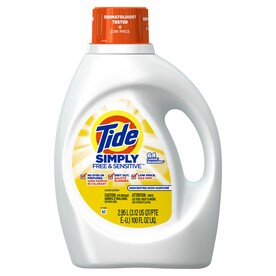
Tide Simply Free & Sensitive Liquid Laundry Detergent 100 oz. 64 loads
Analysis updated July 2026 · How Scout scores
At a glance
Summary
This laundry detergent contains a mix of synthetic and plant-derived ingredients. While it avoids harsh surfactants like SLS and SLES, it includes synthetic compounds such as polyethyleneimines alkoxylated and propylene glycol, which can have environmental impacts. The presence of enzymes like subtilisin and amylase is beneficial for cleaning efficacy, but the overall formulation is moderately processed, limiting its score.
Key ingredients 14
Sodium Salts of C12-18 Fatty AcidsGood
Sodium Salts of C12-18 Fatty Acids are derived from natural fats and oils. They act as surfactants and are biodegradable. These salts are considered safe and environmentally friendly.
Risks
Generally considered safe with minimal risk of irritation.
Benefits
Biodegradable and derived from natural sources, making them environmentally friendly.
SubtilisinGood
Subtilisin is an enzyme that breaks down proteins, enhancing stain removal. It is biodegradable and derived from natural sources. It is effective in removing protein-based stains.
Risks
Can cause allergic reactions in sensitive individuals.
Benefits
Biodegradable and effective in removing protein-based stains, enhancing cleaning performance.
Amylase EnzymeGood
Amylase Enzyme breaks down starches, aiding in stain removal. It is biodegradable and derived from natural sources. It is effective in removing carbohydrate-based stains.
Risks
Can cause allergic reactions in sensitive individuals.
Benefits
Biodegradable and effective in removing starch-based stains, enhancing cleaning performance.
Mannanase EnzymeGood
Mannanase Enzyme breaks down mannans, which are found in many food stains. It is biodegradable and derived from natural sources. It enhances the cleaning power of detergents.
Risks
Can cause allergic reactions in sensitive individuals.
Benefits
Biodegradable and effective in removing mannan-based stains, enhancing cleaning performance.
C10-16 ParethNeutral
C10-16 Pareth is a nonionic surfactant used for its cleaning properties. It is generally considered mild and effective in removing dirt and oils. However, it is not plant-derived and lacks significant environmental benefits.
Risks
There is a potential for mild skin irritation with prolonged exposure.
Benefits
It effectively cleans and removes stains without being overly harsh.
C10-16 Alkyldimethylamine OxideNeutral
C10-16 Alkyldimethylamine Oxide is a surfactant that helps to stabilize foam and enhance cleaning. It is commonly used in cleaning products for its effectiveness. While not plant-derived, it is considered relatively mild.
Risks
May cause mild irritation to skin and eyes upon direct contact.
Benefits
Enhances the cleaning power of detergents and is effective in removing grease.
Sodium C10-16 AlkylbenzenesulfonateNeutral
Sodium C10-16 Alkylbenzenesulfonate is an anionic surfactant known for its strong cleaning ability. It is effective in breaking down and removing dirt and stains. However, it is not biodegradable and can be harsh on the skin.
Risks
Potential skin irritant and not environmentally friendly due to poor biodegradability.
Benefits
Provides strong cleaning power and is effective in removing tough stains.
Sodium CumenesulfonateNeutral
Sodium Cumenesulfonate is used as a hydrotrope to improve the solubility of other ingredients. It helps in stabilizing the formula and enhancing cleaning efficiency. It is not known for significant environmental or health benefits.
Risks
Generally considered safe, but can cause mild irritation if in contact with skin or eyes.
Benefits
Improves the solubility and effectiveness of the detergent formula.
Sodium BorateNeutral
Sodium Borate, also known as borax, is used as a cleaning agent and water softener. It enhances the cleaning power of detergents. However, it is not considered environmentally friendly and can be irritating.
Risks
Can cause skin and eye irritation and is harmful if ingested.
Benefits
Enhances cleaning efficiency and helps in water softening.
Sodium CitrateNeutral
Standard formulation ingredient — neither beneficial nor harmful at typical use.
Risks
Generally safe with minimal risk of irritation.
Benefits
Biodegradable and enhances the cleaning power of detergents by softening water.
Sodium FormateNeutral
Sodium Formate is used as a buffering agent and stabilizer in detergents. It helps maintain the pH balance of the formula. It is not known for significant environmental or health benefits.
Risks
Generally considered safe with minimal risk of irritation.
Benefits
Helps stabilize the detergent formula and maintain pH balance.
Polyethyleneimines AlkoxylatedNeutral
Polyethyleneimines Alkoxylated is used as a dispersing agent in detergents. It helps prevent redeposition of dirt onto fabrics. It is not known for significant environmental or health benefits.
Risks
Generally considered safe with minimal risk of irritation.
Benefits
Enhances cleaning performance by preventing dirt redeposition.
WaterNeutral
Water is used as a solvent and carrier for other ingredients in detergents. It is essential for dissolving and distributing cleaning agents. It is safe and environmentally friendly.
Benefits
Essential for dissolving and distributing cleaning agents, making it a crucial component of the formula.
Propylene GlycolBad
Processed additive flagged under Scout's ingredient doctrine.
Risks
Can cause mild irritation with prolonged exposure.
Benefits
Helps maintain moisture and stability of the detergent formula.
Get the full breakdown in the Scout appTake Scout shopping
Scan any product to see lab results, healthy alternatives, and your personalized analysis.
Download on theApp Store GET IT ONGoogle PlayAmazon pricing & content
Amazon price as of . Product prices and availability are accurate as of the date/time indicated and are subject to change. Any price and availability information displayed on Amazon.com at the time of purchase will apply to the purchase of this product.
CERTAIN CONTENT THAT APPEARS ON THIS SITE COMES FROM AMAZON. THIS CONTENT IS PROVIDED “AS IS” AND IS SUBJECT TO CHANGE OR REMOVAL AT ANY TIME.