
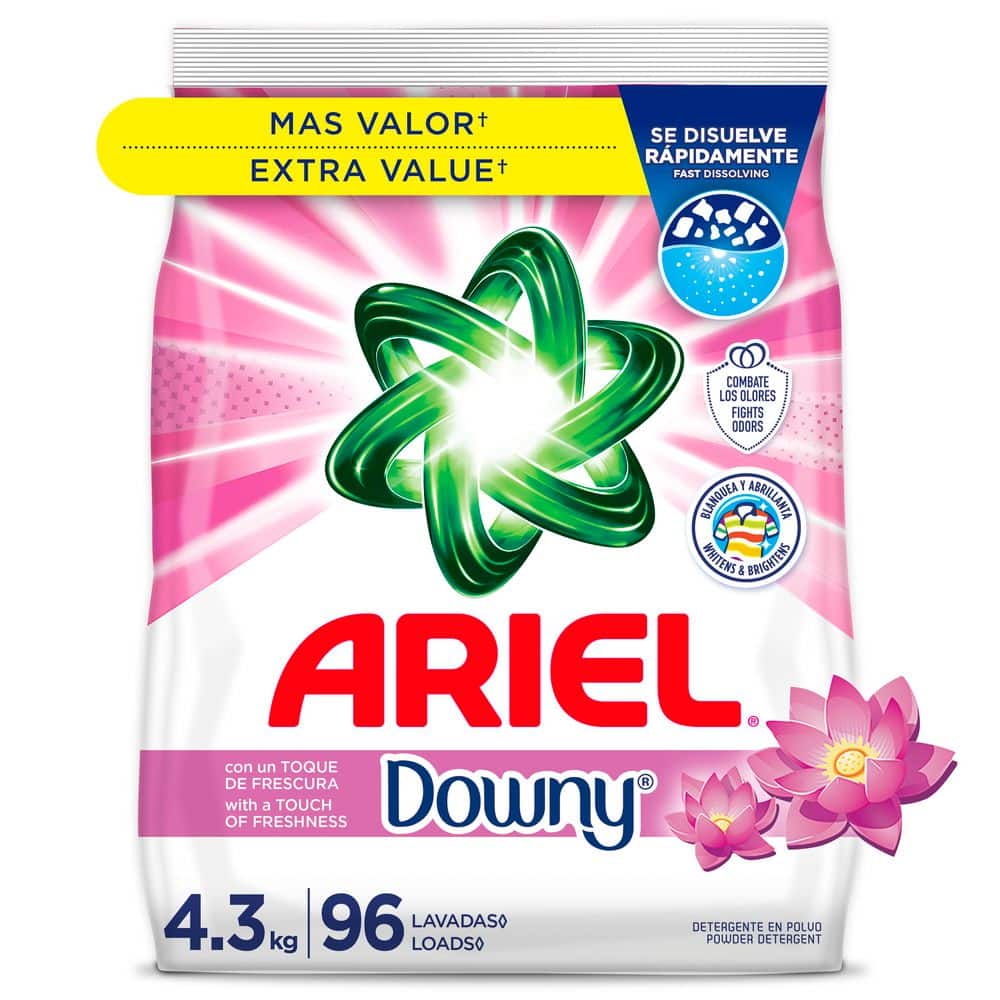

Ariel Scented Laundry Detergents - 96 Loads: Deep Cleaning, Odor Control, Paraben-Free, Powder
Analysis updated August 2026 · How Scout scores
At a glance
Summary
This laundry detergent contains beneficial enzymes like subtilisin and lipase, which enhance cleaning power and are biodegradable. However, the presence of synthetic fragrances poses a risk of skin irritation and allergic reactions. The product also includes several synthetic ingredients, which may impact its environmental friendliness and safety for indoor use.
Key ingredients 16
SubtilisinGood
Subtilisin is an enzyme that helps break down protein-based stains. It is effective in removing tough stains like blood and grass. It is biodegradable and considered safe for use in detergents.
Risks
Can cause allergic reactions in sensitive individuals.
Benefits
Highly effective in stain removal and environmentally friendly.
LipaseGood
Lipase is an enzyme that breaks down fats and oils. It enhances the cleaning power of detergents by targeting greasy stains. It is biodegradable and safe for use in cleaning products.
Risks
Potential allergen for some individuals.
Benefits
Effective in removing oily and greasy stains.
Sodium CarbonateNeutral
Sodium carbonate is a common water softener and cleaning agent. It helps to remove grease and stains by breaking down oils and dirt. It is generally considered safe for use in cleaning products.
Risks
Inhalation of dust can cause respiratory irritation.
Benefits
Effective in enhancing the cleaning power of detergents.
Sodium SilicateNeutral
Sodium silicate acts as a corrosion inhibitor and helps to maintain the stability of the detergent. It is used to prevent the metal parts of washing machines from rusting. It is generally safe in cleaning applications.
Risks
Can cause skin and eye irritation upon contact.
Benefits
Helps in maintaining the integrity of washing machines by preventing corrosion.
Sodium C10-16 alkylbenzenesulfonateNeutral
This is a surfactant that helps to remove dirt and stains from fabrics. It is effective in breaking down grease and oils. It is commonly used in many cleaning products.
Risks
May cause skin irritation with prolonged exposure.
Benefits
Highly effective in cleaning and stain removal.
C10-16 AlkethNeutral
C10-16 Alketh is a non-ionic surfactant used to enhance the cleaning power of detergents. It helps in emulsifying oils and dirt. It is generally considered safe for use in cleaning products.
Risks
Potential for skin irritation with direct contact.
Benefits
Improves the overall cleaning efficiency of the detergent.
Sodium PolyacrylateNeutral
Sodium polyacrylate is used as a water-absorbing agent in detergents. It helps to keep the detergent dry and free-flowing. It is generally safe for use in cleaning products.
Risks
Inhalation of dust can cause respiratory irritation.
Benefits
Enhances the texture and usability of powdered detergents.
Cellulose GumNeutral
Standard formulation ingredient — neither beneficial nor harmful at typical use.
Risks
Minimal risks associated with its use in cleaning products.
Benefits
Biodegradable and environmentally friendly thickening agent.
Sodium Sulfate and/or Sodium ChlorideNeutral
These are used as fillers to bulk up the detergent and ensure even distribution of active ingredients. They are generally considered safe for use in cleaning products. They do not contribute to the cleaning power of the detergent.
Risks
Excessive use can lead to environmental concerns.
Benefits
Help in maintaining the consistency and flow of powdered detergents.
BentoniteNeutral
Bentonite is a natural clay used to soften water and enhance cleaning efficiency. It helps to prevent redeposition of dirt on fabrics. It is generally safe for use in cleaning products.
Risks
Inhalation of dust can cause respiratory irritation.
Benefits
Improves the cleaning power of detergents by softening water.
Zeolite or Calcium CarbonateNeutral
These are used as water softeners and to enhance the cleaning power of detergents. They help to prevent mineral buildup in washing machines. They are generally safe for use in cleaning products.
Risks
Inhalation of dust can cause respiratory irritation.
Benefits
Help in maintaining the efficiency of washing machines by preventing mineral buildup.
Disodium Distyrylbiphenyl DisulfonateNeutral
This is a fluorescent whitening agent used to enhance the appearance of fabrics. It helps to make clothes appear brighter and cleaner. It is generally considered safe for use in cleaning products.
Risks
May cause skin irritation in sensitive individuals.
Benefits
Improves the visual appearance of fabrics by making them look brighter.
Fluorescent Brightener 71Neutral
Fluorescent Brightener 71 is used to enhance the brightness of fabrics. It absorbs UV light and re-emits it as visible blue light, making clothes appear whiter. It is generally considered safe for use in cleaning products.
Risks
Potential skin irritant for sensitive individuals.
Benefits
Enhances the visual brightness of fabrics.
ColorantsNeutral
Colorants are used to give the detergent a distinct appearance. They do not contribute to the cleaning power of the product. They are generally considered safe for use in cleaning products.
Risks
May cause skin irritation in sensitive individuals.
Benefits
Enhance the visual appeal of the detergent.
WaterNeutral
Water is used as a solvent and carrier for other ingredients in the detergent. It helps to dissolve and distribute the active ingredients. It is safe and essential for the formulation of liquid detergents.
Benefits
Essential for dissolving and distributing active ingredients.
FragrancesBad
Fragrances are added to provide a pleasant scent to the detergent. They can contain a mixture of synthetic chemicals. There is a risk of skin irritation and allergic reactions.
Risks
Potential allergens and skin irritants.
Benefits
Provide a pleasant scent to the laundry.
Get the full breakdown in the Scout appTake Scout shopping
Scan any product to see lab results, healthy alternatives, and your personalized analysis.
Download on theApp Store GET IT ONGoogle Play