
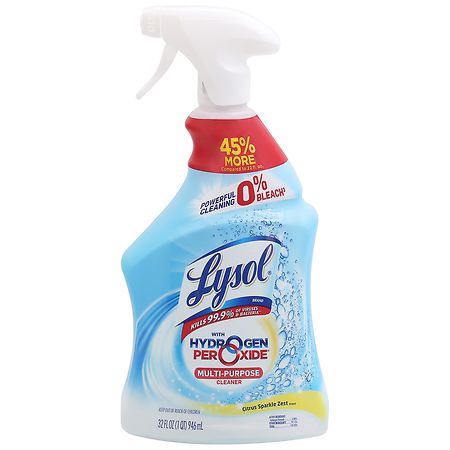


Lysol Bleach Free Hydrogen Peroxide Multi-Purpose Cleaner Citrus 32 fl oz
Analysis updated August 2026 · How Scout scores
At a glance
Summary
This cleaning product contains beneficial ingredients like hydrogen peroxide, citric acid, and plant-derived surfactants, which are effective and environmentally friendly. However, the presence of sodium laureth sulfate, which carries a risk of contamination with 1,4-dioxane, impacts its safety profile. The product's processing level also contributes to a lower score, despite its effective cleaning properties.
Key ingredients 17
Hydrogen PeroxideGood
Hydrogen peroxide is a common disinfectant known for its ability to kill bacteria and viruses. It breaks down into water and oxygen, making it environmentally friendly. It is effective in cleaning and sanitizing surfaces.
Risks
In high concentrations, it can be irritating to the skin and eyes.
Benefits
It is a powerful disinfectant that is safe for the environment.
Capryl GlucosideGood
Capryl glucoside is a mild, plant-derived surfactant used for its gentle cleaning properties. It is biodegradable and considered safe for use in cleaning products. It is effective in removing dirt and grease without harshness.
Risks
There are minimal risks associated with this ingredient.
Benefits
It provides effective cleaning while being gentle on surfaces and the environment.
Lauryl GlucosideGood
Lauryl glucoside is a non-ionic surfactant derived from natural sources like coconut oil and glucose. It is known for its mildness and biodegradability. It is effective in cleaning without causing irritation.
Risks
There are minimal risks associated with this ingredient.
Benefits
It is a gentle and effective cleaning agent that is environmentally friendly.
WaterNeutral
Water is used as a solvent in cleaning products to dissolve other ingredients. It helps in the application and distribution of the cleaner on surfaces. It is a neutral component with no direct cleaning properties.
Risks
There are no significant risks associated with water in cleaning products.
Benefits
It acts as a carrier for active ingredients, aiding in their application.
Dipropylene Glycol Butyl EtherNeutral
This ingredient is a solvent that helps dissolve other substances in the cleaner. It enhances the cleaning power by breaking down grease and grime. It is commonly used in cleaning products for its effectiveness.
Risks
It can cause mild irritation if it comes into contact with skin or eyes.
Benefits
It improves the cleaning efficiency of the product by dissolving tough stains.
Citric AcidNeutral
Common acidulant and preservative — safe at typical use levels, neither beneficial nor harmful.
Risks
In concentrated forms, it can cause skin irritation.
Benefits
It is effective in removing hard water stains and is environmentally friendly.
C10 Ethoxylated AlcoholNeutral
This ingredient is a non-ionic surfactant used to enhance the cleaning power of the product. It helps in emulsifying oils and dirt. It is commonly used in household cleaners for its effectiveness.
Risks
It may cause mild irritation if it comes into contact with skin or eyes.
Benefits
It improves the product's ability to clean oily and greasy surfaces.
Tetrasodium IminodisuccinateNeutral
Tetrasodium iminodisuccinate is a chelating agent that binds to metal ions, preventing them from interfering with the cleaning process. It enhances the effectiveness of surfactants. It is considered safe and biodegradable.
Risks
There are minimal risks associated with this ingredient.
Benefits
It improves the cleaning performance by softening water and enhancing surfactant action.
2,6-Dimethyl-2-HeptanolNeutral
This ingredient is used as a solvent and fragrance component in cleaning products. It helps in dissolving other ingredients and may contribute to the scent. It is commonly used in household cleaners.
Risks
It may cause mild irritation if it comes into contact with skin or eyes.
Benefits
It aids in the dissolution of other ingredients and may enhance the product's fragrance.
DihydromyrcenolNeutral
Dihydromyrcenol is a fragrance ingredient used to impart a fresh scent to cleaning products. It is commonly used in household products for its pleasant aroma. It does not contribute to the cleaning efficacy.
Risks
It may cause mild irritation if it comes into contact with skin or eyes.
Benefits
It provides a fresh scent to the product, enhancing user experience.
Dipropylene GlycolNeutral
Dipropylene glycol is a solvent used to dissolve other ingredients in cleaning products. It helps in the even distribution of the cleaner on surfaces. It is commonly used for its effectiveness and low toxicity.
Risks
It may cause mild irritation if it comes into contact with skin or eyes.
Benefits
It aids in the dissolution and application of active ingredients.
Ethylene BrassylateNeutral
Ethylene brassylate is a fragrance ingredient used to impart a pleasant scent to cleaning products. It is commonly used in household products for its aroma. It does not contribute to the cleaning efficacy.
Risks
It may cause mild irritation if it comes into contact with skin or eyes.
Benefits
It provides a pleasant scent to the product, enhancing user experience.
Methylbenzyl AcetateNeutral
Methylbenzyl acetate is a fragrance ingredient used to impart a floral scent to cleaning products. It is commonly used in household products for its pleasant aroma. It does not contribute to the cleaning efficacy.
Risks
It may cause mild irritation if it comes into contact with skin or eyes.
Benefits
It provides a floral scent to the product, enhancing user experience.
Tricyclodecenyl PropionateNeutral
Tricyclodecenyl propionate is a fragrance ingredient used to impart a woody scent to cleaning products. It is commonly used in household products for its aroma. It does not contribute to the cleaning efficacy.
Risks
It may cause mild irritation if it comes into contact with skin or eyes.
Benefits
It provides a woody scent to the product, enhancing user experience.
Sodium SulfateNeutral
Sodium sulfate is used as a filler and thickening agent in cleaning products. It helps in maintaining the consistency of the product. It is commonly used for its low cost and effectiveness.
Risks
There are minimal risks associated with this ingredient.
Benefits
It helps in maintaining the product's consistency and stability.
Sodium Laureth SulfateBad
Sodium laureth sulfate is a surfactant used for its foaming and cleaning properties. It is milder than sodium lauryl sulfate but can still cause irritation. There is a risk of contamination with 1,4-dioxane, a potential carcinogen.
Risks
It can cause skin and eye irritation and may be contaminated with harmful byproducts.
Benefits
It helps in removing dirt and grease effectively.
Propylene GlycolBad
Processed additive flagged under Scout's ingredient doctrine.
Risks
It may cause mild irritation if it comes into contact with skin or eyes.
Benefits
It aids in the dissolution and application of active ingredients.
Get the full breakdown in the Scout appTake Scout shopping
Scan any product to see lab results, healthy alternatives, and your personalized analysis.
Download on theApp Store GET IT ONGoogle PlayAmazon pricing & content
Amazon price as of . Product prices and availability are accurate as of the date/time indicated and are subject to change. Any price and availability information displayed on Amazon.com at the time of purchase will apply to the purchase of this product.
CERTAIN CONTENT THAT APPEARS ON THIS SITE COMES FROM AMAZON. THIS CONTENT IS PROVIDED “AS IS” AND IS SUBJECT TO CHANGE OR REMOVAL AT ANY TIME.