
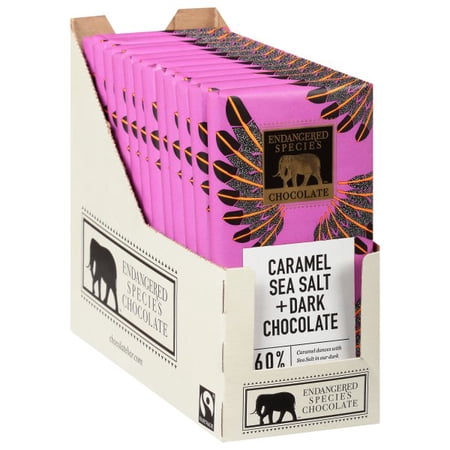


Endangered Species - Dark Chocolate Bars Box 60% Cocoa Sea Salt & Caramel - 12 Bars
Analysis updated May 2026 · How Scout scores
At a glance
Summary
This dark chocolate bar contains beneficial ingredients like bittersweet chocolate, chocolate liquor, and cocoa butter, which are rich in antioxidants and healthy fats. However, the presence of refined sugar and the product's processed nature limit its health benefits. The ingredient list is relatively clean, with no artificial additives, but the added sugar and processing level prevent it from achieving a higher score.
Key ingredients 10
Bittersweet chocolateGood
Bittersweet chocolate is rich in antioxidants and flavonoids, which can support heart health. It contains a higher cocoa content, providing more beneficial compounds compared to milk chocolate. The presence of cocoa butter adds healthy fats that can be beneficial in moderation.
Risks
Excessive consumption may lead to weight gain due to its calorie density.
Benefits
Contains antioxidants that may improve heart health and reduce inflammation. Provides a source of healthy fats from cocoa butter.
Chocolate liquorGood
Chocolate liquor is a pure form of chocolate containing both cocoa solids and cocoa butter. It is a source of antioxidants and minerals like magnesium. The natural fats in cocoa butter can be beneficial for heart health when consumed in moderation.
Risks
High in calories and fat, which can contribute to weight gain if consumed in excess.
Benefits
Rich in antioxidants and minerals that support overall health. Provides healthy fats that may benefit cardiovascular health.
Cocoa butterGood
Cocoa butter is a natural fat extracted from cocoa beans, known for its smooth texture and stability. It contains healthy fats that can support heart health when consumed in moderation. The extraction process preserves beneficial compounds like stearic acid, which may have a neutral effect on cholesterol levels.
Risks
High in calories and fat, which can contribute to weight gain if consumed in excess.
Benefits
Provides healthy fats that may support cardiovascular health. Contains stearic acid, which may have a neutral effect on cholesterol.
VanillaGood
Beneficial ingredient — whole-food or functional value in this product class.
Benefits
Enhances flavor and aroma of chocolate products. Contains small amounts of antioxidants.
Pink Himalayan sea saltGood
Unrefined sea salt — a minimally processed, natural source of sodium and essential trace minerals, and a legitimate whole-food seasoning. Treated as a positive ingredient.
Risks
Excessive salt intake can lead to hypertension and cardiovascular issues.
Benefits
Contains trace minerals that may offer health benefits. Enhances flavor and provides a balance to sweet ingredients.
Organic caramelNeutral
Organic caramel is made by heating sugar and is used for its sweet flavor and chewy texture. Being organic, it is free from synthetic pesticides and fertilizers. The caramelization process adds a distinct flavor but also increases sugar content.
Risks
High sugar content can contribute to weight gain and dental issues if consumed in excess.
Benefits
Provides a rich, sweet flavor and chewy texture. Organic certification ensures it is free from synthetic additives.
SugarBad
Refined sugar is a high-calorie ingredient with no essential nutrients. It can contribute to weight gain and increase the risk of chronic diseases when consumed in excess. The processing of sugar removes any potential beneficial compounds found in whole foods.
Risks
Excessive sugar intake is linked to obesity, type 2 diabetes, and heart disease.
Soy lecithinBad
Refined emulsifier lecithin (doctrine: 'bad', distinct from seed oils).
Risks
May cause allergic reactions in individuals sensitive to soy.
Benefits
Improves texture and consistency of chocolate products. Generally recognized as safe in small amounts.
Organic tapioca syrupBad
Processed additive flagged under Scout's ingredient doctrine.
Risks
High in sugar, which can contribute to weight gain and blood sugar spikes.
Benefits
Provides a natural sweetening option with a lower glycemic index than some other sweeteners.
Organic cane sugarBad
Processed additive flagged under Scout's ingredient doctrine.
Risks
High sugar content can lead to weight gain and increased risk of chronic diseases if consumed in excess.
Benefits
Provides a natural sweetening option with minimal processing. Organic certification ensures it is free from synthetic additives.
Processing
Processed Foods
Get the full breakdown in the Scout appTake Scout shopping
Scan any product to see lab results, healthy alternatives, and your personalized analysis.
Download on theApp Store GET IT ONGoogle PlayAmazon pricing & content
Amazon price as of . Product prices and availability are accurate as of the date/time indicated and are subject to change. Any price and availability information displayed on Amazon.com at the time of purchase will apply to the purchase of this product.
CERTAIN CONTENT THAT APPEARS ON THIS SITE COMES FROM AMAZON. THIS CONTENT IS PROVIDED “AS IS” AND IS SUBJECT TO CHANGE OR REMOVAL AT ANY TIME.