
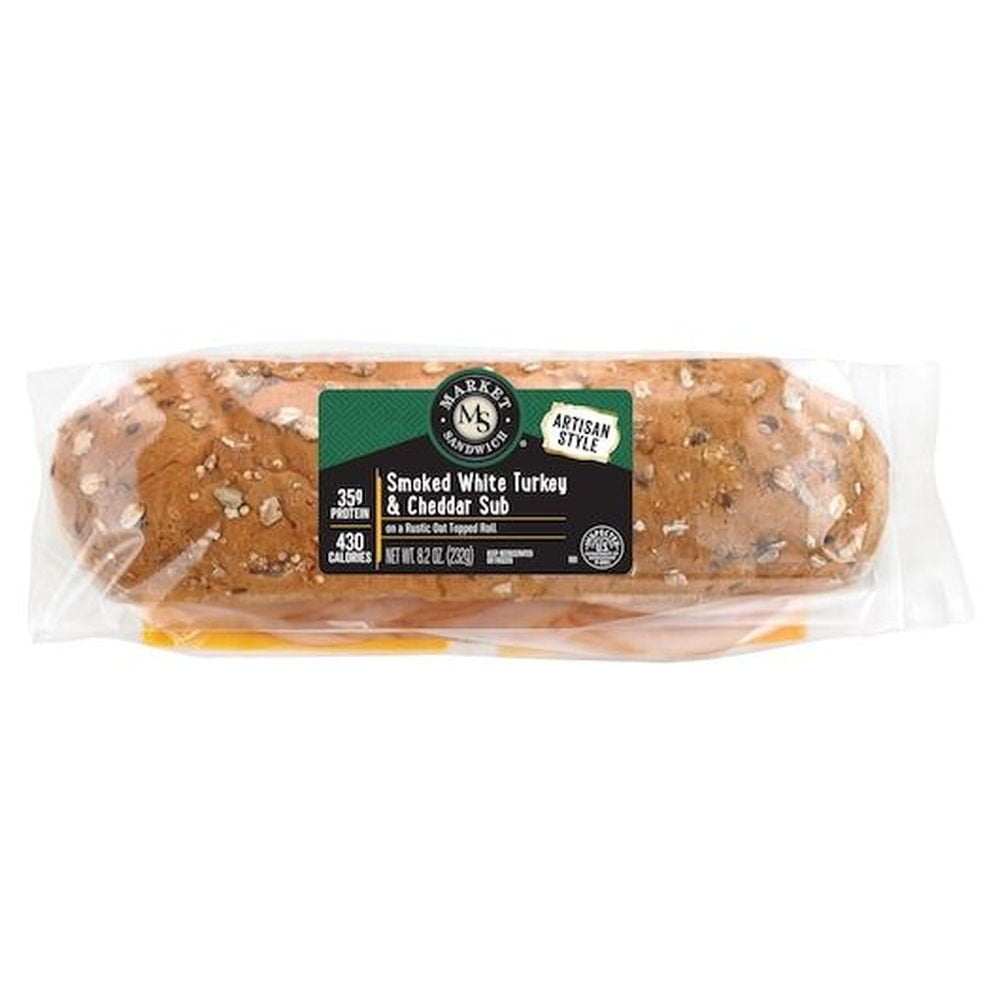


Smoked White Turkey & Cheddar Sub
Summary
The Smoked White Turkey & Cheddar Sub contains beneficial ingredients like smoked turkey and oats, which provide protein and fiber. However, it is a processed food with a relatively high energy content and sodium level, which limits its score. The presence of enriched flour with added vitamins and minerals is positive, but the overall processing level and potential additives in the sub contribute to a moderate score.
At a glance
Key ingredients 13
Wheat breadNeutral
Wheat bread is a common staple providing carbohydrates and some fiber. It is typically made from refined flour, which lacks the nutrients found in whole grains. The presence of gluten may be a concern for those with sensitivities.
Risks
Contains gluten, which can cause issues for individuals with celiac disease or gluten sensitivity.
Benefits
Provides a source of carbohydrates for energy, though it lacks the nutritional benefits of whole grain alternatives.
Enriched flourNeutral
Enriched flour is refined wheat flour with added nutrients like iron and B vitamins. It lacks the fiber and some nutrients found in whole wheat flour. The enrichment process aims to replace some lost nutrients during refining.
Risks
May contribute to blood sugar spikes due to its refined nature.
Benefits
Provides essential nutrients like iron and B vitamins due to enrichment.
Wheat flourNeutral
Wheat flour is a basic ingredient in many baked goods, providing structure and texture. It is often refined, removing bran and germ, which reduces its nutritional value. Whole wheat flour would offer more fiber and nutrients.
Risks
Contains gluten, which can be problematic for those with gluten intolerance.
Benefits
Serves as a primary source of carbohydrates and energy.
Malted barley flourNeutral
Malted barley flour is used to enhance flavor and improve the texture of baked goods. It contains enzymes that can help break down starches into sugars. It is typically used in small amounts.
Benefits
Adds flavor and aids in the fermentation process of bread.
NiacinGood
Niacin, also known as vitamin B3, is essential for energy metabolism and DNA repair. It is often added to enriched flours to replace nutrients lost during processing. Adequate intake supports skin health and nervous system function.
Benefits
Supports energy production and maintains healthy skin and nerves.
Reduced ironGood
Reduced iron is added to foods to prevent iron deficiency anemia. It is a form of elemental iron used to fortify foods. Iron is crucial for oxygen transport in the blood.
Risks
Excessive iron intake can lead to toxicity, but this is rare from fortified foods alone.
Benefits
Helps prevent iron deficiency and supports healthy blood function.
Thiamine mononitrateGood
Thiamine mononitrate is a form of vitamin B1, essential for energy metabolism. It is added to enriched products to compensate for losses during processing. Adequate thiamine intake supports nerve function and energy production.
Benefits
Supports energy metabolism and proper nerve function.
RiboflavinGood
Riboflavin, or vitamin B2, is important for energy production and cellular function. It is often added to enriched flours to replace nutrients lost during processing. Riboflavin also supports skin and eye health.
Benefits
Essential for energy production and maintaining healthy skin and eyes.
Folic acidGood
Folic acid is a synthetic form of folate, a B vitamin important for DNA synthesis and repair. It is added to enriched foods to prevent neural tube defects in pregnancy. Adequate intake is crucial for cell division and growth.
Risks
Excessive intake can mask vitamin B12 deficiency, but this is rare from fortified foods alone.
Benefits
Supports DNA synthesis and is crucial for fetal development during pregnancy.
WaterNeutral
Water is a fundamental ingredient used in food preparation and processing. It acts as a solvent and is essential for hydration. In this context, it is used to mix and bind ingredients.
Benefits
Essential for hydration and acts as a solvent in food preparation.
Smoked white turkeyGood
Smoked white turkey is a lean source of protein, providing essential amino acids. Smoking adds flavor but may introduce some nitrates or nitrites. It is a healthier alternative to red meats due to lower saturated fat content.
Risks
Potential presence of nitrates or nitrites from smoking, which can be a concern if consumed in large amounts.
Benefits
Provides high-quality protein with lower saturated fat compared to red meats.
Aged cheddarNeutral
Aged cheddar is a source of calcium and protein, with a rich flavor profile. Aging enhances flavor but increases sodium content. It is a good source of calcium but should be consumed in moderation due to fat content.
Risks
High in saturated fat and sodium, which can be a concern for heart health if consumed excessively.
Benefits
Rich in calcium and protein, supporting bone health and muscle function.
OatsGood
Oats are a whole grain rich in fiber, particularly beta-glucan, which supports heart health. They provide essential nutrients like manganese and phosphorus. Oats can help lower cholesterol levels and improve digestion.
Benefits
Supports heart health and digestion due to high fiber content.
Processing
Processed Foods
Get the full breakdown in the Scout app
Scan any product to see lab results, healthy alternatives, and your personalized analysis.
Download on theApp Store