
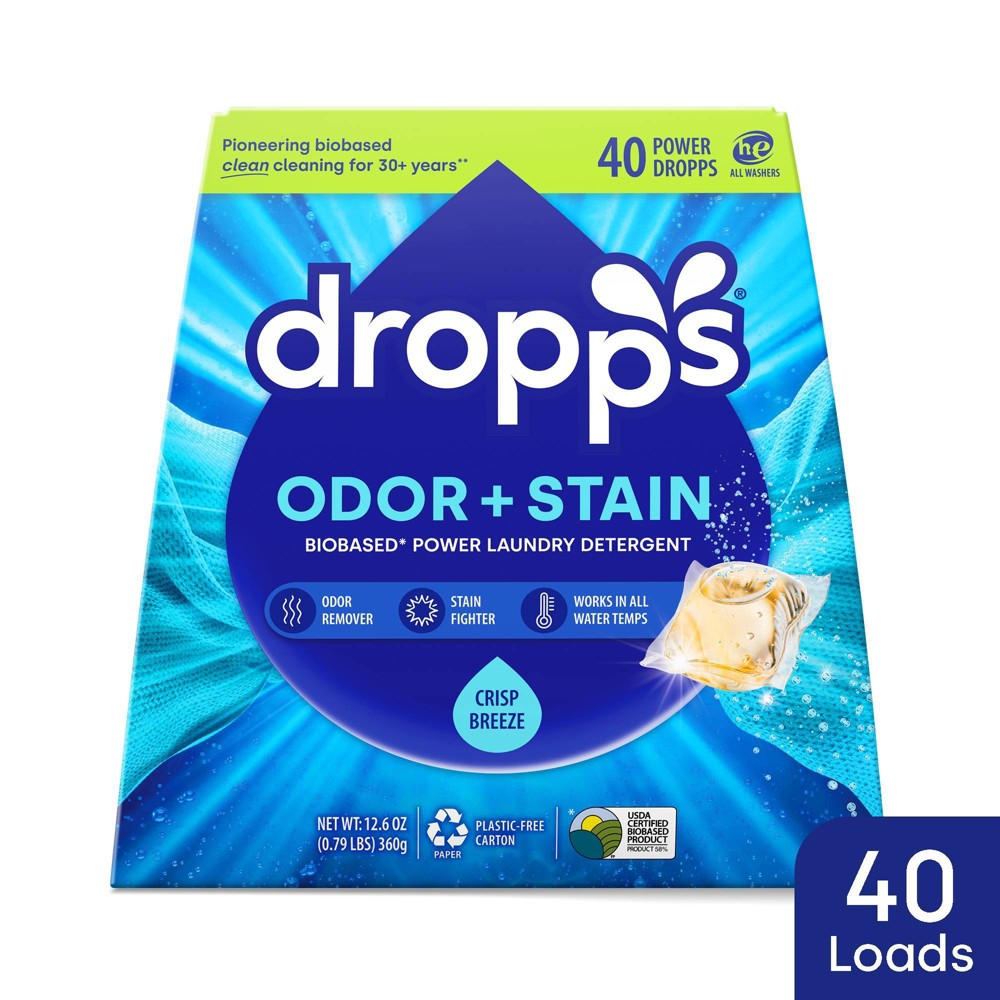

Dropps Laundry Odor + Stain Detergent Pods Biobased HE Compatible Crisp Breeze Scent 40 Count
Analysis updated August 2026 · How Scout scores
At a glance
Summary
This detergent features a range of plant-derived enzymes and surfactants, which are effective and environmentally friendly. However, the presence of synthetic fragrance, which can cause allergic reactions and lacks transparency, slightly detracts from its overall safety and environmental impact. The product is processed, which limits its maximum potential score.
Key ingredients 19
Alkyl glucosideGood
Alkyl glucosides are plant-derived surfactants known for their mildness. They are effective in cleaning without being harsh on fabrics or skin. They are biodegradable and environmentally friendly.
Risks
Low risk of irritation compared to harsher surfactants.
Benefits
Provides gentle yet effective cleaning action.
Subtilisin enzymeGood
Subtilisin is a protease enzyme that breaks down protein-based stains. It is derived from natural sources and is biodegradable. It is effective in removing tough stains like blood and grass.
Risks
May cause allergic reactions in sensitive individuals.
Benefits
Highly effective in breaking down protein stains.
Amylase enzymeGood
Amylase is an enzyme that breaks down starches into sugars. It is used in detergents to remove starchy stains such as pasta and potatoes. It is biodegradable and environmentally friendly.
Risks
Low risk of irritation or allergic reactions.
Benefits
Effective in removing starchy stains from fabrics.
Lipase enzymeGood
Lipase is an enzyme that breaks down fats and oils. It is used in detergents to tackle greasy stains. It is derived from natural sources and is biodegradable.
Risks
Minimal risk of irritation or allergic reactions.
Benefits
Highly effective in removing greasy and oily stains.
Pectate lyase enzymeGood
Pectate lyase is an enzyme that breaks down pectin, a component of plant cell walls. It is used in detergents to remove fruit and vegetable stains. It is biodegradable and considered safe for the environment.
Risks
Low risk of irritation or allergic reactions.
Benefits
Effective in removing fruit and vegetable stains.
Mannanase enzymeGood
Mannanase is an enzyme that breaks down mannans, a type of polysaccharide. It is used in detergents to remove food-based stains. It is biodegradable and environmentally friendly.
Risks
Minimal risk of irritation or allergic reactions.
Benefits
Effective in removing food-based stains from fabrics.
Eugenia caryophyllus (clove) leaf oilGood
Clove leaf oil is a natural essential oil with antimicrobial properties. It is used in cleaning products for its pleasant scent and antibacterial effects. It is considered safe and biodegradable.
Risks
May cause skin irritation in sensitive individuals.
Benefits
Provides a natural fragrance and antimicrobial benefits.
Eucalyptus globulus (eucalyptus) leaf oilGood
Eucalyptus leaf oil is a natural essential oil known for its fresh scent and antimicrobial properties. It is used in cleaning products for its deodorizing and antibacterial effects. It is biodegradable and considered safe.
Risks
Potential for skin irritation in sensitive individuals.
Benefits
Offers a natural fragrance and antimicrobial benefits.
Mentha arvensis (cornmint) leaf oilGood
Cornmint leaf oil is a natural essential oil with a refreshing scent. It is used in cleaning products for its deodorizing properties. It is biodegradable and considered safe for use.
Risks
May cause skin irritation in sensitive individuals.
Benefits
Provides a natural fragrance and deodorizing benefits.
Alcohols, C12-16, ethoxylatedNeutral
This ingredient is a surfactant used to help remove dirt and stains. It is derived from natural alcohols but is chemically processed. It is generally considered safe for use in cleaning products.
Risks
May cause mild skin irritation in sensitive individuals.
Benefits
Effective in breaking down and removing grease and stains.
GlycerinNeutral
Standard formulation ingredient — neither beneficial nor harmful at typical use.
Risks
Generally considered safe with minimal risk.
Benefits
Helps maintain fabric softness and moisture.
WaterNeutral
Water is used as a solvent in many cleaning products. It helps dissolve other ingredients and facilitates their application. It is a neutral and safe component.
Benefits
Acts as a carrier for other ingredients, enhancing their effectiveness.
Tetrasodium glutamate diacetateNeutral
This ingredient is a chelating agent that helps improve cleaning efficiency. It binds to metal ions, preventing them from interfering with the cleaning process. It is considered safe for use in cleaning products.
Risks
Low risk of irritation or adverse effects.
Benefits
Enhances the performance of surfactants and enzymes.
Lauramine oxideNeutral
Lauramine oxide is a surfactant and foam booster used in cleaning products. It is derived from coconut oil and is considered mild. It helps improve the cleaning power of detergents.
Risks
May cause mild irritation in sensitive individuals.
Benefits
Enhances foam and cleaning performance.
Myristamine oxideNeutral
Myristamine oxide is a surfactant used to enhance cleaning efficiency. It is similar to lauramine oxide in its properties and applications. It is generally considered safe for use in cleaning products.
Risks
Potential for mild skin irritation.
Benefits
Improves the cleaning and foaming action of detergents.
Citric acidNeutral
Common acidulant and preservative — safe at typical use levels, neither beneficial nor harmful.
Risks
Low risk of irritation or adverse effects.
Benefits
Effective in removing mineral deposits and enhancing cleaning.
Polyvinyl alcoholNeutral
Polyvinyl alcohol is a synthetic polymer used as a film-forming agent. It is used in detergent pods to encapsulate the liquid ingredients. It is water-soluble and considered safe for use.
Risks
Minimal risk of irritation or adverse effects.
Benefits
Allows for convenient and controlled release of detergent.
Bittering agentNeutral
A bittering agent is added to deter ingestion of the product. It is non-toxic and used in small amounts. It is considered safe for use in cleaning products.
Benefits
Helps prevent accidental ingestion of the product.
FragranceVery Bad
Fragrance in cleaning products can be synthetic and may cause allergic reactions. It is often added to mask chemical odors. The specific composition is usually undisclosed, raising concerns about potential allergens.
Risks
Potential for skin irritation and allergic reactions.
Benefits
Provides a pleasant scent to the product.
Get the full breakdown in the Scout appTake Scout shopping
Scan any product to see lab results, healthy alternatives, and your personalized analysis.
Download on theApp Store GET IT ONGoogle PlayAmazon pricing & content
Amazon price as of . Product prices and availability are accurate as of the date/time indicated and are subject to change. Any price and availability information displayed on Amazon.com at the time of purchase will apply to the purchase of this product.
CERTAIN CONTENT THAT APPEARS ON THIS SITE COMES FROM AMAZON. THIS CONTENT IS PROVIDED “AS IS” AND IS SUBJECT TO CHANGE OR REMOVAL AT ANY TIME.