


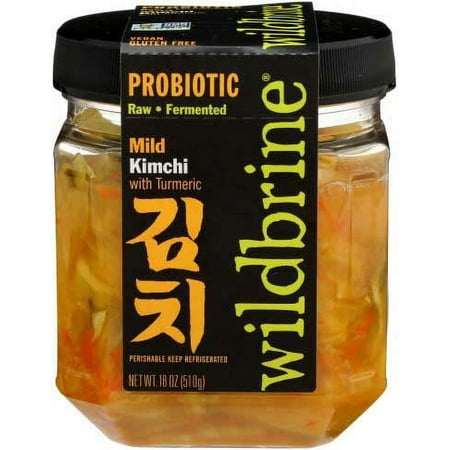

At a glance
Summary
This kimchi contains beneficial ingredients like napa cabbage, garlic, and ginger, which provide vitamins, minerals, and probiotics. However, the presence of refined sugar and monosodium glutamate, along with its classification as an ultra-processed food, limits its health score. Despite its nutritious components, the processing level and added sugar prevent it from achieving a higher rating.
Key ingredients 12
Napa cabbageVery Good
Napa cabbage is a low-calorie vegetable rich in vitamins and minerals. It provides dietary fiber which aids in digestion and supports gut health. Fermentation enhances its probiotic content, beneficial for the digestive system.
Benefits
Rich in vitamins C and K, and provides beneficial probiotics when fermented.
GingerVery Good
Ginger is a spice known for its anti-inflammatory and digestive benefits. It contains gingerol, which may reduce nausea and improve digestion. Its use in kimchi adds a zesty flavor and enhances health benefits.
Benefits
Contains gingerol, which provides anti-inflammatory and digestive benefits.
Red chili powderGood
Red chili powder adds flavor and heat, and contains capsaicin, which may boost metabolism. It is a source of antioxidants that can help reduce inflammation. The spice level can vary, affecting its use in sensitive individuals.
Risks
May cause irritation or discomfort in individuals sensitive to spicy foods.
Benefits
Contains capsaicin, which may aid in metabolism and provide anti-inflammatory benefits.
Daikon radishGood
Daikon radish is a low-calorie root vegetable rich in vitamin C and digestive enzymes. It aids in digestion and provides a crunchy texture to dishes. Its mild flavor complements the spiciness of kimchi.
Benefits
Rich in vitamin C and aids digestion with its natural enzymes.
Kelp stockGood
Kelp stock is made from dried kelp and water, providing iodine and other trace minerals. It enhances the umami flavor of dishes and supports thyroid health. The natural minerals in kelp are beneficial for overall health.
Risks
Excessive iodine intake can affect thyroid function, but this is unlikely in moderate consumption.
Benefits
Provides iodine and trace minerals that support thyroid function and overall health.
GarlicGood
Garlic is known for its strong flavor and health benefits, including antimicrobial properties. It contains allicin, which may support heart health and boost the immune system. Its use in fermentation can enhance these benefits.
Benefits
Contains allicin, which supports heart health and has antimicrobial properties.
LeeksGood
Leeks are a mild-flavored vegetable related to onions and garlic. They provide vitamins A, C, and K, and support heart health. Their inclusion in kimchi adds flavor complexity and nutritional value.
Benefits
Rich in vitamins and supports heart health with its nutrient profile.
OnionsGood
Onions add flavor and are rich in antioxidants and sulfur compounds. They support heart health and have anti-inflammatory properties. Their natural sugars can enhance the fermentation process.
Benefits
Rich in antioxidants and sulfur compounds that support heart health.
Rice flourNeutral
Rice flour is used as a thickening agent in kimchi paste. It is gluten-free and provides a smooth texture. It does not significantly impact the nutritional profile of the product.
See more about Rice flour →Monosodium glutamateNeutral
Monosodium glutamate (MSG) is used to enhance flavor by providing umami taste. It is generally recognized as safe but controversial due to anecdotal reports of sensitivity. Scientific studies have not conclusively linked MSG to adverse health effects.
Risks
Some individuals may experience sensitivity, leading to headaches or discomfort.
Benefits
Enhances flavor by providing umami taste without adding calories.
SaltNeutral
Salt is essential for the fermentation process and acts as a preservative. It enhances flavor but should be consumed in moderation due to potential health risks. Excessive salt intake can lead to hypertension.
Risks
High intake can contribute to hypertension and cardiovascular issues.
Benefits
Essential for fermentation and acts as a preservative.
SugarBad
Refined sugar is used to balance flavors but offers no nutritional benefits. Excessive consumption can lead to health issues like obesity and diabetes. It is often criticized for its role in processed foods.
Risks
High intake can contribute to obesity, diabetes, and other metabolic disorders.
Processing
Ultra-Processed Foods
Get the full breakdown in the Scout appTake Scout shopping
Scan any product to see lab results, healthy alternatives, and your personalized analysis.
Download on theApp Store GET IT ONGoogle Play