
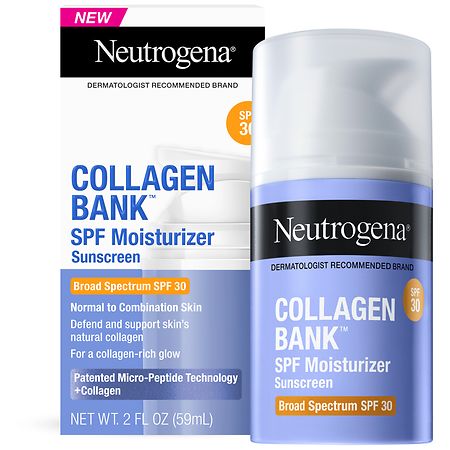
Neutrogena Collagen Bank Daily Face Moisturizer - SPF 30 - 2 fl oz: Cream for Normal to Very Dry Skin, Unscented
Summary
This moisturizer contains beneficial ingredients like hydrolyzed collagen, shea butter, and jojoba esters, which are known for their skin-nourishing properties. However, the presence of petrolatum and homosalate, which are associated with potential health concerns, along with synthetic polymers and stabilizers, affects the overall ingredient safety. The product is moderately processed, which further impacts its rating, despite the inclusion of some skin-friendly components.
At a glance
Key ingredients 43
WaterNeutral
Water is a common solvent used in cosmetics to dissolve other ingredients. It helps in the application and absorption of the product. It does not provide direct benefits or risks.
Benefits
Acts as a solvent and helps in the application of the product.
GlycerinVery Good
Glycerin is a humectant that attracts moisture to the skin, helping to keep it hydrated. It is widely used in skincare for its moisturizing properties. It is generally well-tolerated and beneficial for most skin types.
Risks
Rarely, it may cause irritation in very sensitive skin.
Benefits
Helps to maintain skin hydration and improve skin barrier function.
Cetearyl AlcoholGood
Cetearyl Alcohol is a fatty alcohol used as an emollient and thickener in cosmetics. It helps to soften and smooth the skin. It is considered safe and beneficial for skin conditioning.
Risks
Minimal risk of irritation for sensitive skin types.
Benefits
Provides emollient properties, improving skin texture and feel.
Dicaprylyl CarbonateNeutral
Dicaprylyl Carbonate is an emollient that provides a silky feel to the skin. It helps in the spreadability of the product. It is generally considered safe with no significant benefits or risks.
Benefits
Improves product texture and application.
Hydrolyzed CollagenGood
Hydrolyzed Collagen is used for its moisturizing and skin-conditioning properties. It helps to improve skin elasticity and hydration. It is beneficial for maintaining skin's youthful appearance.
Benefits
Enhances skin hydration and elasticity.
BakuchiolVery Good
Bakuchiol is a plant-based alternative to retinol, known for its anti-aging properties. It helps to reduce the appearance of fine lines and improve skin texture. It is well-tolerated and suitable for sensitive skin.
Risks
Minimal risk of irritation compared to retinol.
Benefits
Provides anti-aging benefits and improves skin texture.
Acetyl Dipeptide-31 AmideGood
Acetyl Dipeptide-31 Amide is a peptide used for its skin-conditioning properties. It helps to improve skin firmness and elasticity. It is beneficial for anti-aging formulations.
Benefits
Enhances skin firmness and elasticity.
Butyrospermum Parkii (Shea) ButterVery Good
Shea Butter is a natural fat extracted from the nuts of the shea tree, known for its moisturizing and anti-inflammatory properties. It helps to soothe and hydrate dry skin. It is highly beneficial for skin nourishment and protection.
Risks
Rarely, it may cause allergic reactions in individuals with nut allergies.
Benefits
Deeply moisturizes and nourishes the skin, providing anti-inflammatory benefits.
Hydroxypropyl Starch PhosphateNeutral
Hydroxypropyl Starch Phosphate is used as a thickening agent in cosmetics. It helps to stabilize emulsions and improve product texture. It is generally considered safe with no significant benefits or risks.
Benefits
Improves product texture and stability.
Steareth-10Neutral
Steareth-10 is an emulsifier used to blend oil and water components in cosmetics. It helps to maintain product consistency. It is generally considered safe with no significant benefits or risks.
Benefits
Helps to stabilize emulsions and maintain product consistency.
Stearic AcidNeutral
Stearic Acid is a fatty acid used as an emulsifier and thickener in cosmetics. It helps to stabilize formulations and improve texture. It is generally considered safe with no significant benefits or risks.
Benefits
Improves product stability and texture.
Palmitic AcidNeutral
Palmitic Acid is a fatty acid used as an emollient and thickener in cosmetics. It helps to soften the skin and improve product texture. It is generally considered safe with no significant benefits or risks.
Benefits
Provides emollient properties and improves product texture.
Glyceryl DilaurateNeutral
Glyceryl Dilaurate is an emulsifier used to blend oil and water components in cosmetics. It helps to maintain product consistency. It is generally considered safe with no significant benefits or risks.
Benefits
Helps to stabilize emulsions and maintain product consistency.
Caprylyl GlycolNeutral
Caprylyl Glycol is a skin-conditioning agent and preservative booster. It helps to improve skin hydration and extend product shelf life. It is generally considered safe with no significant benefits or risks.
Benefits
Enhances skin hydration and product preservation.
Sodium PolyacrylateNeutral
Sodium Polyacrylate is a thickening agent used to improve product texture and stability. It helps to enhance the viscosity of formulations. It is generally considered safe with no significant benefits or risks.
Benefits
Improves product texture and stability.
PetrolatumVery Bad
Petrolatum is a semi-solid mixture of hydrocarbons used as an occlusive agent in cosmetics. It helps to lock in moisture but can be comedogenic and occlusive. It is heavily penalized due to potential contamination with polycyclic aromatic hydrocarbons (PAHs).
Risks
Potential contamination with PAHs and may clog pores.
Benefits
Provides a barrier to prevent moisture loss.
ChlorphenesinNeutral
Chlorphenesin is a preservative used to prevent microbial growth in cosmetics. It helps to extend product shelf life. It is generally considered safe with no significant benefits or risks.
Risks
May cause irritation in sensitive individuals.
Benefits
Prevents microbial growth and extends product shelf life.
SilicaNeutral
Silica is used as a thickening agent and absorbent in cosmetics. It helps to improve product texture and reduce shine. It is generally considered safe with no significant benefits or risks.
Benefits
Improves product texture and reduces shine.
Caprylyl MethiconeNeutral
Caprylyl Methicone is a silicone used to enhance the spreadability and feel of cosmetics. It helps to improve product application and texture. It is generally considered safe with no significant benefits or risks.
Benefits
Enhances product spreadability and texture.
Diisopropyl AdipateNeutral
Diisopropyl Adipate is an emollient used to improve the spreadability of cosmetics. It helps to enhance product texture and application. It is generally considered safe with no significant benefits or risks.
Benefits
Improves product spreadability and texture.
DimethiconeNeutral
Dimethicone is a silicone used as an emollient and skin protectant in cosmetics. It helps to smooth and soften the skin. It is generally considered safe with no significant benefits or risks.
Risks
May cause build-up on the skin with prolonged use.
Benefits
Provides a smooth application and protects the skin.
Potassium Cetyl PhosphateNeutral
Potassium Cetyl Phosphate is an emulsifier used to blend oil and water components in cosmetics. It helps to maintain product consistency. It is generally considered safe with no significant benefits or risks.
Benefits
Helps to stabilize emulsions and maintain product consistency.
Synthetic BeeswaxNeutral
Synthetic Beeswax is used as an emollient and thickener in cosmetics. It helps to improve product texture and provide a barrier on the skin. It is generally considered safe with no significant benefits or risks.
Benefits
Improves product texture and provides a protective barrier.
Benzyl AlcoholNeutral
Benzyl Alcohol is used as a preservative and solvent in cosmetics. It helps to prevent microbial growth and improve product stability. It is generally considered safe with no significant benefits or risks.
Risks
May cause irritation in sensitive individuals.
Benefits
Prevents microbial growth and enhances product stability.
Tocopheryl AcetateGood
Tocopheryl Acetate is a form of Vitamin E used for its antioxidant properties. It helps to protect the skin from free radical damage. It is beneficial for maintaining skin health and appearance.
Risks
Rarely, it may cause irritation in sensitive skin.
Benefits
Provides antioxidant protection and supports skin health.
Jojoba EstersVery Good
Jojoba Esters are derived from jojoba oil and used as emollients in cosmetics. They help to moisturize and soften the skin. They are highly beneficial for skin conditioning and nourishment.
Benefits
Moisturizes and conditions the skin, enhancing its softness.
Hydrolyzed Jojoba EstersVery Good
Hydrolyzed Jojoba Esters are used for their moisturizing and skin-conditioning properties. They help to improve skin hydration and texture. They are beneficial for maintaining skin softness and elasticity.
Benefits
Enhances skin hydration and improves texture.
EthylhexylglycerinNeutral
Ethylhexylglycerin is used as a preservative and skin-conditioning agent in cosmetics. It helps to enhance product preservation and improve skin feel. It is generally considered safe with no significant benefits or risks.
Benefits
Enhances product preservation and skin feel.
Cetyl DimethiconeNeutral
Cetyl Dimethicone is a silicone used to enhance the spreadability and feel of cosmetics. It helps to improve product application and texture. It is generally considered safe with no significant benefits or risks.
Benefits
Enhances product spreadability and texture.
Glyceryl StearateNeutral
Glyceryl Stearate is an emulsifier used to blend oil and water components in cosmetics. It helps to maintain product consistency. It is generally considered safe with no significant benefits or risks.
Benefits
Helps to stabilize emulsions and maintain product consistency.
PEG-100 StearateNeutral
PEG-100 Stearate is an emulsifier used to blend oil and water components in cosmetics. It helps to maintain product consistency. It is generally considered safe with no significant benefits or risks.
Benefits
Helps to stabilize emulsions and maintain product consistency.
Behenyl AlcoholNeutral
Behenyl Alcohol is a fatty alcohol used as an emollient and thickener in cosmetics. It helps to soften the skin and improve product texture. It is generally considered safe with no significant benefits or risks.
Benefits
Provides emollient properties and improves product texture.
Xanthan GumNeutral
Xanthan Gum is a thickening agent used to improve product texture and stability. It helps to enhance the viscosity of formulations. It is generally considered safe with no significant benefits or risks.
Benefits
Improves product texture and stability.
Acrylates/Dimethicone CopolymerNeutral
Acrylates/Dimethicone Copolymer is used as a film-forming agent in cosmetics. It helps to improve product texture and provide a smooth finish. It is generally considered safe with no significant benefits or risks.
Benefits
Improves product texture and provides a smooth finish.
Dimethicone/PEG-10/15 CrosspolymerNeutral
Dimethicone/PEG-10/15 Crosspolymer is used as a film-forming agent in cosmetics. It helps to improve product texture and provide a smooth finish. It is generally considered safe with no significant benefits or risks.
Benefits
Improves product texture and provides a smooth finish.
Ethylhexyl StearateNeutral
Ethylhexyl Stearate is an emollient used to improve the spreadability of cosmetics. It helps to enhance product texture and application. It is generally considered safe with no significant benefits or risks.
Benefits
Improves product spreadability and texture.
Disodium EDTANeutral
Disodium EDTA is a chelating agent used to improve product stability and prevent metal ion contamination. It helps to enhance the efficacy of preservatives. It is generally considered safe with no significant benefits or risks.
Benefits
Improves product stability and enhances preservative efficacy.
Trideceth-6Neutral
Trideceth-6 is an emulsifier used to blend oil and water components in cosmetics. It helps to maintain product consistency. It is generally considered safe with no significant benefits or risks.
Benefits
Helps to stabilize emulsions and maintain product consistency.
BHTNeutral
BHT is an antioxidant used to prevent the oxidation of ingredients in cosmetics. It helps to extend product shelf life. It is generally considered safe with no significant benefits or risks.
Risks
May cause irritation in sensitive individuals.
Benefits
Prevents oxidation and extends product shelf life.
Avobenzone (2.5%)Neutral
Avobenzone is a chemical sunscreen agent that provides broad-spectrum UV protection. It helps to protect the skin from UVA rays. It is effective but can degrade in sunlight without stabilizers.
Risks
May cause irritation in sensitive skin and degrade in sunlight.
Benefits
Provides broad-spectrum UVA protection.
Homosalate (6%)Very Bad
Homosalate is a chemical sunscreen agent used to absorb UVB rays. It helps to protect the skin from sunburn. However, it is heavily penalized due to potential endocrine-disrupting effects and environmental concerns.
Risks
Potential endocrine disruptor and environmental pollutant.
Benefits
Provides UVB protection.
Octisalate (4.5%)Neutral
Octisalate is a chemical sunscreen agent used to stabilize other sunscreen ingredients and absorb UVB rays. It helps to enhance the efficacy of sunscreen formulations. It is generally considered safe with no significant benefits or risks.
Risks
May cause irritation in sensitive skin.
Benefits
Stabilizes sunscreen formulations and provides UVB protection.
Octocrylene (8%)Very Bad
Octocrylene is a chemical sunscreen agent used to absorb UVB and short UVA rays. It helps to protect the skin from sunburn. However, it is heavily penalized due to potential endocrine-disrupting effects and environmental concerns.
Risks
Potential endocrine disruptor and environmental pollutant.
Benefits
Provides UVB and short UVA protection.
Processing
Processed Foods
Get the full breakdown in the Scout app
Scan any product to see lab results, healthy alternatives, and your personalized analysis.
Download on theApp Store