
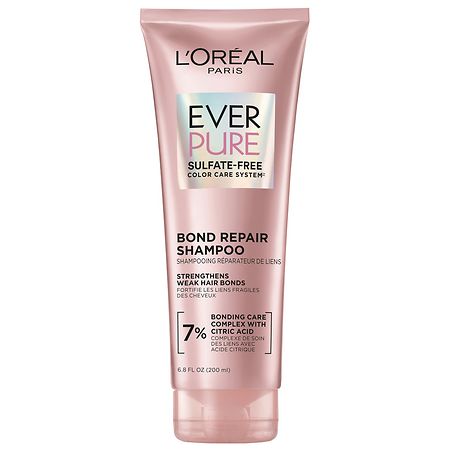

L'Oreal Paris EverPure Sulfate Free Bond Repair Color Care Shampoo - 6.8 fl oz: For Colored Hair, Daily Use
Analysis updated August 2026 · How Scout scores
At a glance
Summary
This shampoo is sulfate-free and contains beneficial ingredients like sodium cocoyl isethionate and aloe vera, which are gentle and moisturizing. However, it includes synthetic fragrance, sodium chloride, and non-water-soluble silicone (amodimethicone), which can cause buildup and irritation. Additionally, preservatives like methylchloroisothiazolinone and methylisothiazolinone are known to cause allergic reactions, impacting the overall safety and healthiness of the product.
Key ingredients 41
Sodium Cocoyl IsethionateVery Good
A gentle surfactant derived from coconut oil, it is known for its mildness and ability to cleanse without stripping natural oils. It is often used in sulfate-free shampoos for its gentle cleansing properties.
Risks
Generally considered safe with minimal risks.
Benefits
Provides gentle cleansing and is suitable for sensitive skin.
Decyl GlucosideGood
Beneficial ingredient — whole-food or functional value in this product class.
Risks
Generally considered safe with minimal risks.
Benefits
Provides gentle cleansing suitable for sensitive skin.
Aloe Barbadensis Leaf JuiceGood
Aloe vera is known for its soothing and moisturizing properties. It helps to hydrate the hair and scalp, reducing dryness and irritation. It is a natural ingredient that is generally considered safe and beneficial.
Risks
Generally considered safe with minimal risks.
Benefits
Provides hydration and soothing benefits to the hair and scalp.
Helianthus Annuus Seed Oil/Sunflower Seed OilGood
Sunflower seed oil is a natural oil rich in fatty acids and vitamin E. It helps to moisturize and condition the hair, improving its texture and shine. It is generally considered safe and beneficial for hair care.
Risks
Generally considered safe with minimal risks.
Benefits
Provides moisturizing and conditioning benefits to the hair.
Rosmarinus Officinalis Leaf Extract/Rosemary Leaf ExtractGood
Rosemary leaf extract is known for its antioxidant and antimicrobial properties. It helps to protect the hair and scalp from environmental damage and reduce dandruff. It is a natural ingredient that is generally considered safe and beneficial.
Risks
Generally considered safe with minimal risks.
Benefits
Provides antioxidant and antimicrobial benefits to the hair and scalp.
Centella Asiatica ExtractGood
Centella asiatica extract is known for its soothing and healing properties. It helps to calm irritated skin and promote healing. It is a natural ingredient that is generally considered safe and beneficial.
Risks
Generally considered safe with minimal risks.
Benefits
Provides soothing and healing benefits to the scalp.
TocopherolGood
Tocopherol, also known as vitamin E, is an antioxidant that helps to protect the hair and scalp from environmental damage. It also provides moisturizing benefits and improves the overall health of the hair. It is generally considered safe and beneficial.
Risks
Generally considered safe with minimal risks.
Benefits
Provides antioxidant and moisturizing benefits to the hair and scalp.
Aqua/Water/EauNeutral
Water is a universal solvent and is used as a base in many cosmetic products. It helps to dissolve other ingredients and provides a medium for them to be applied to the hair. It is generally considered safe and non-reactive.
Risks
There are no significant risks associated with water in cosmetic formulations.
Benefits
Water hydrates and helps distribute other ingredients evenly.
Disodium Laureth SulfosuccinateNeutral
This is a mild surfactant used to cleanse the hair by removing dirt and oil. It is considered less irritating than traditional sulfates. It is often used in sulfate-free formulations.
Risks
May cause mild irritation in sensitive individuals.
Benefits
Provides gentle cleansing without stripping natural oils.
Cocamidopropyl BetaineNeutral
A surfactant derived from coconut oil, it helps to create foam and cleanse the hair. It is generally considered mild and non-irritating. It is often used in combination with other surfactants to enhance performance.
Risks
Can cause allergic reactions in some individuals.
Benefits
Enhances foam and cleansing properties while being gentle on the skin.
EthanolamineNeutral
Ethanolamine is used to adjust the pH of cosmetic formulations. It helps to stabilize the product and ensure it performs effectively. It is generally considered safe in low concentrations.
Risks
High concentrations can cause irritation.
Benefits
Helps maintain product stability and effectiveness.
Citric AcidNeutral
Citric acid is used to adjust the pH of cosmetic products. It helps to maintain the stability and performance of the formulation. It is generally considered safe and non-irritating.
Risks
Can cause irritation in sensitive individuals if used in high concentrations.
Benefits
Helps maintain the desired pH level for optimal product performance.
Sodium Lauryl SulfoacetateNeutral
A mild surfactant that helps to cleanse the hair and create foam. It is considered less irritating than traditional sulfates. It is often used in sulfate-free formulations.
Risks
May cause mild irritation in sensitive individuals.
Benefits
Provides effective cleansing with a gentle touch.
Glycol DistearateNeutral
Glycol distearate is used as a pearlizing agent to give shampoos a creamy appearance. It also acts as an emollient, helping to soften and smooth the hair. It is generally considered safe and non-irritating.
Risks
There are no significant risks associated with this ingredient.
Benefits
Enhances the visual appeal of the product and provides conditioning benefits.
Sodium ChlorideNeutral
Standard formulation ingredient — neither beneficial nor harmful at typical use.
Risks
Can cause dryness and irritation of the scalp.
Benefits
Helps to thicken the product for better application.
Polyquaternium-10Neutral
Polyquaternium-10 is a conditioning agent that helps to improve the texture and manageability of hair. It forms a thin film on the hair, providing smoothness and reducing static. It is generally considered safe and non-irritating.
Risks
There are no significant risks associated with this ingredient.
Benefits
Improves hair texture and reduces static.
PPG-5-Ceteth-20Neutral
This is an emulsifying agent that helps to blend oil and water-based ingredients. It is used to stabilize formulations and improve texture. It is generally considered safe and non-irritating.
Risks
There are no significant risks associated with this ingredient.
Benefits
Helps to stabilize formulations and improve texture.
Coco-BetaineNeutral
Coco-betaine is a surfactant derived from coconut oil that helps to cleanse and create foam. It is considered mild and suitable for sensitive skin. It is often used in combination with other surfactants to enhance performance.
Risks
Can cause allergic reactions in some individuals.
Benefits
Enhances foam and cleansing properties while being gentle on the skin.
PEG-55 Propylene Glycol OleateNeutral
This is an emulsifier that helps to blend oil and water-based ingredients. It is used to stabilize formulations and improve texture. It is generally considered safe and non-irritating.
Risks
There are no significant risks associated with this ingredient.
Benefits
Helps to stabilize formulations and improve texture.
CarbomerNeutral
Carbomer is used as a thickening agent to improve the texture and consistency of cosmetic products. It helps to stabilize formulations and ensure even application. It is generally considered safe and non-irritating.
Risks
There are no significant risks associated with this ingredient.
Benefits
Improves product texture and stability.
Acrylates/Beheneth-25 Methacrylate CopolymerNeutral
This is a film-forming agent used to provide hold and texture to hair products. It helps to improve the styling properties of the product. It is generally considered safe and non-irritating.
Risks
There are no significant risks associated with this ingredient.
Benefits
Enhances styling properties and provides hold.
Hexyl CinnamalNeutral
Hexyl cinnamal is a fragrance ingredient used to impart a floral scent to cosmetic products. It is generally considered safe, but can cause allergic reactions in some individuals. It is used in small concentrations to enhance the product's aroma.
Risks
May cause allergic reactions in sensitive individuals.
Benefits
Provides a pleasant floral scent.
Benzoic AcidNeutral
Benzoic acid is used as a preservative to prevent microbial growth in cosmetic products. It helps to extend the shelf life of the product. It is generally considered safe and non-irritating.
Risks
There are no significant risks associated with this ingredient.
Benefits
Helps to preserve the product and extend its shelf life.
Trideceth-6Neutral
Trideceth-6 is an emulsifier that helps to blend oil and water-based ingredients. It is used to stabilize formulations and improve texture. It is generally considered safe and non-irritating.
Risks
There are no significant risks associated with this ingredient.
Benefits
Helps to stabilize formulations and improve texture.
HydroxycitronellalNeutral
Hydroxycitronellal is a fragrance ingredient used to impart a floral scent to cosmetic products. It is generally considered safe, but can cause allergic reactions in some individuals. It is used in small concentrations to enhance the product's aroma.
Risks
May cause allergic reactions in sensitive individuals.
Benefits
Provides a pleasant floral scent.
Salicylic AcidNeutral
Salicylic acid is used for its exfoliating properties, helping to remove dead skin cells and reduce dandruff. It is generally considered safe, but can cause irritation in sensitive individuals. It is often used in anti-dandruff formulations.
Risks
Can cause irritation in sensitive individuals.
Benefits
Helps to exfoliate the scalp and reduce dandruff.
Magnesium NitrateNeutral
Magnesium nitrate is used as a stabilizer in cosmetic formulations. It helps to maintain the stability and performance of the product. It is generally considered safe and non-irritating.
Risks
There are no significant risks associated with this ingredient.
Benefits
Helps to stabilize formulations and maintain product performance.
GeraniolNeutral
Geraniol is a naturally occurring terpene alcohol found in many essential oils. It is used for its fragrance properties and is generally considered safe. However, it can cause allergic reactions in some individuals.
Risks
May cause allergic reactions in sensitive individuals.
Benefits
Provides a pleasant floral scent.
CitronellolNeutral
Citronellol is a naturally occurring terpene alcohol found in many essential oils. It is used for its fragrance properties and is generally considered safe. However, it can cause allergic reactions in some individuals.
Risks
May cause allergic reactions in sensitive individuals.
Benefits
Provides a pleasant floral scent.
Magnesium ChlorideNeutral
Magnesium chloride is used as a stabilizer in cosmetic formulations. It helps to maintain the stability and performance of the product. It is generally considered safe and non-irritating.
Risks
There are no significant risks associated with this ingredient.
Benefits
Helps to stabilize formulations and maintain product performance.
Sodium Lauroyl SarcosinateBad
Processed additive flagged under Scout's ingredient doctrine.
Risks
May cause mild irritation in sensitive individuals.
Benefits
Provides gentle cleansing without stripping natural oils.
AmodimethiconeBad
Amodimethicone is a silicone-based conditioning agent that helps to smooth and detangle hair. However, it is not water-soluble and can lead to buildup on the hair over time. This buildup can make hair feel heavy and less manageable.
Risks
Can cause buildup on the hair, leading to heaviness and reduced manageability.
Benefits
Provides smoothness and detangling benefits.
Propylene GlycolBad
Processed additive flagged under Scout's ingredient doctrine.
Risks
Can cause irritation in sensitive individuals.
Benefits
Helps to retain moisture and improve product texture.
LinaloolBad
Processed additive flagged under Scout's ingredient doctrine.
Risks
May cause allergic reactions in sensitive individuals.
Benefits
Provides a pleasant floral scent.
LimoneneBad
Processed additive flagged under Scout's ingredient doctrine.
Risks
May cause allergic reactions in sensitive individuals.
Benefits
Provides a fresh citrus scent.
Cetrimonium ChlorideBad
Processed additive flagged under Scout's ingredient doctrine.
Risks
There are no significant risks associated with this ingredient.
Benefits
Improves hair texture and reduces static and frizz.
Sodium BenzoateBad
Synthetic preservative that can form benzene in the presence of vitamin C.
Risks
There are no significant risks associated with this ingredient.
Benefits
Helps to preserve the product and extend its shelf life.
MethylchloroisothiazolinoneBad
Methylchloroisothiazolinone is a preservative used to prevent microbial growth in cosmetic products. It is effective in low concentrations but can cause allergic reactions and skin irritation. It is often used in combination with other preservatives.
Risks
Can cause allergic reactions and skin irritation.
Benefits
Helps to preserve the product and prevent microbial growth.
Potassium SorbateBad
Synthetic preservative — flagged in daily-use products.
Risks
There are no significant risks associated with this ingredient.
Benefits
Helps to preserve the product and extend its shelf life.
Parfum/FragranceVery Bad
Synthetic fragrances are used to impart scent to cosmetic products. They can contain a mixture of various chemicals, some of which may cause irritation or allergic reactions. The exact composition is often undisclosed, leading to concerns about potential allergens.
Risks
May cause skin irritation or allergic reactions in sensitive individuals.
Benefits
Provides a pleasant scent to the product.
MethylisothiazolinoneVery Bad
Methylisothiazolinone is a preservative used to prevent microbial growth in cosmetic products. It is effective in low concentrations but can cause allergic reactions and skin irritation. It is often used in combination with other preservatives.
Risks
Can cause allergic reactions and skin irritation.
Benefits
Helps to preserve the product and prevent microbial growth.
Get the full breakdown in the Scout appTake Scout shopping
Scan any product to see lab results, healthy alternatives, and your personalized analysis.
Download on theApp Store GET IT ONGoogle PlayAmazon pricing & content
Amazon price as of . Product prices and availability are accurate as of the date/time indicated and are subject to change. Any price and availability information displayed on Amazon.com at the time of purchase will apply to the purchase of this product.
CERTAIN CONTENT THAT APPEARS ON THIS SITE COMES FROM AMAZON. THIS CONTENT IS PROVIDED “AS IS” AND IS SUBJECT TO CHANGE OR REMOVAL AT ANY TIME.