
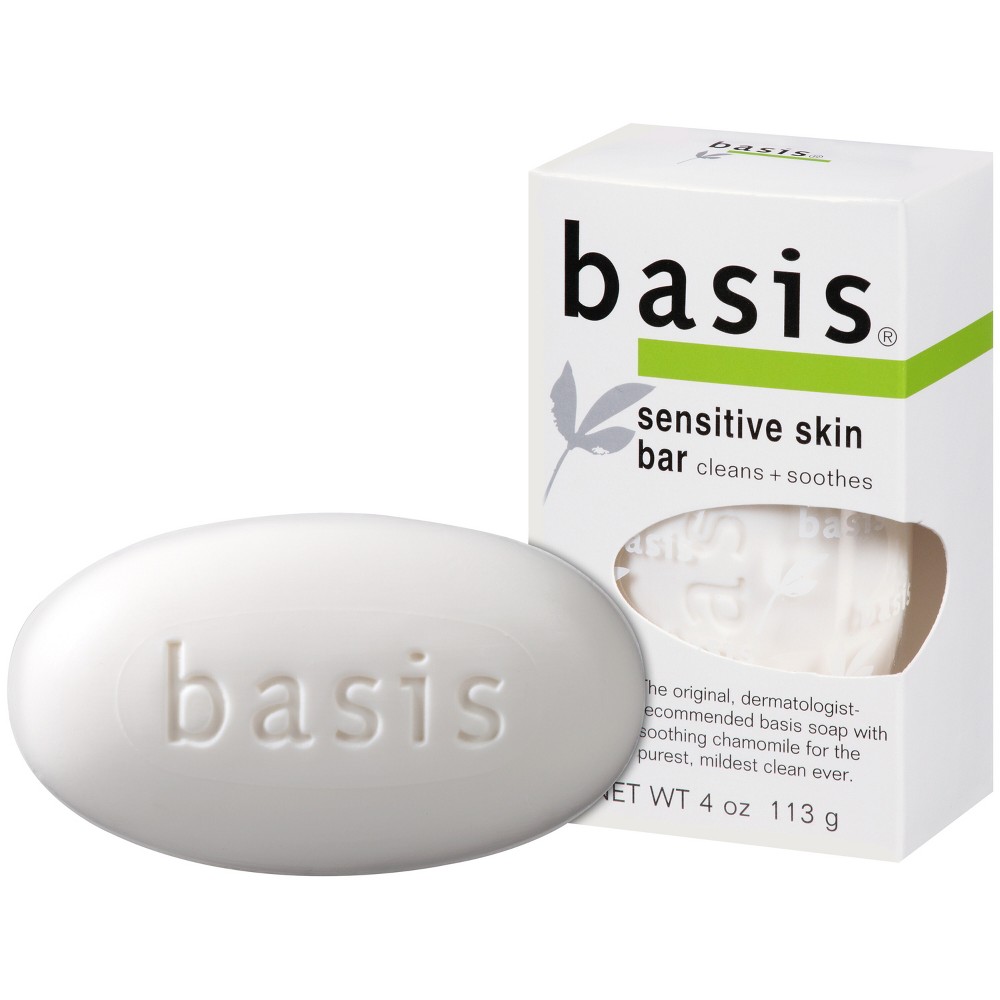
Basis Sensitive Skin Unscented Bar Soap - Alkaline PH - 4oz: Basic Cleansing, Soothing, Dye-Free, Whole Body Use
Analysis updated August 2026 · How Scout scores
At a glance
Summary
This soap contains beneficial ingredients like glycerin, almond oil, beeswax, lanolin, chamomile, and aloe vera, which are known for their moisturizing and soothing properties. However, the presence of petrolatum, a byproduct of petroleum refining, raises concerns due to potential contamination with harmful substances. The overall formulation is relatively clean, but the inclusion of petrolatum prevents it from achieving a higher score.
Key ingredients 13
Prunus Amygdalus (Almond Oil)Very Good
Almond Oil is a natural oil rich in fatty acids and vitamins. It nourishes and moisturizes the skin, making it soft and supple. It is well-tolerated by most skin types.
Risks
Potential allergen for those with nut allergies.
Benefits
Highly moisturizing and nourishing for the skin.
BeeswaxVery Good
Beeswax is a natural wax produced by honeybees. It acts as an emollient and thickening agent, providing a protective barrier on the skin. It is well-known for its skin-soothing properties.
Risks
May cause allergic reactions in individuals sensitive to bee products.
Benefits
Provides a protective barrier and soothes the skin.
LanolinVery Good
Lanolin is a natural emollient derived from sheep's wool. It is highly effective in moisturizing and protecting the skin. It is particularly beneficial for dry and chapped skin.
Risks
Potential allergen for individuals with wool allergies.
Benefits
Excellent for moisturizing and protecting dry skin.
ChamomileVery Good
Chamomile is a botanical extract known for its anti-inflammatory and soothing properties. It helps calm irritated skin and reduce redness. It is widely used in skincare for its gentle and calming effects.
Risks
Rare allergic reactions in sensitive individuals.
Benefits
Soothes and calms irritated skin.
Aloe VeraVery Good
Aloe Vera is a plant extract known for its soothing and hydrating properties. It helps heal and calm the skin, making it ideal for sensitive skin types. It is widely used for its skin-repairing benefits.
Risks
Rare allergic reactions in some individuals.
Benefits
Hydrates and soothes the skin, promoting healing.
GlycerinGood
Glycerin is a humectant that attracts moisture to the skin. It helps maintain skin hydration and improves skin barrier function. Widely regarded as safe and beneficial for all skin types.
Risks
Rarely, may cause irritation in very sensitive skin.
Benefits
Excellent for moisturizing and maintaining skin hydration.
Sodium TallowateNeutral
Sodium Tallowate is a common soap ingredient derived from animal fat. It acts as a surfactant and cleansing agent. While effective in cleansing, it may not be suitable for vegans.
Risks
Potential allergen for individuals sensitive to animal-derived ingredients.
Benefits
Provides effective cleansing properties.
Sodium CocoateNeutral
Sodium Cocoate is a surfactant derived from coconut oil. It helps in cleansing and lathering. Generally considered mild and safe for skin.
Risks
May cause dryness in sensitive skin types.
Benefits
Derived from natural coconut oil, providing gentle cleansing.
Sodium Palm KernelateNeutral
Sodium Palm Kernelate is a surfactant derived from palm kernel oil. It is used for its cleansing and foaming properties. It is generally safe but raises environmental concerns due to palm oil sourcing.
Risks
Environmental concerns related to palm oil production.
Benefits
Effective in cleansing and lathering.
WaterNeutral
Water is used as a solvent in many cosmetic formulations. It helps dissolve other ingredients and provides a base for the product. It is essential but does not provide direct skin benefits.
Benefits
Acts as a solvent and base for the formulation.
Sodium ChlorideNeutral
Sodium Chloride, or table salt, is used to thicken and stabilize formulations. It is generally safe and non-irritating. It does not provide direct skin benefits.
Risks
Excessive use may lead to dryness.
Benefits
Helps in stabilizing and thickening the product.
Titanium DioxideNeutral
Titanium Dioxide is used as a whitening agent and UV filter. In soaps, it primarily serves to improve appearance. It is considered safe in non-nano form.
Risks
Inhalation of nano-sized particles can be harmful.
Benefits
Provides whitening effect and UV protection.
PetrolatumVery Bad
Petrolatum is a byproduct of petroleum refining used as an occlusive agent. It can trap moisture in the skin but may also trap dirt and bacteria. Concerns exist regarding contamination with polycyclic aromatic hydrocarbons (PAHs).
Risks
Potential contamination with harmful substances like PAHs.
Benefits
Effective in preventing moisture loss from the skin.
Get the full breakdown in the Scout appTake Scout shopping
Scan any product to see lab results, healthy alternatives, and your personalized analysis.
Download on theApp Store GET IT ONGoogle Play