
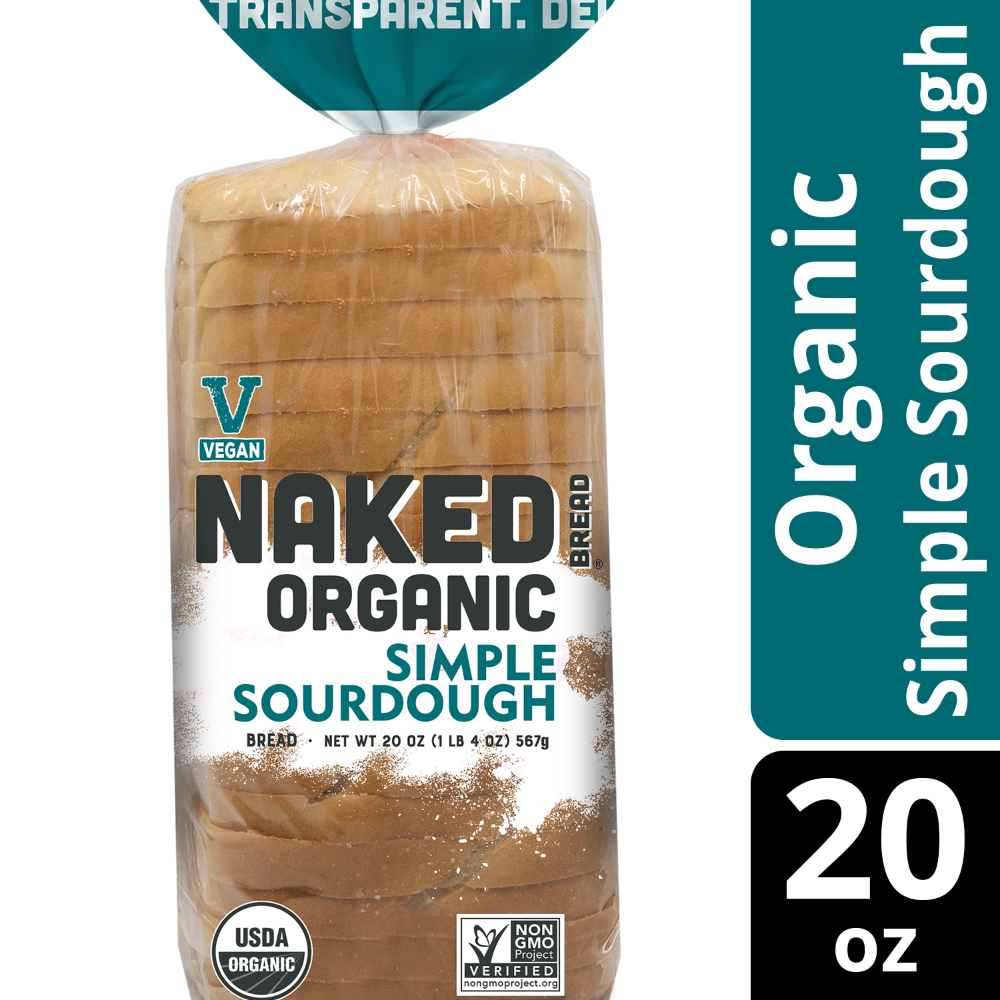


Naked Organic Simple Sourdough Bread
Analysis updated August 2026 · How Scout scores
At a glance
Summary
This sourdough bread is made with organic ingredients and contains beneficial components like yeast, organic distilled vinegar, and sea salt, which contribute to its nutritional profile. However, the presence of organic palm oil, a saturated fat with environmental concerns, and the use of enriched flour indicate a moderate level of processing. While the ingredient list is relatively clean, the processing level limits its score.
Key ingredients 10
Organic distilled vinegarGood
Distilled vinegar is used to enhance flavor and act as a natural preservative. It can help improve the shelf life of bread by inhibiting mold growth. The organic certification indicates a higher quality with fewer chemical residues.
Benefits
Acts as a natural preservative and enhances flavor.
Sea saltGood
Sea salt is a natural source of sodium and trace minerals, which are essential for various bodily functions. It is less processed than table salt, retaining more of its natural mineral content. Its use in moderation can enhance flavor without significant health risks.
Risks
Excessive sodium intake can lead to hypertension and cardiovascular issues.
Benefits
Provides essential minerals and enhances flavor.
Ascorbic acidGood
Ascorbic acid, also known as vitamin C, is used as a dough conditioner to improve the texture and volume of bread. It is an antioxidant that can help preserve the freshness of the product. Its presence in small amounts poses no health risks.
Benefits
Acts as an antioxidant and improves dough quality.
Organic cultured wheat flourGood
Cultured wheat flour is fermented, which can enhance the flavor and digestibility of the bread. The fermentation process can also increase the availability of nutrients. The organic certification indicates a higher quality with fewer chemical residues.
Benefits
Fermentation enhances flavor and nutrient absorption.
Organic enriched unbleached wheat flourNeutral
This flour is enriched with vitamins and minerals, which can help replenish nutrients lost during processing. However, it is still a refined flour, which lacks the fiber and nutrients found in whole grains. The organic certification indicates a higher quality with fewer pesticides.
Risks
Refined flour can contribute to blood sugar spikes and lacks the fiber of whole grains.
Benefits
Enrichment adds essential nutrients like iron and B vitamins, which are beneficial for health.
Filtered waterNeutral
Filtered water is used as a solvent and to hydrate ingredients, playing a crucial role in the dough formation. It is free from impurities and contaminants that could affect the quality of the bread. Its neutrality means it does not contribute additional nutrients or risks.
See more about Filtered water →Organic vital wheat glutenNeutral
Vital wheat gluten is added to improve the elasticity and texture of the bread. It is a concentrated source of gluten, which can be problematic for those with gluten sensitivities or celiac disease. The organic certification suggests fewer chemical residues.
Risks
May cause adverse reactions in individuals with gluten intolerance or celiac disease.
Benefits
Enhances the texture and structure of bread, making it more palatable.
YeastNeutral
Baker's/nutritional yeast in standard use — benign.
Benefits
Promotes fermentation, which can enhance flavor and nutrient absorption.
EnzymesNeutral
Enzymes are used to improve the texture and shelf life of bread. They are naturally occurring proteins that aid in the breakdown of starches and proteins. Their use is generally considered safe and beneficial for bread quality.
Benefits
Enhances texture and shelf life of bread.
Organic palm oilBad
Palm oil is a saturated fat that can contribute to heart disease if consumed in excess. Although organic, its production is often linked to environmental concerns such as deforestation. It is less healthy compared to unsaturated fats like olive oil.
Risks
High saturated fat content may increase the risk of heart disease.
Benefits
Provides a stable fat source that can improve the texture and shelf life of baked goods.
Processing
Processed Foods
Get the full breakdown in the Scout appTake Scout shopping
Scan any product to see lab results, healthy alternatives, and your personalized analysis.
Download on theApp Store GET IT ONGoogle Play