
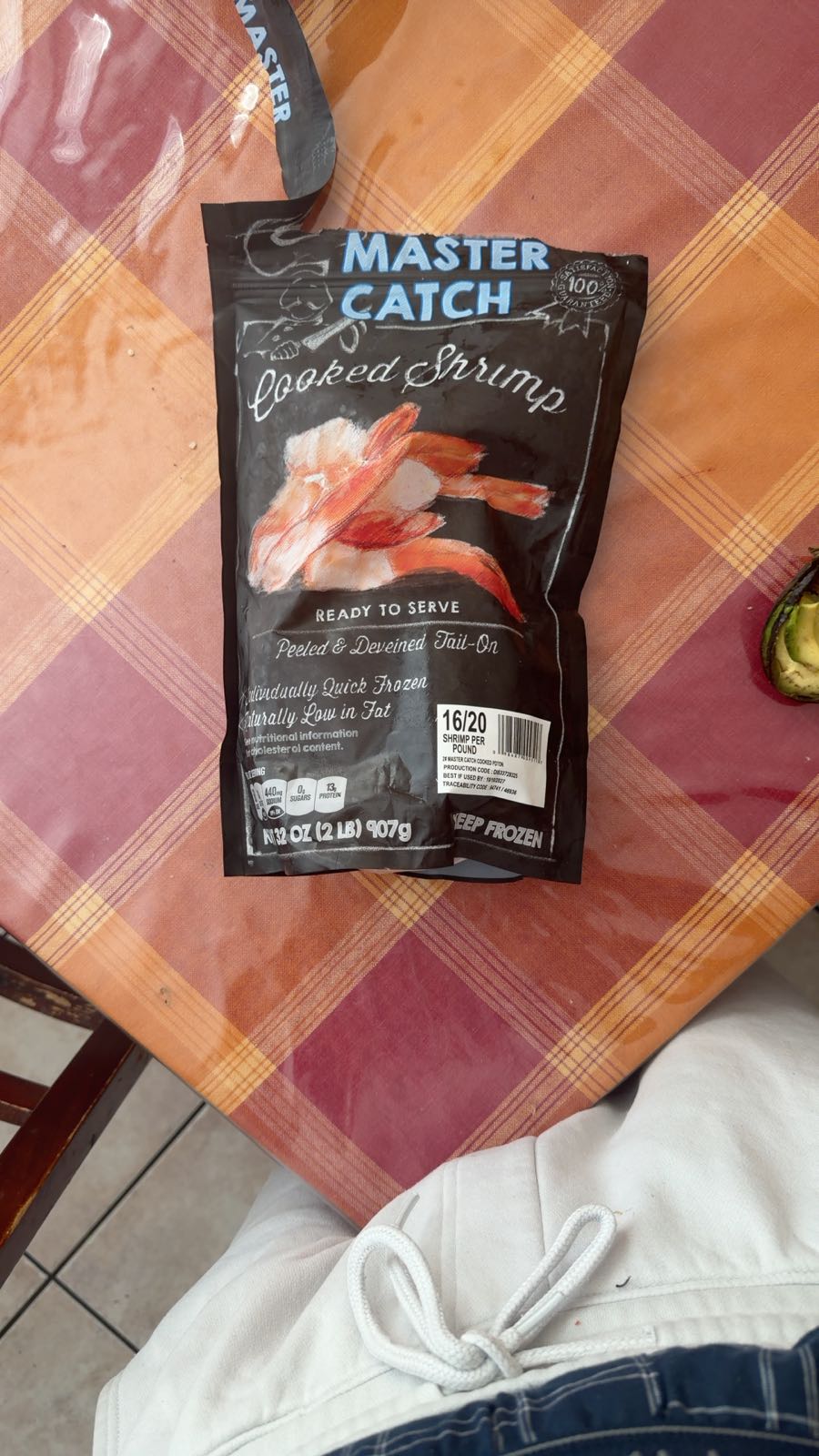


Peeled & Deveined Tail-On Cooked Shrimp
Analysis updated August 2026 · How Scout scores
At a glance
Summary
This shrimp product is processed and contains sodium phosphates, which are used to retain moisture but can contribute to health issues if consumed excessively. While the ingredient list is relatively short and the shrimp itself is a good source of protein, the presence of sodium phosphates and the processing level limit its score.
Key ingredients 3
ShrimpNeutral
Shrimp is a good source of protein and contains essential nutrients like selenium and vitamin B12. However, it can be high in cholesterol and may contain traces of pollutants from its aquatic environment. The nutritional benefits are balanced by potential environmental and health concerns.
Risks
Shrimp can be high in cholesterol and may contain pollutants such as mercury or microplastics.
Benefits
Rich in protein and essential nutrients like selenium and vitamin B12, which support metabolic and immune functions.
SaltNeutral
Salt is used to enhance flavor and preserve the shrimp. It is a common additive in processed foods but does not provide additional nutritional benefits. Excessive consumption can lead to health issues such as hypertension.
Risks
High sodium intake can contribute to hypertension and cardiovascular diseases.
Sodium PhosphatesBad
Sodium phosphates are used to retain moisture and improve texture in processed foods. They are considered safe in small amounts but can contribute to an imbalance in phosphate levels if consumed excessively. Overconsumption may lead to health issues such as kidney damage or cardiovascular problems.
Risks
Excessive intake of phosphates can lead to imbalances that affect kidney function and cardiovascular health.
Benefits
Helps retain moisture and improve the texture of processed foods, enhancing consumer appeal.
Processing
Processed Foods
Get the full breakdown in the Scout appTake Scout shopping
Scan any product to see lab results, healthy alternatives, and your personalized analysis.
Download on theApp Store GET IT ONGoogle Play