
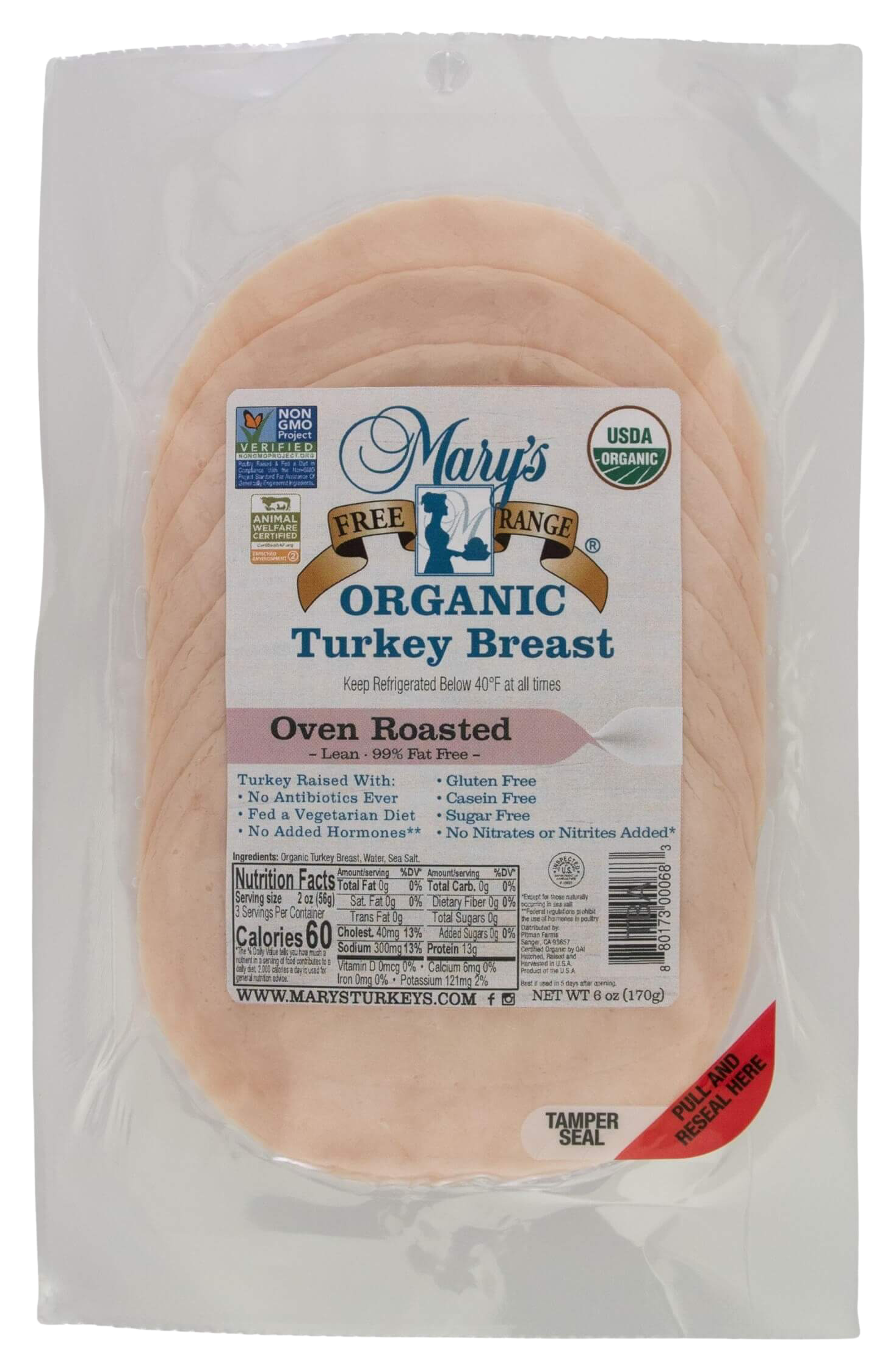
Honey Roasted Turkey Breast

Member's Mark
75 Good
View on Amazon

Summary

The Honey Roasted Turkey Breast contains high-quality turkey breast as its primary ingredient, providing a good source of lean protein. However, it is moderately processed and includes added sugar, which detracts from its nutritional profile. The presence of sodium phosphate and cultured celery powder also indicates a level of processing that impacts its overall healthiness.

At a glance

Beneficial ingredients 2
Harmful ingredients 1
Owned by Walmart
Category Meat And Seafood

Key ingredients 9

Turkey Breast
Good

Turkey breast is a high-quality source of lean protein, essential for muscle repair and growth. It is minimally processed and provides a rich amino acid profile. Compared to plant-based proteins, it offers better absorption and utilization by the body.

Benefits

Excellent source of lean protein, supporting muscle maintenance and overall health. Provides essential amino acids necessary for various bodily functions.

Turkey Broth
Neutral

Turkey broth is used to enhance flavor and moisture in the product. It is typically made by simmering turkey bones and meat, which can add some nutrients. However, it is not a significant source of nutrition in this context.

Benefits

May provide some flavor and moisture to the product, enhancing palatability.

Honey
Neutral

Honey is a natural sweetener used to add flavor and slight sweetness to the product. It is less processed than refined sugars and contains trace amounts of vitamins and minerals. However, it is still a source of sugar and should be consumed in moderation.

Risks

Excessive consumption of honey can contribute to increased sugar intake, which may lead to health issues like weight gain and dental problems.

Benefits

Provides a natural source of sweetness and contains trace nutrients that are absent in refined sugars.

See more about Honey →
Salt
Neutral

Salt is used as a preservative and flavor enhancer in processed foods. It is essential for maintaining fluid balance and nerve function. However, excessive intake can lead to health issues such as hypertension.

Risks

High sodium intake is associated with increased risk of hypertension and cardiovascular diseases.

Benefits

Essential for maintaining electrolyte balance and proper nerve function.

See more about Salt →
Sugar
Bad

Sugar is added to enhance sweetness and flavor but offers no nutritional benefits. It is a refined carbohydrate that can contribute to various health issues when consumed in excess. Unlike natural sugars found in whole foods, refined sugar lacks essential nutrients.

Risks

Excessive sugar intake is linked to obesity, type 2 diabetes, and dental cavities.

See more about Sugar →
Vinegar
Neutral

Vinegar is used as a flavoring agent and preservative in food products. It is made through the fermentation of ethanol by acetic acid bacteria. While it can enhance flavor, it does not provide significant nutritional benefits.

Benefits

May enhance flavor and act as a natural preservative.

See more about Vinegar →
Sodium Phosphate
Neutral

Sodium phosphate is used as an emulsifier and preservative in processed foods. It helps maintain moisture and texture in meat products. While generally recognized as safe, excessive consumption can affect kidney function.

Risks

High intake of phosphates may lead to imbalances in mineral levels and affect kidney health.

Benefits

Helps maintain moisture and texture in processed meat products.

See more about Sodium Phosphate →
Cultured Celery Powder
Neutral

Cultured celery powder is used as a natural preservative due to its nitrate content. It is often used as a substitute for synthetic nitrates in processed meats. While it provides a natural alternative, it still contributes to nitrate intake.

Risks

Excessive nitrate consumption can be linked to health concerns, including potential carcinogenic effects.

Benefits

Acts as a natural preservative, reducing the need for synthetic additives.

See more about Cultured Celery Powder →
Sea Salt
Good

Unrefined sea salt — a minimally processed, natural source of sodium and essential trace minerals, and a legitimate whole-food seasoning. Treated as a positive ingredient.

Risks

Excessive sodium intake can lead to hypertension and cardiovascular issues.

Benefits

Contains trace minerals that may offer slight nutritional benefits over regular table salt.

See more about Sea Salt →

Processing

Group 3 · Processed

Processed Foods

Get the full breakdown in the Scout app

Scan any product to see lab results, healthy alternatives, and your personalized analysis.

Download on theApp Store