
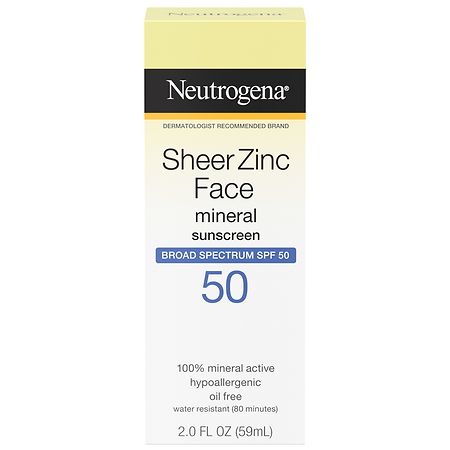



Neutrogena Sheer Zinc Dry-Touch Face SPF 50 Sunscreen Lotion 2 fl. oz
Analysis updated August 2026 · How Scout scores
At a glance
Summary
This sunscreen features zinc oxide as its primary active ingredient, which is a mineral filter known for its broad-spectrum UV protection and safety for sensitive skin. The inclusion of colloidal oatmeal and tocopheryl acetate adds soothing and antioxidant benefits. However, the presence of synthetic polymers and PEG compounds, along with a processed formulation, slightly reduces its overall rating despite the absence of harmful chemical UV filters.
Key ingredients 24
Colloidal OatmealVery Good
Colloidal oatmeal is known for its soothing and anti-inflammatory properties, making it beneficial for sensitive or irritated skin. It helps to maintain the skin's moisture barrier and provides relief from itching and dryness.
Risks
There are minimal risks associated with colloidal oatmeal, though rare allergic reactions may occur.
Benefits
It is beneficial for calming and moisturizing the skin, especially in conditions like eczema.
Zinc oxideGood
Zinc oxide is a mineral sunscreen agent that provides broad-spectrum UV protection. It is considered safe and effective for sensitive skin. It is often used in physical sunscreens due to its ability to reflect and scatter UV rays.
Risks
There are minimal risks associated with zinc oxide, though it may leave a white cast on the skin.
Benefits
Zinc oxide is beneficial for its non-irritating properties and effectiveness in protecting against both UVA and UVB rays.
Tocopheryl AcetateGood
Tocopheryl acetate is a form of Vitamin E, which is an antioxidant that helps protect the skin from free radical damage. It also has moisturizing properties that can improve skin texture.
Risks
There are minimal risks, though it may cause irritation in very sensitive individuals.
Benefits
It is beneficial for its antioxidant properties and ability to support skin health.
GlycerinGood
Beneficial ingredient — whole-food or functional value in this product class.
Risks
There are minimal risks, though it may cause irritation in very sensitive individuals.
Benefits
It is beneficial for its ability to maintain skin hydration and improve skin barrier function.
WaterNeutral
Water is used as a solvent in cosmetic formulations to dissolve other ingredients. It is a common base in many skincare products.
Risks
There are no significant risks associated with water in cosmetic formulations.
Benefits
Water helps to hydrate the skin and is essential for the formulation of many products.
C12-15 Alkyl BenzoateNeutral
C12-15 Alkyl Benzoate is an emollient that helps to improve the texture and spreadability of products. It is commonly used in sunscreens and moisturizers.
Risks
There are minimal risks, though it may cause irritation in sensitive individuals.
Benefits
It provides a silky feel to the skin and helps to enhance the product's application.
Octyldodecyl Citrate CrosspolymerNeutral
Octyldodecyl Citrate Crosspolymer is used as a film-forming agent in cosmetics. It helps to improve the water resistance of sunscreen products.
Risks
There are minimal risks associated with this ingredient.
Benefits
It enhances the longevity and effectiveness of sunscreen by providing water resistance.
Phenyl TrimethiconeNeutral
Phenyl Trimethicone is a silicone-based ingredient that provides a smooth application and enhances the product's spreadability. It is often used in skincare and haircare products.
Risks
There are minimal risks, though it may cause build-up on the skin or hair with excessive use.
Benefits
It improves the texture and feel of the product, making it easier to apply.
Cetyl PEG/PPG-10/1 DimethiconeNeutral
Cetyl PEG/PPG-10/1 Dimethicone is a silicone-based emulsifier that helps to stabilize formulations. It is commonly used in skincare products for its conditioning properties.
Risks
There are minimal risks, though it may cause irritation in sensitive individuals.
Benefits
It helps to improve the product's stability and enhances skin feel.
Polyhydroxystearic AcidNeutral
Polyhydroxystearic Acid is used as an emulsifier and thickening agent in cosmetic formulations. It helps to stabilize products and improve their texture.
Risks
There are minimal risks associated with this ingredient.
Benefits
It enhances the stability and consistency of the product.
Ethyl MethiconeNeutral
Ethyl Methicone is a silicone-based ingredient used to improve the spreadability and feel of products. It is commonly used in skincare and haircare formulations.
Risks
There are minimal risks, though it may cause build-up on the skin or hair with excessive use.
Benefits
It enhances the texture and application of the product.
Cetyl DimethiconeNeutral
Cetyl Dimethicone is a silicone-based conditioning agent that provides a smooth application and enhances the product's texture. It is often used in skincare and haircare products.
Risks
There are minimal risks, though it may cause build-up on the skin or hair with excessive use.
Benefits
It improves the product's feel and application.
SilicaNeutral
Silica is used as an absorbent and anti-caking agent in cosmetic formulations. It helps to improve the texture and mattify the skin.
Risks
There are minimal risks, though inhalation of silica particles should be avoided.
Benefits
It is beneficial for its oil-absorbing properties and ability to provide a matte finish.
Chrysanthemum Parthenium (Feverfew) Flower/Leaf/Stem JuiceNeutral
Feverfew extract is known for its anti-inflammatory and antioxidant properties. It is used in skincare products to soothe and protect the skin.
Risks
There are minimal risks, though it may cause irritation in sensitive individuals.
Benefits
It is beneficial for its calming and protective effects on the skin.
Glyceryl BehenateNeutral
Glyceryl Behenate is used as an emulsifier and thickening agent in cosmetic formulations. It helps to stabilize products and improve their texture.
Risks
There are minimal risks associated with this ingredient.
Benefits
It enhances the stability and consistency of the product.
Phenethyl AlcoholNeutral
Phenethyl Alcohol is used as a fragrance and preservative in cosmetic formulations. It helps to enhance the scent and stability of products.
Risks
There are minimal risks, though it may cause irritation in sensitive individuals.
Benefits
It provides a pleasant scent and helps to preserve the product.
Caprylyl GlycolNeutral
Caprylyl Glycol is used as a skin conditioning agent and preservative booster in cosmetic formulations. It helps to improve skin hydration and enhance product stability.
Risks
There are minimal risks, though it may cause irritation in sensitive individuals.
Benefits
It is beneficial for its moisturizing properties and ability to enhance preservative efficacy.
Cetyl Dimethicone/Bis-Vinyldimethicone CrosspolymerNeutral
This ingredient is used as a film-forming agent to improve the texture and application of products. It is commonly found in skincare and haircare formulations.
Risks
There are minimal risks, though it may cause build-up on the skin or hair with excessive use.
Benefits
It enhances the product's feel and provides a smooth application.
Acrylates/Dimethicone CopolymerNeutral
Acrylates/Dimethicone Copolymer is used as a film-forming agent to improve the water resistance of products. It is commonly found in sunscreens and other skincare products.
Risks
There are minimal risks, though it may cause irritation in sensitive individuals.
Benefits
It helps to maintain the product's effectiveness by providing a protective barrier on the skin.
Sodium ChlorideNeutral
Sodium Chloride is used as a thickening agent and stabilizer in cosmetic formulations. It helps to improve the texture and consistency of products.
Risks
There are minimal risks associated with this ingredient.
Benefits
It enhances the stability and texture of the product.
ChlorphenesinNeutral
Chlorphenesin is used as a preservative in cosmetic formulations to prevent microbial growth. It is considered safe in low concentrations.
Risks
There are minimal risks, though it may cause irritation in sensitive individuals.
Benefits
It helps to preserve the product and extend its shelf life.
Styrene/Acrylates CopolymerBad
Processed additive flagged under Scout's ingredient doctrine.
Risks
There are minimal risks, though it may cause irritation in sensitive individuals.
Benefits
It helps to maintain the product's effectiveness by providing a protective barrier on the skin.
DimethiconeBad
Occlusive silicone film-former — flagged under clean-beauty doctrine.
Risks
There are minimal risks, though it may cause build-up on the skin with excessive use.
Benefits
It is beneficial for its ability to create a barrier on the skin, preventing moisture loss.
PhenoxyethanolBad
Processed additive flagged under Scout's ingredient doctrine.
Risks
There are minimal risks, though it may cause irritation in sensitive individuals.
Benefits
It helps to preserve the product and extend its shelf life.
Get the full breakdown in the Scout appTake Scout shopping
Scan any product to see lab results, healthy alternatives, and your personalized analysis.
Download on theApp Store GET IT ONGoogle PlayAmazon pricing & content
Amazon price as of . Product prices and availability are accurate as of the date/time indicated and are subject to change. Any price and availability information displayed on Amazon.com at the time of purchase will apply to the purchase of this product.
CERTAIN CONTENT THAT APPEARS ON THIS SITE COMES FROM AMAZON. THIS CONTENT IS PROVIDED “AS IS” AND IS SUBJECT TO CHANGE OR REMOVAL AT ANY TIME.