
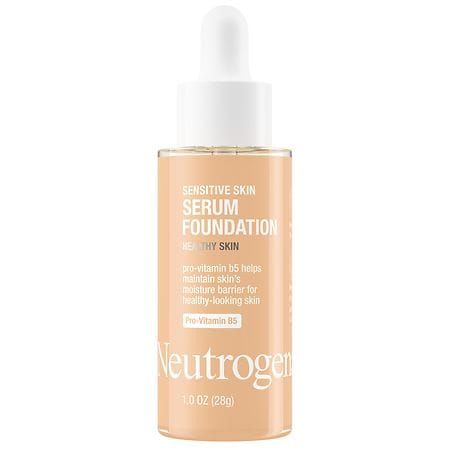


Neutrogena Sensitive Skin Serum Foundation Light/Medium 02 1 oz
Analysis updated August 2026 · How Scout scores
At a glance
Summary
This serum foundation contains beneficial ingredients like glycerin and panthenol, which provide hydration and improve skin texture. However, it also includes synthetic compounds such as dimethicone and PEG/PPG derivatives, which are associated with moderate processing levels. The presence of these synthetic ingredients, along with the processed nature of the product, influences its overall rating.
Key ingredients 27
GlycerinGood
Glycerin is a powerful humectant that attracts moisture to the skin, keeping it hydrated. It is a natural compound that is safe and effective for all skin types. It enhances the skin's barrier function and improves skin texture.
Risks
There are minimal risks associated with glycerin; it is generally well-tolerated.
Benefits
It helps in maintaining skin hydration and smoothness.
PanthenolGood
Panthenol, also known as provitamin B5, is a moisturizing agent that helps improve skin hydration. It has anti-inflammatory properties and is beneficial for soothing irritated skin. It is widely used in skincare products for its hydrating and healing properties.
Risks
There are minimal risks associated with panthenol; it is generally well-tolerated.
Benefits
It enhances skin hydration and soothes irritation.
Iron OxidesGood
Beneficial ingredient — whole-food or functional value in this product class.
Risks
There are no significant risks associated with iron oxides.
Benefits
They provide color to the product.
MicaGood
Beneficial ingredient — whole-food or functional value in this product class.
Risks
There are no significant risks associated with mica.
Benefits
It adds shimmer and shine to the product.
WaterNeutral
Water is a common solvent used in cosmetics to dissolve other ingredients. It helps in forming emulsions and is generally considered safe. It does not provide any direct benefits or risks in cosmetic formulations.
Risks
There are no significant risks associated with water in cosmetics.
Benefits
Water helps in the application and spreadability of the product.
Butylene GlycolNeutral
Butylene Glycol is a common humectant that helps retain moisture in the skin. It is generally considered safe for use in cosmetics. It can enhance the penetration of other ingredients.
Risks
In rare cases, it may cause irritation in sensitive skin.
Benefits
It helps in keeping the skin hydrated and smooth.
IsododecaneNeutral
Isododecane is a lightweight hydrocarbon used to improve the spreadability of products. It evaporates quickly, leaving a non-greasy finish. It is considered safe for use in cosmetics.
Risks
There are no significant risks associated with isododecane.
Benefits
It provides a lightweight feel and enhances the product's texture.
Sodium ChlorideNeutral
Sodium Chloride, or table salt, is used as a thickening agent in cosmetics. It helps in stabilizing emulsions and is generally safe. It does not provide direct benefits to the skin.
Risks
In high concentrations, it may cause dryness or irritation.
Benefits
It helps in maintaining the consistency of the product.
Cetyl PEG/PPG-10/1 DimethiconeNeutral
Cetyl PEG/PPG-10/1 Dimethicone is a silicone-based emulsifier that helps blend water and oil components. It improves the texture and spreadability of the product. It is considered safe for use in cosmetics.
Risks
There are no significant risks associated with this ingredient.
Benefits
It enhances the product's texture and application.
1,2-HexanediolNeutral
1,2-Hexanediol is a synthetic preservative and moisture-binding agent. It helps in extending the shelf life of the product. It is generally considered safe for use in cosmetics.
Risks
In rare cases, it may cause irritation in sensitive skin.
Benefits
It helps in preserving the product and maintaining moisture.
TrimethylsiloxysilicateNeutral
Trimethylsiloxysilicate is a silicone resin used to provide water resistance and long-lasting wear. It forms a flexible film on the skin, enhancing the durability of the product. It is considered safe for use in cosmetics.
Risks
There are no significant risks associated with this ingredient.
Benefits
It improves the longevity and water resistance of the product.
Diphenylsiloxy Phenyl TrimethiconeNeutral
Diphenylsiloxy Phenyl Trimethicone is a silicone-based ingredient that provides a silky feel and enhances the spreadability of the product. It is used to improve the texture and appearance of the skin. It is considered safe for use in cosmetics.
Risks
There are no significant risks associated with this ingredient.
Benefits
It provides a smooth application and enhances the product's texture.
PolymethylsilsesquioxaneNeutral
Polymethylsilsesquioxane is a silicone powder used to improve the texture and feel of the product. It provides a soft-focus effect, reducing the appearance of fine lines. It is considered safe for use in cosmetics.
Risks
There are no significant risks associated with this ingredient.
Benefits
It enhances the texture and provides a soft-focus effect.
SilicaNeutral
Silica is a mineral used to absorb excess oil and provide a matte finish. It helps in improving the texture and feel of the product. It is considered safe for use in cosmetics.
Risks
Inhalation of silica dust can be harmful, but this is not a concern in liquid formulations.
Benefits
It provides a matte finish and absorbs excess oil.
Glyceryl CaprylateNeutral
Glyceryl Caprylate is an emollient and emulsifier derived from glycerin and caprylic acid. It helps in stabilizing formulations and provides moisturizing benefits. It is considered safe for use in cosmetics.
Risks
There are no significant risks associated with this ingredient.
Benefits
It provides moisturizing benefits and stabilizes formulations.
TribeheninNeutral
Tribehenin is an emollient used to condition and soften the skin. It helps in improving the texture and feel of the product. It is considered safe for use in cosmetics.
Risks
There are no significant risks associated with this ingredient.
Benefits
It conditions and softens the skin.
Disteardimonium HectoriteNeutral
Disteardimonium Hectorite is a thickening agent used to stabilize emulsions and improve the texture of the product. It helps in maintaining the consistency of the formulation. It is considered safe for use in cosmetics.
Risks
There are no significant risks associated with this ingredient.
Benefits
It stabilizes emulsions and improves texture.
TriethoxycaprylylsilaneNeutral
Triethoxycaprylylsilane is a silicone-based ingredient used to improve the adhesion of pigments to the skin. It enhances the durability and wear of the product. It is considered safe for use in cosmetics.
Risks
There are no significant risks associated with this ingredient.
Benefits
It improves pigment adhesion and product durability.
Titanium DioxideNeutral
Titanium Dioxide is a mineral used as a pigment and UV filter in cosmetics. It provides opacity and sun protection benefits. It is considered safe for use in cosmetics.
Risks
Inhalation of titanium dioxide dust can be harmful, but this is not a concern in liquid formulations.
Benefits
It provides sun protection and opacity.
Phenyl TrimethiconeNeutral
Phenyl Trimethicone is a silicone-based ingredient used to provide a smooth application and enhance the product's texture. It is considered safe for use in cosmetics. It helps in reducing the appearance of fine lines.
Risks
There are no significant risks associated with this ingredient.
Benefits
It provides a smooth application and enhances texture.
Methyl TrimethiconeNeutral
Methyl Trimethicone is a volatile silicone used to improve the spreadability and feel of the product. It evaporates quickly, leaving a non-greasy finish. It is considered safe for use in cosmetics.
Risks
There are no significant risks associated with this ingredient.
Benefits
It provides a lightweight feel and enhances spreadability.
Octyldodecyl Stearoyl StearateNeutral
Octyldodecyl Stearoyl Stearate is an emollient used to condition and soften the skin. It helps in improving the texture and feel of the product. It is considered safe for use in cosmetics.
Risks
There are no significant risks associated with this ingredient.
Benefits
It conditions and softens the skin.
Pentylene GlycolNeutral
Pentylene Glycol is a synthetic humectant and solvent used to improve the texture and moisture retention of the product. It is considered safe for use in cosmetics. It enhances the penetration of other ingredients.
Risks
There are no significant risks associated with this ingredient.
Benefits
It helps in retaining moisture and improving texture.
Butylene Glycol Dicaprylate/DicaprateNeutral
Butylene Glycol Dicaprylate/Dicaprate is an emollient used to condition and soften the skin. It helps in improving the texture and feel of the product. It is considered safe for use in cosmetics.
Risks
There are no significant risks associated with this ingredient.
Benefits
It conditions and softens the skin.
DimethiconeBad
Occlusive silicone film-former — flagged under clean-beauty doctrine.
Risks
It may cause breakouts in acne-prone skin due to its occlusive nature.
Benefits
It provides a silky feel and helps in reducing the appearance of fine lines.
Dimethicone/Vinyl Dimethicone CrosspolymerBad
Processed additive flagged under Scout's ingredient doctrine.
Risks
There are no significant risks associated with this ingredient.
Benefits
It enhances the texture and application of the product.
Disodium EDTABad
Processed additive flagged under Scout's ingredient doctrine.
Risks
There are no significant risks associated with this ingredient.
Benefits
It improves product stability and shelf life.
Get the full breakdown in the Scout appTake Scout shopping
Scan any product to see lab results, healthy alternatives, and your personalized analysis.
Download on theApp Store GET IT ONGoogle PlayAmazon pricing & content
Amazon price as of . Product prices and availability are accurate as of the date/time indicated and are subject to change. Any price and availability information displayed on Amazon.com at the time of purchase will apply to the purchase of this product.
CERTAIN CONTENT THAT APPEARS ON THIS SITE COMES FROM AMAZON. THIS CONTENT IS PROVIDED “AS IS” AND IS SUBJECT TO CHANGE OR REMOVAL AT ANY TIME.