
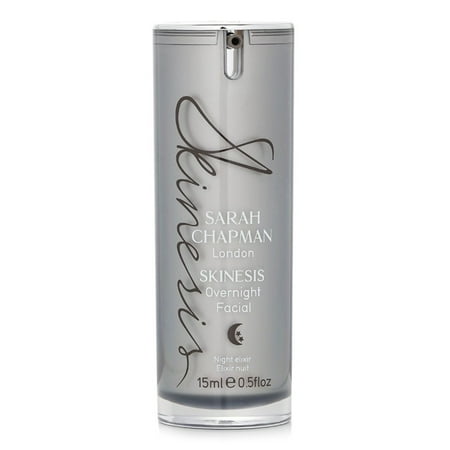

Sarah Chapman Skinesis Overnight Facial Night Elixir 15ml/0.5oz
Analysis updated August 2026 · How Scout scores
At a glance
Summary
This serum contains several beneficial natural oils and skin actives like jojoba oil and tetrahexyldecyl ascorbate, which are known for their moisturizing and antioxidant properties. However, the presence of multiple fragrance components, such as parfum, linalool, and limonene, which are potential skin irritants, lowers its safety profile. The product's processing level and inclusion of synthetic ingredients like PEG compounds also contribute to a moderate rating.
Key ingredients 44
Simmondsia Chinensis (Jojoba) Seed OilVery Good
Jojoba oil is a natural plant oil known for its moisturizing properties. It closely resembles the skin's natural sebum, making it an excellent emollient. It is rich in vitamins and minerals that nourish the skin.
Risks
There are minimal risks associated with jojoba oil, though some individuals may experience mild irritation.
Benefits
Jojoba oil helps to balance oil production and provides deep hydration without clogging pores.
Tetrahexyldecyl AscorbateVery Good
Tetrahexyldecyl Ascorbate is a stable form of Vitamin C used in skincare for its antioxidant properties. It helps to brighten the skin and reduce signs of aging. It is more stable and less irritating than other forms of Vitamin C.
Risks
There is a low risk of irritation, particularly for sensitive skin types.
Benefits
It provides antioxidant protection, brightens the skin, and helps to reduce the appearance of fine lines and wrinkles.
Retinyl PalmitateVery Good
Retinyl Palmitate is a form of Vitamin A used in skincare for its anti-aging properties. It helps to improve the appearance of aging skin and enhance skin elasticity. It is well-tolerated by most skin types.
Risks
There is a minimal risk of irritation, particularly for sensitive skin types.
Benefits
It helps to improve skin elasticity and reduce signs of aging.
Palmitoyl Hexapeptide-12Very Good
Palmitoyl Hexapeptide-12 is a peptide used in skincare for its anti-aging properties. It helps to improve the appearance of aging skin and enhance skin elasticity. It is well-tolerated by most skin types.
Risks
There is a minimal risk of irritation, though it is generally considered safe.
Benefits
It helps to improve skin elasticity and reduce signs of aging.
Caprylic/Capric TriglycerideGood
Caprylic/Capric Triglyceride is derived from coconut oil and glycerin. It is used as an emollient and helps to improve the spreadability of products. It is well-tolerated by most skin types and is non-greasy.
Risks
There is a minimal risk of irritation, though it is generally considered safe.
Benefits
It provides a lightweight, non-greasy moisture and helps to improve the texture of formulations.
Crambe Abyssinica Seed OilGood
Crambe Abyssinica Seed Oil is a natural oil rich in fatty acids. It provides excellent moisturizing properties and helps to improve skin elasticity. It is well-tolerated by most skin types.
Risks
There is a minimal risk of irritation, though it is generally considered safe.
Benefits
It provides deep hydration and helps to improve skin texture and elasticity.
Adansonia Digitata Seed OilGood
Adansonia Digitata Seed Oil, also known as Baobab oil, is rich in vitamins and antioxidants. It provides excellent moisturizing properties and helps to improve skin elasticity. It is well-tolerated by most skin types.
Risks
There is a minimal risk of irritation, though it is generally considered safe.
Benefits
It provides deep hydration and helps to improve skin texture and elasticity.
Citrullus Vulgaris (Watermelon) Seed OilGood
Watermelon Seed Oil is rich in essential fatty acids and antioxidants. It provides excellent moisturizing properties and helps to improve skin elasticity. It is well-tolerated by most skin types.
Risks
There is a minimal risk of irritation, though it is generally considered safe.
Benefits
It provides deep hydration and helps to improve skin texture and elasticity.
Limnanthes Alba Seed OilGood
Limnanthes Alba Seed Oil, also known as Meadowfoam Seed Oil, is rich in fatty acids and antioxidants. It provides excellent moisturizing properties and helps to improve skin elasticity. It is well-tolerated by most skin types.
Risks
There is a minimal risk of irritation, though it is generally considered safe.
Benefits
It provides deep hydration and helps to improve skin texture and elasticity.
Cannabis Sativa Seed OilGood
Cannabis Sativa Seed Oil is rich in essential fatty acids and antioxidants. It provides excellent moisturizing properties and helps to improve skin elasticity. It is well-tolerated by most skin types.
Risks
There is a minimal risk of irritation, though it is generally considered safe.
Benefits
It provides deep hydration and helps to improve skin texture and elasticity.
Tocopheryl Linoleate/OleateGood
Tocopheryl Linoleate/Oleate is a form of Vitamin E combined with fatty acids. It provides antioxidant protection and helps to moisturize the skin. It is well-tolerated by most skin types.
Risks
There is a minimal risk of irritation, though it is generally considered safe.
Benefits
It provides antioxidant protection and helps to improve skin hydration and texture.
Tocopheryl AcetateGood
Tocopheryl Acetate is a stable form of Vitamin E used in skincare for its antioxidant properties. It helps to protect the skin from free radical damage and improve moisture retention. It is well-tolerated by most skin types.
Risks
There is a minimal risk of irritation, though it is generally considered safe.
Benefits
It provides antioxidant protection and helps to improve skin hydration and texture.
UbiquinoneGood
Ubiquinone, also known as Coenzyme Q10, is an antioxidant used in skincare to protect the skin from free radical damage. It helps to improve the appearance of aging skin and enhance skin elasticity. It is well-tolerated by most skin types.
Risks
There is a minimal risk of irritation, though it is generally considered safe.
Benefits
It provides antioxidant protection and helps to improve skin elasticity and reduce signs of aging.
Ceramide NgGood
Ceramide Ng is a lipid molecule that helps to restore the skin's natural barrier. It provides excellent moisturizing properties and helps to improve skin elasticity. It is well-tolerated by most skin types.
Risks
There is a minimal risk of irritation, though it is generally considered safe.
Benefits
It helps to restore the skin's natural barrier and improve hydration and elasticity.
TocopherolGood
Tocopherol, also known as Vitamin E, is an antioxidant used in skincare to protect the skin from free radical damage. It helps to improve moisture retention and enhance skin elasticity. It is well-tolerated by most skin types.
Risks
There is a minimal risk of irritation, though it is generally considered safe.
Benefits
It provides antioxidant protection and helps to improve skin hydration and texture.
Cetearyl EthylhexanoateNeutral
Cetearyl Ethylhexanoate is an ester used as an emollient and texture enhancer in cosmetics. It provides a silky feel and helps to soften the skin. It is generally considered safe for use in skincare products.
Risks
There is a low risk of skin irritation, particularly for sensitive skin types.
Benefits
It enhances the spreadability of products and leaves the skin feeling smooth and soft.
CyclopentasiloxaneNeutral
Cyclopentasiloxane is a silicone used to improve the texture and spreadability of skincare products. It evaporates quickly, leaving a silky, smooth feel. It is widely used in cosmetics for its non-greasy finish.
Risks
There are concerns about bioaccumulation in the environment, though it is considered safe for human use.
Benefits
It provides a lightweight, non-greasy feel and helps to temporarily fill in fine lines and wrinkles.
Di-PPG-2 Myreth-10 AdipateNeutral
Di-PPG-2 Myreth-10 Adipate is an emollient and skin conditioning agent. It helps to improve the texture and feel of skincare products. It is generally considered safe for use in cosmetics.
Risks
There is a low risk of skin irritation, particularly for sensitive skin types.
Benefits
It enhances the spreadability of products and provides a smooth, soft finish.
Ethylene/Propylene/Styrene CopolymerNeutral
Ethylene/Propylene/Styrene Copolymer is used as a film-forming agent in cosmetics. It helps to improve the texture and stability of products. It is considered safe for use in skincare formulations.
Risks
There is a low risk of skin irritation, though it is generally considered safe.
Benefits
It provides a smooth, even application and helps to stabilize formulations.
PEG-4Neutral
PEG-4 is a polyethylene glycol used as a solvent and humectant in cosmetics. It helps to improve the texture and moisture retention of products. It is generally considered safe for use in cosmetics.
Risks
There is a potential risk of contamination with ethylene oxide and 1,4-dioxane.
Benefits
It enhances the texture and moisture retention of formulations.
Phenyl TrimethiconeNeutral
Phenyl Trimethicone is a silicone used to improve the texture and spreadability of skincare products. It provides a silky, smooth feel and helps to reduce greasiness. It is considered safe for use in cosmetics.
Risks
There are concerns about bioaccumulation in the environment, though it is considered safe for human use.
Benefits
It provides a lightweight, non-greasy feel and helps to improve the texture of formulations.
C12-15 Alkyl BenzoateNeutral
C12-15 Alkyl Benzoate is an emollient and texture enhancer used in cosmetics. It provides a silky feel and helps to soften the skin. It is generally considered safe for use in skincare products.
Risks
There is a low risk of skin irritation, particularly for sensitive skin types.
Benefits
It enhances the spreadability of products and leaves the skin feeling smooth and soft.
TribeheninNeutral
Tribehenin is an emollient and conditioning agent used in cosmetics. It helps to improve the texture and feel of skincare products. It is generally considered safe for use in cosmetics.
Risks
There is a low risk of skin irritation, particularly for sensitive skin types.
Benefits
It enhances the spreadability of products and provides a smooth, soft finish.
Hydroxycinnamic AcidNeutral
Hydroxycinnamic Acid is an antioxidant used in cosmetics to protect the skin from free radical damage. It helps to improve the stability of formulations. It is generally considered safe for use in cosmetics.
Risks
There is a low risk of skin irritation, though it is generally considered safe.
Benefits
It provides antioxidant protection and helps to stabilize formulations.
Butylene/Ethylene/Styrene CopolymerNeutral
Butylene/Ethylene/Styrene Copolymer is used as a film-forming agent in cosmetics. It helps to improve the texture and stability of products. It is considered safe for use in skincare formulations.
Risks
There is a low risk of skin irritation, though it is generally considered safe.
Benefits
It provides a smooth, even application and helps to stabilize formulations.
TeprenoneNeutral
Teprenone is used in skincare for its anti-aging properties. It helps to improve the appearance of aging skin and enhance skin elasticity. It is generally considered safe for use in cosmetics.
Risks
There is a low risk of skin irritation, though it is generally considered safe.
Benefits
It helps to improve skin elasticity and reduce signs of aging.
Pentaerythrityl Tetra-Di-T-Butyl HydroxyhydrocinnamateNeutral
Pentaerythrityl Tetra-Di-T-Butyl Hydroxyhydrocinnamate is an antioxidant used in cosmetics to protect the product from oxidation. It helps to improve the stability of formulations. It is generally considered safe for use in cosmetics.
Risks
There is a low risk of skin irritation, though it is generally considered safe.
Benefits
It provides antioxidant protection and helps to stabilize formulations.
PEG-10 PhytosterolNeutral
PEG-10 Phytosterol is used as an emollient and skin conditioning agent in cosmetics. It helps to improve the texture and feel of skincare products. It is generally considered safe for use in cosmetics.
Risks
There is a potential risk of contamination with ethylene oxide and 1,4-dioxane.
Benefits
It enhances the texture and moisture retention of formulations.
Lactic AcidNeutral
Standard formulation ingredient — neither beneficial nor harmful at typical use.
Risks
There is a minimal risk of irritation, particularly for sensitive skin types.
Benefits
It helps to exfoliate the skin, improve texture, and reduce signs of aging.
Thioctic AcidNeutral
Thioctic Acid, also known as Alpha Lipoic Acid, is an antioxidant used in skincare to protect the skin from free radical damage. It helps to improve the appearance of aging skin and enhance skin elasticity. It is generally considered safe for use in cosmetics.
Risks
There is a low risk of skin irritation, though it is generally considered safe.
Benefits
It provides antioxidant protection and helps to improve skin elasticity and reduce signs of aging.
LinaloolBad
Linalool is a fragrance component that can cause skin irritation and allergic reactions. It is a common allergen and can be problematic for sensitive skin. It is considered a negative ingredient due to potential irritation.
Risks
Linalool can cause skin irritation, allergic reactions, and may trigger sensitivities.
Benefits
It provides a pleasant scent to the product, enhancing user experience.
LimoneneBad
Limonene is a fragrance component that can cause skin irritation and allergic reactions. It is a common allergen and can be problematic for sensitive skin. It is considered a negative ingredient due to potential irritation.
Risks
Limonene can cause skin irritation, allergic reactions, and may trigger sensitivities.
Benefits
It provides a pleasant scent to the product, enhancing user experience.
Benzyl BenzoateBad
Benzyl Benzoate is a fragrance component that can cause skin irritation and allergic reactions. It is a common allergen and can be problematic for sensitive skin. It is considered a negative ingredient due to potential irritation.
Risks
Benzyl Benzoate can cause skin irritation, allergic reactions, and may trigger sensitivities.
Benefits
It provides a pleasant scent to the product, enhancing user experience.
CitronellolBad
Citronellol is a fragrance component that can cause skin irritation and allergic reactions. It is a common allergen and can be problematic for sensitive skin. It is considered a negative ingredient due to potential irritation.
Risks
Citronellol can cause skin irritation, allergic reactions, and may trigger sensitivities.
Benefits
It provides a pleasant scent to the product, enhancing user experience.
GeraniolBad
Geraniol is a fragrance component that can cause skin irritation and allergic reactions. It is a common allergen and can be problematic for sensitive skin. It is considered a negative ingredient due to potential irritation.
Risks
Geraniol can cause skin irritation, allergic reactions, and may trigger sensitivities.
Benefits
It provides a pleasant scent to the product, enhancing user experience.
FarnesolBad
Farnesol is a fragrance component that can cause skin irritation and allergic reactions. It is a common allergen and can be problematic for sensitive skin. It is considered a negative ingredient due to potential irritation.
Risks
Farnesol can cause skin irritation, allergic reactions, and may trigger sensitivities.
Benefits
It provides a pleasant scent to the product, enhancing user experience.
Benzyl CinnamateBad
Benzyl Cinnamate is a fragrance component that can cause skin irritation and allergic reactions. It is a common allergen and can be problematic for sensitive skin. It is considered a negative ingredient due to potential irritation.
Risks
Benzyl Cinnamate can cause skin irritation, allergic reactions, and may trigger sensitivities.
Benefits
It provides a pleasant scent to the product, enhancing user experience.
Benzyl SalicylateBad
Benzyl Salicylate is a fragrance component that can cause skin irritation and allergic reactions. It is a common allergen and can be problematic for sensitive skin. It is considered a negative ingredient due to potential irritation.
Risks
Benzyl Salicylate can cause skin irritation, allergic reactions, and may trigger sensitivities.
Benefits
It provides a pleasant scent to the product, enhancing user experience.
EugenolBad
Eugenol is a fragrance component that can cause skin irritation and allergic reactions. It is a common allergen and can be problematic for sensitive skin. It is considered a negative ingredient due to potential irritation.
Risks
Eugenol can cause skin irritation, allergic reactions, and may trigger sensitivities.
Benefits
It provides a pleasant scent to the product, enhancing user experience.
Benzyl AlcoholBad
Benzyl Alcohol is used as a preservative and fragrance component in cosmetics. It can cause skin irritation and allergic reactions, particularly for sensitive skin. It is considered a negative ingredient due to potential irritation.
Risks
Benzyl Alcohol can cause skin irritation, allergic reactions, and may trigger sensitivities.
Benefits
It acts as a preservative, extending the shelf life of the product.
CitralBad
Citral is a fragrance component that can cause skin irritation and allergic reactions. It is a common allergen and can be problematic for sensitive skin. It is considered a negative ingredient due to potential irritation.
Risks
Citral can cause skin irritation, allergic reactions, and may trigger sensitivities.
Benefits
It provides a pleasant scent to the product, enhancing user experience.
HydroxycitronellalBad
Hydroxycitronellal is a fragrance component that can cause skin irritation and allergic reactions. It is a common allergen and can be problematic for sensitive skin. It is considered a negative ingredient due to potential irritation.
Risks
Hydroxycitronellal can cause skin irritation, allergic reactions, and may trigger sensitivities.
Benefits
It provides a pleasant scent to the product, enhancing user experience.
BHABad
BHA, or Butylated Hydroxyanisole, is a preservative that can cause skin irritation and allergic reactions. It is a potential endocrine disruptor and is considered a negative ingredient due to potential health concerns.
Risks
BHA can cause skin irritation, allergic reactions, and may have endocrine-disrupting effects.
Benefits
It acts as a preservative, extending the shelf life of the product.
Parfum (Fragrance)Very Bad
Fragrance is often added to cosmetics for scent but can cause skin irritation and allergic reactions. It is a common allergen and can be problematic for sensitive skin. It is considered a negative ingredient due to potential irritation.
Risks
Fragrance can cause skin irritation, allergic reactions, and may trigger sensitivities.
Benefits
It provides a pleasant scent to the product, enhancing user experience.
Get the full breakdown in the Scout appTake Scout shopping
Scan any product to see lab results, healthy alternatives, and your personalized analysis.
Download on theApp Store GET IT ONGoogle Play