
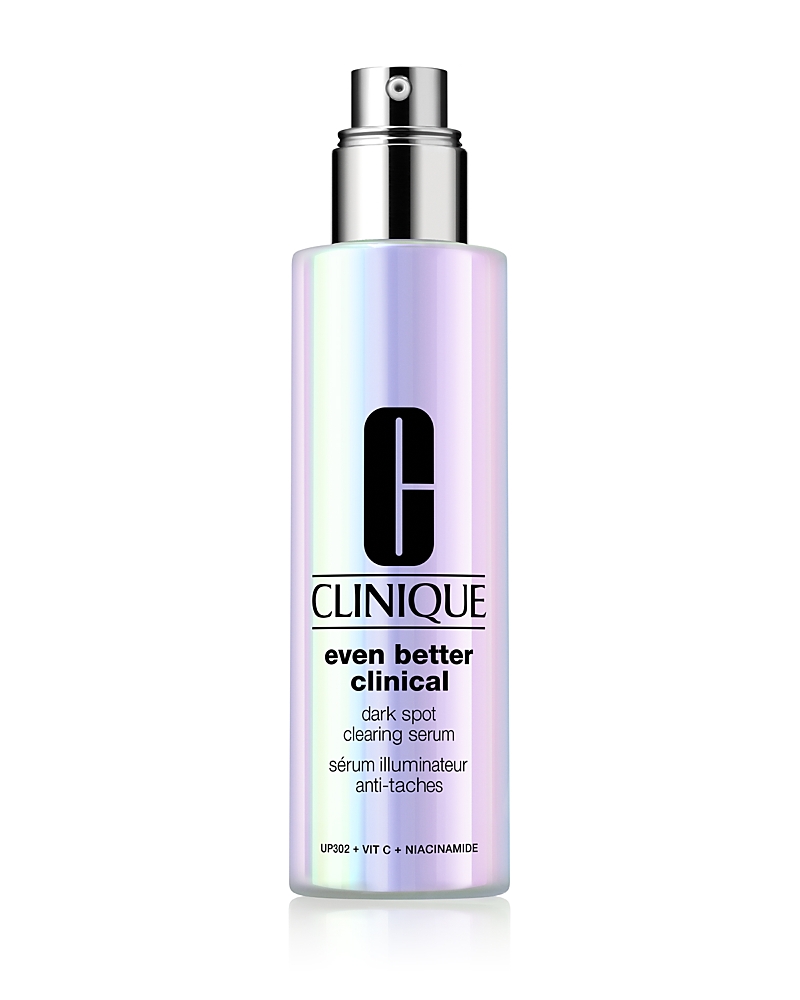

Clinique Even Better Clinical Dark Spot Clearing Serum with Vitamin C 2.5 oz.
Analysis updated August 2026 · How Scout scores
At a glance
Summary
This serum contains beneficial ingredients like niacinamide, ascorbyl glucoside, and squalane, which are known for their skin-replenishing and hydrating properties. However, the presence of dimethicone, BHT, and phenoxyethanol, which are flagged for potential health concerns and processing, affects the overall safety profile. The product's formulation includes a mix of natural and synthetic components, leading to a moderate processing level.
Key ingredients 48
Ascorbyl GlucosideVery Good
Ascorbyl glucoside is a stable form of Vitamin C used for its antioxidant properties. It helps to brighten the skin and reduce signs of aging. It is effective in improving skin radiance and tone.
Risks
May cause mild irritation in sensitive skin types.
Benefits
Brightens skin, reduces signs of aging, and provides antioxidant benefits.
SqualaneVery Good
Squalane is a natural emollient that helps to moisturize and soften the skin. It is known for its ability to mimic the skin's natural oils. It is highly beneficial for maintaining skin hydration and softness.
Risks
Generally well-tolerated with no significant risks.
Benefits
Moisturizes and softens skin.
Camellia Sinensis Leaf ExtractVery Good
Camellia sinensis leaf extract, also known as green tea extract, is rich in antioxidants and provides anti-inflammatory benefits. It helps to protect the skin from environmental damage and reduce redness. It is highly beneficial for maintaining healthy and calm skin.
Risks
Generally well-tolerated with no significant risks.
Benefits
Provides antioxidant protection and reduces redness.
Magnesium Ascorbyl PhosphateVery Good
Magnesium ascorbyl phosphate is a stable form of Vitamin C used for its antioxidant and brightening properties. It helps to improve skin radiance and reduce signs of aging. It is highly beneficial for maintaining healthy and radiant skin.
Risks
Generally well-tolerated with no significant risks.
Benefits
Brightens skin and provides antioxidant protection.
NiacinamideGood
Vitamin B3 — evidence-backed skin and metabolic benefits.
Risks
Generally well-tolerated, but may cause mild irritation in very sensitive skin.
Benefits
Improves skin texture, reduces pores, and provides anti-inflammatory benefits.
Acetyl GlucosamineGood
Acetyl glucosamine is an amino sugar used for its skin-replenishing properties. It helps to improve skin hydration and reduce the appearance of fine lines. It is beneficial for maintaining healthy skin.
Risks
Generally well-tolerated, but may cause mild irritation in very sensitive skin.
Benefits
Improves skin hydration and reduces fine lines.
GlycerinGood
Glycerin is a humectant that attracts moisture to the skin, helping to keep it hydrated. It is widely used in cosmetics for its moisturizing properties. It is highly beneficial for maintaining skin hydration.
Risks
Generally well-tolerated with no significant risks.
Benefits
Attracts moisture and keeps skin hydrated.
Sodium HyaluronateGood
Beneficial ingredient — whole-food or functional value in this product class.
Risks
Generally well-tolerated with no significant risks.
Benefits
Hydrates skin and improves elasticity.
CholesterolGood
Cholesterol is a lipid that helps to maintain the skin's barrier function. It is used in cosmetics for its moisturizing and skin-replenishing properties. It is beneficial for maintaining healthy skin.
Risks
Generally well-tolerated with no significant risks.
Benefits
Maintains skin barrier and provides moisturizing benefits.
Helianthus Annuus (sunflower) Seed ExtractGood
Sunflower seed extract is rich in vitamins and antioxidants, providing nourishing benefits to the skin. It helps to protect the skin from environmental damage. It is beneficial for maintaining healthy skin.
Risks
Generally well-tolerated with no significant risks.
Benefits
Nourishes skin and protects from environmental damage.
Glycyrrhiza Glabra (licorice) Root ExtractGood
Licorice root extract is known for its skin-brightening and anti-inflammatory properties. It helps to reduce the appearance of dark spots and soothe irritated skin. It is beneficial for improving skin tone and reducing inflammation.
Risks
Generally well-tolerated, but may cause mild irritation in very sensitive skin.
Benefits
Brightens skin and reduces inflammation.
Oryza Sativa (rice) Bran ExtractGood
Rice bran extract is rich in antioxidants and vitamins, providing nourishing benefits to the skin. It helps to improve skin texture and tone. It is beneficial for maintaining healthy and radiant skin.
Risks
Generally well-tolerated with no significant risks.
Benefits
Nourishes skin and improves texture and tone.
Triticum Vulgare (wheat) Germ ExtractGood
Wheat germ extract is rich in vitamins and antioxidants, providing nourishing benefits to the skin. It helps to improve skin texture and protect from environmental damage. It is beneficial for maintaining healthy skin.
Risks
Generally well-tolerated with no significant risks.
Benefits
Nourishes skin and protects from environmental damage.
Cucumis Sativus (cucumber) Fruit ExtractGood
Cucumber fruit extract is known for its soothing and hydrating properties. It helps to calm irritated skin and provide moisture. It is beneficial for maintaining hydrated and soothed skin.
Risks
Generally well-tolerated with no significant risks.
Benefits
Soothes and hydrates skin.
Salicylic AcidGood
Salicylic acid is a beta hydroxy acid known for its exfoliating and acne-fighting properties. It helps to unclog pores and reduce acne breakouts. It is beneficial for improving skin clarity and texture.
Risks
May cause irritation and dryness in sensitive skin types.
Benefits
Unclogs pores and reduces acne breakouts.
Glycyrrhetinic AcidGood
Glycyrrhetinic acid is derived from licorice root and is known for its anti-inflammatory and soothing properties. It helps to calm irritated skin and reduce redness. It is beneficial for maintaining calm and balanced skin.
Risks
Generally well-tolerated, but may cause mild irritation in very sensitive skin.
Benefits
Calms irritated skin and reduces redness.
Tocopheryl AcetateGood
Tocopheryl acetate is a form of Vitamin E known for its antioxidant properties. It helps to protect the skin from environmental damage and improve skin texture. It is beneficial for maintaining healthy and protected skin.
Risks
Generally well-tolerated with no significant risks.
Benefits
Provides antioxidant protection and improves skin texture.
Water Aqua EauNeutral
Water is a common solvent used in cosmetics to dissolve other ingredients. It helps in the application and absorption of the product. It does not provide direct benefits or risks.
Risks
There are no significant risks associated with water in cosmetics.
Benefits
Water helps in the application and absorption of the product.
IsododecaneNeutral
Isododecane is a hydrocarbon used as an emollient and solvent in cosmetics. It provides a lightweight feel and helps in the even application of the product. It is generally considered safe for use.
Risks
May cause irritation if used in high concentrations.
Benefits
Provides a lightweight feel and helps in even application.
Yeast Extract Faex Extrait De LevureNeutral
Yeast extract is used for its moisturizing and antioxidant properties. It can help improve skin texture and appearance. It is generally well-tolerated in cosmetic formulations.
Risks
Rarely, it may cause irritation in sensitive individuals.
Benefits
Provides moisturizing and antioxidant benefits.
Butylene GlycolNeutral
Butylene glycol is a common solvent and conditioning agent in cosmetics. It helps to improve the texture and spreadability of products. It is generally considered safe for use.
Risks
May cause irritation in sensitive skin types.
Benefits
Improves texture and spreadability of products.
Polysilicone-11Neutral
Polysilicone-11 is a silicone used to provide a silky, smooth feel to the skin. It helps to fill in fine lines and create a smooth surface. It is generally considered safe for use in cosmetics.
Risks
May cause breakouts in some individuals with sensitive skin.
Benefits
Provides a silky, smooth feel and helps fill in fine lines.
Peg-10 DimethiconeNeutral
PEG-10 Dimethicone is a silicone-based polymer used as an emulsifier and conditioning agent. It helps to improve the texture and spreadability of products. It is generally considered safe for use in cosmetics.
Risks
May cause irritation in sensitive skin types.
Benefits
Improves texture and spreadability of products.
Peg-6Neutral
PEG-6 is a polyethylene glycol used as an emulsifier and solvent in cosmetics. It helps to stabilize formulations and improve texture. It is generally considered safe for use.
Risks
May cause irritation in sensitive skin types.
Benefits
Stabilizes formulations and improves texture.
Trametes Versicolor ExtractNeutral
Trametes versicolor extract is derived from a type of mushroom and is used for its antioxidant properties. It helps to protect the skin from oxidative stress. It is generally considered safe for use in cosmetics.
Risks
May cause irritation in sensitive skin types.
Benefits
Provides antioxidant protection to the skin.
Hordeum Vulgare Extract Extrait D'orgeNeutral
Hordeum vulgare extract, derived from barley, is used for its antioxidant and soothing properties. It helps to protect the skin from environmental stressors. It is generally considered safe for use in cosmetics.
Risks
May cause irritation in sensitive skin types.
Benefits
Provides antioxidant protection and soothes skin.
CaffeineNeutral
Standard formulation ingredient — neither beneficial nor harmful at typical use.
Risks
Generally well-tolerated, but may cause mild irritation in very sensitive skin.
Benefits
Reduces puffiness and improves skin texture.
IsohexadecaneNeutral
Isohexadecane is a hydrocarbon used as an emollient and solvent in cosmetics. It provides a lightweight feel and helps in the even application of the product. It is generally considered safe for use.
Risks
May cause irritation if used in high concentrations.
Benefits
Provides a lightweight feel and helps in even application.
Propylene Glycol DicaprateNeutral
Propylene glycol dicaprate is an ester used as an emollient and skin conditioning agent. It helps to improve the texture and spreadability of products. It is generally considered safe for use.
Risks
May cause irritation in sensitive skin types.
Benefits
Improves texture and spreadability of products.
Dimethoxytolyl PropylresorcinolNeutral
Dimethoxytolyl propylresorcinol is used for its skin-brightening properties. It helps to reduce the appearance of dark spots and improve skin tone. It is generally considered safe for use in cosmetics.
Risks
May cause irritation in sensitive skin types.
Benefits
Reduces dark spots and improves skin tone.
Caprylyl GlycolNeutral
Caprylyl glycol is used as a skin conditioning agent and preservative booster. It helps to improve the texture and stability of products. It is generally considered safe for use.
Risks
May cause irritation in sensitive skin types.
Benefits
Improves texture and stability of products.
Stearamidopropyl DimethylamineNeutral
Stearamidopropyl dimethylamine is used as a conditioning agent and emulsifier in cosmetics. It helps to improve the texture and spreadability of products. It is generally considered safe for use.
Risks
May cause irritation in sensitive skin types.
Benefits
Improves texture and spreadability of products.
PhosphatidylcholineNeutral
Phosphatidylcholine is a phospholipid used for its skin conditioning properties. It helps to improve skin texture and hydration. It is generally considered safe for use in cosmetics.
Risks
May cause irritation in sensitive skin types.
Benefits
Improves skin texture and hydration.
Sorbitan OleateNeutral
Sorbitan oleate is an emulsifier used to stabilize formulations and improve texture. It helps to blend ingredients and improve product consistency. It is generally considered safe for use.
Risks
May cause irritation in sensitive skin types.
Benefits
Stabilizes formulations and improves texture.
Polysorbate 20Neutral
Polysorbate 20 is an emulsifier used to stabilize formulations and improve texture. It helps to blend ingredients and improve product consistency. It is generally considered safe for use.
Risks
May cause irritation in sensitive skin types.
Benefits
Stabilizes formulations and improves texture.
Stearic AcidNeutral
Stearic acid is a fatty acid used as an emulsifier and thickening agent in cosmetics. It helps to stabilize formulations and improve texture. It is generally considered safe for use.
Risks
May cause irritation in sensitive skin types.
Benefits
Stabilizes formulations and improves texture.
Hexylene GlycolNeutral
Hexylene glycol is used as a solvent and viscosity agent in cosmetics. It helps to improve the texture and spreadability of products. It is generally considered safe for use.
Risks
May cause irritation in sensitive skin types.
Benefits
Improves texture and spreadability of products.
TromethamineNeutral
Tromethamine is used as a pH adjuster and buffering agent in cosmetics. It helps to stabilize formulations and maintain product efficacy. It is generally considered safe for use.
Risks
May cause irritation in sensitive skin types.
Benefits
Stabilizes formulations and maintains product efficacy.
Citric AcidNeutral
Citric acid is used as a pH adjuster and exfoliant in cosmetics. It helps to maintain product stability and improve skin texture. It is generally considered safe for use.
Risks
May cause irritation in sensitive skin types.
Benefits
Maintains product stability and improves skin texture.
Acrylamide/sodium Acryloyldimethyltaurate CopolymerNeutral
This copolymer is used as a thickening agent and film-former in cosmetics. It helps to improve the texture and stability of products. It is generally considered safe for use.
Risks
May cause irritation in sensitive skin types.
Benefits
Improves texture and stability of products.
Ammonium Acryloyldimethyltaurate/vp CopolymerNeutral
This copolymer is used as a thickening agent and film-former in cosmetics. It helps to improve the texture and stability of products. It is generally considered safe for use.
Risks
May cause irritation in sensitive skin types.
Benefits
Improves texture and stability of products.
Sodium CitrateNeutral
Sodium citrate is used as a buffering agent and pH adjuster in cosmetics. It helps to stabilize formulations and maintain product efficacy. It is generally considered safe for use.
Risks
May cause irritation in sensitive skin types.
Benefits
Stabilizes formulations and maintains product efficacy.
Nylon-12Neutral
Nylon-12 is used as a texture enhancer and film-former in cosmetics. It helps to improve the feel and application of products. It is generally considered safe for use.
Risks
May cause irritation in sensitive skin types.
Benefits
Enhances texture and application of products.
DimethiconeBad
Occlusive silicone film-former — flagged under clean-beauty doctrine.
Risks
May cause breakouts in some individuals with sensitive skin.
Benefits
Helps to smooth skin texture and retain moisture.
Polysorbate 80Bad
Processed additive flagged under Scout's ingredient doctrine.
Risks
May cause irritation in sensitive skin types.
Benefits
Stabilizes formulations and improves texture.
BhtBad
BHT is a synthetic antioxidant used to extend the shelf life of products. It has been associated with potential health concerns, including skin irritation and endocrine disruption. Its use in cosmetics is controversial due to these potential risks.
Risks
May cause skin irritation and has potential endocrine-disrupting effects.
Benefits
Extends the shelf life of products by preventing oxidation.
Disodium EdtaBad
Processed additive flagged under Scout's ingredient doctrine.
Risks
May cause irritation in sensitive skin types.
Benefits
Improves stability and efficacy of formulations.
PhenoxyethanolBad
Processed additive flagged under Scout's ingredient doctrine.
Risks
May cause irritation in sensitive skin types.
Benefits
Prevents microbial growth and extends product shelf life.
Get the full breakdown in the Scout appTake Scout shopping
Scan any product to see lab results, healthy alternatives, and your personalized analysis.
Download on theApp Store GET IT ONGoogle PlayAmazon pricing & content
Amazon price as of . Product prices and availability are accurate as of the date/time indicated and are subject to change. Any price and availability information displayed on Amazon.com at the time of purchase will apply to the purchase of this product.
CERTAIN CONTENT THAT APPEARS ON THIS SITE COMES FROM AMAZON. THIS CONTENT IS PROVIDED “AS IS” AND IS SUBJECT TO CHANGE OR REMOVAL AT ANY TIME.